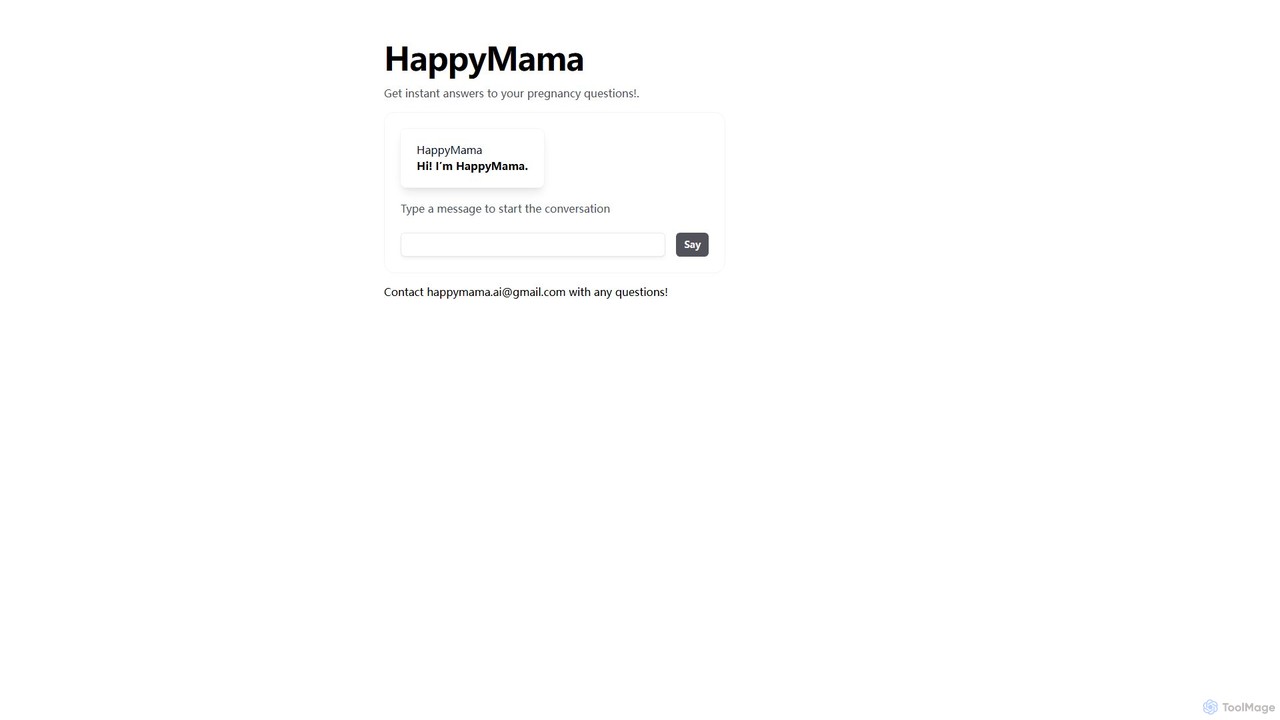
Happy Mama
Happy Mama is an AI-powered chatbot designed to provide instant, supportive, and reliable answers to questions about pregnancy. …
Happy Mama is an AI-powered chatbot designed to provide instant, supportive, and reliable answers to questions about pregnancy. It serves as a 24/7 virtual companion for expectant mothers, offering guidance on everything from symptoms and nutrition to fetal development and postpartum care.
About Pregnancy
AI-powered Pregnancy tools leverage artificial intelligence to support expectant parents and healthcare providers throughout the prenatal and postnatal journey. These innovative platforms utilize machine learning to offer personalized guidance, monitor key health metrics, and provide comprehensive educational resources. They aim to empower users with informed decisions, enhance well-being, and streamline the management of pregnancy-related information. By analyzing individual data, these tools can offer tailored insights and proactive support, complementing traditional medical care.
Core Features
- Personalized Health Guidance: Offers AI-driven advice on nutrition, exercise, and lifestyle tailored to individual pregnancy stages and health profiles.
- Fetal Development Tracking: Provides interactive visualizations and detailed information on the baby's growth and milestones week-by-week.
- Symptom Monitoring & Analysis: Tracks and interprets user-reported symptoms, offering insights, trend analysis, and flagging potential concerns.
- Risk Assessment & Prediction: Utilizes predictive models to identify potential pregnancy complications based on collected data and medical history.
- Curated Educational Resources: Delivers AI-selected articles, videos, and FAQs covering a wide range of pregnancy-related topics.
Applicable Scenarios
AI Pregnancy tools are invaluable for expectant mothers seeking personalized health advice and support, helping them navigate the complexities of pregnancy with confidence. Healthcare providers can utilize these tools to monitor patient progress remotely, identify potential risks earlier, and enhance patient engagement through data-driven insights. Researchers also benefit by analyzing aggregated, anonymized data to advance understanding of maternal and fetal health trends.
How to Choose
When selecting an AI Pregnancy tool, prioritize data privacy and security, ensuring sensitive health information is protected. Verify the accuracy and medical validation of the content and advice provided, ideally with input from healthcare professionals. Evaluate the comprehensiveness of its feature set, including tracking, guidance, and support options. Consider the user interface for ease of use and its ability to integrate with other health devices or platforms for a holistic experience.
PregnancyUse Cases
Personalized Pregnancy Health Planning
An expectant mother uses an AI pregnancy tool to generate a customized diet and exercise plan. By inputting her current health status, dietary preferences, and activity levels, the AI analyzes this data against medical guidelines to suggest safe and beneficial routines. This helps her maintain optimal health, manage weight gain, and prepare her body for childbirth, ensuring a healthier pregnancy journey tailored to her specific needs.
Early Detection of Potential Complications
A healthcare provider utilizes an AI pregnancy tool to monitor a patient's tracked symptoms and vital signs. The AI continuously analyzes patterns in blood pressure, glucose levels, and reported symptoms like swelling or headaches. If the system detects deviations from healthy ranges or identifies early indicators of conditions like preeclampsia or gestational diabetes, it promptly alerts the provider, enabling timely intervention and potentially preventing serious complications for both mother and baby.
Fetal Development Visualization & Education
Parents-to-be use an AI pregnancy app to visualize their baby's growth and understand developmental milestones. By selecting their current week of pregnancy, the AI generates interactive 3D models or detailed illustrations showing the baby's size, organ development, and key changes. This feature enhances the emotional connection, provides educational insights into fetal development, and helps alleviate anxiety by offering clear, engaging information about what to expect at each stage.
Mental Wellness Support for Expectant Mothers
An expectant mother experiencing anxiety or stress during pregnancy uses an AI-powered mental wellness chatbot. The chatbot provides a safe space for her to express feelings, offers guided meditation exercises, mindfulness techniques, and links to evidence-based resources on perinatal mental health. While not a substitute for professional therapy, this AI tool offers accessible, immediate emotional support and coping strategies, helping to improve her overall mental well-being during a sensitive period.
Postpartum Recovery & Care Guidance
A new mother uses an AI pregnancy tool for postpartum recovery and care guidance. The AI provides personalized advice on physical healing (e.g., wound care, pelvic floor exercises), emotional well-being (e.g., managing baby blues, identifying postpartum depression symptoms), and newborn care (e.g., feeding schedules, sleep tips). This continuous support helps her navigate the challenges of the fourth trimester, promoting a smoother recovery and confident transition into motherhood by offering reliable, accessible information.
Optimizing Prenatal Appointment Scheduling & Reminders
An expectant parent uses an AI pregnancy tool to manage and optimize their prenatal appointment schedule. The AI integrates with their calendar, sends timely reminders for doctor visits, tests, and classes, and can even suggest optimal times based on personal availability and clinic hours. This helps reduce missed appointments, ensures adherence to the prenatal care plan, and alleviates the mental load of managing a complex schedule, contributing to consistent and comprehensive medical oversight.