
Clariti
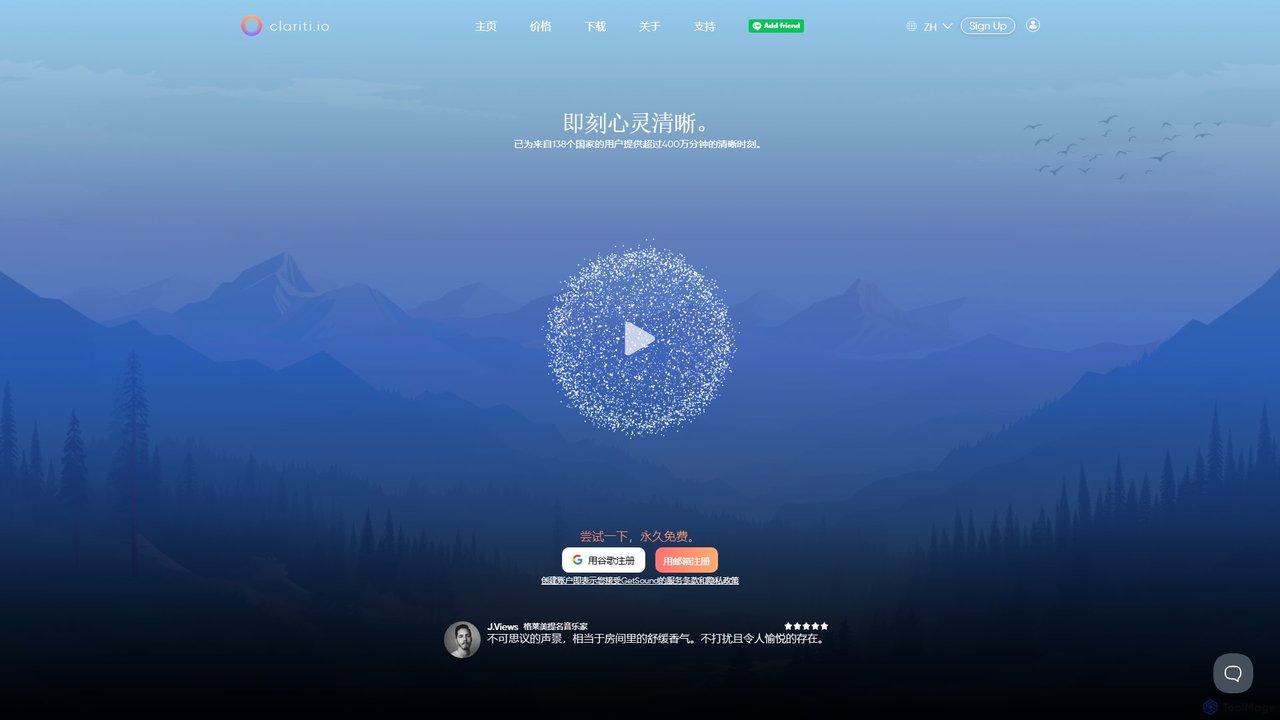
Clariti is an AI-powered soundscape generator that creates personalized ambient sounds to enhance focus, relaxation, and productivity. It …
Clariti is an AI-powered soundscape generator that creates personalized ambient sounds to enhance focus, relaxation, and productivity. It dynamically adapts to your location, time of day, and local weather, providing a unique auditory environment to help you concentrate and block out distractions. Ideal for professionals, creatives, and students seeking mental clarity.
About Relaxation
AI Relaxation tools are applications that leverage artificial intelligence to create personalized experiences for stress reduction and mental well-being. These tools often use generative algorithms to produce adaptive soundscapes, guided meditations, or visual patterns that respond to user input or biometric data. Their primary value lies in providing tailored, on-demand support for managing anxiety, improving focus, and enhancing sleep quality. Unlike static content libraries, AI-driven relaxation tools can dynamically adjust their output to better suit an individual's current emotional state.
Core Features
- Personalized Soundscapes: Generates unique, calming audio environments (like rain, forests, or abstract sounds) based on user preferences.
- Adaptive Guided Meditations: Adjusts the pace, content, and focus of meditation sessions in real-time based on feedback or user goals.
- Biofeedback Integration: Connects with wearables (like smartwatches) to use heart rate or breathing data to modulate the relaxation experience.
- AI-Powered Breathing Exercises: Provides visual and auditory cues for breathing techniques, often adapting to the user's rhythm.
- Mood Tracking and Analysis: Uses AI to analyze journal entries or mood inputs to suggest relevant relaxation content and track patterns over time.
Applicable Scenarios
These tools are widely used by professionals in high-stress jobs to manage daily anxiety, students preparing for exams to improve focus, and individuals experiencing sleep difficulties. They are also valuable in clinical settings as a supplement to therapy or for anyone seeking to build mindfulness and emotional resilience in their daily life.
Selection Criteria
When choosing an AI Relaxation tool, consider the variety and quality of its content library. Evaluate the level of personalization and whether it integrates with any biometric devices you use. Also, review the data privacy policy to understand how your personal and health data is handled. Finally, consider the user interface and ease of use to ensure it contributes to, rather than detracts from, a relaxing experience.
RelaxationUse Cases
Stress Reduction During Work Breaks
A software developer facing a tight deadline uses an AI Relaxation tool for a 10-minute break. They select a 'Focus & Calm' session. The AI generates a binaural beats soundscape combined with subtle visual patterns. The tool uses the microphone to analyze ambient noise and adjusts the audio to mask distractions effectively. After the session, the developer feels mentally refreshed and less overwhelmed, allowing them to return to their complex coding task with renewed concentration.
Improving Sleep Quality with Adaptive Sound
An individual struggling with inconsistent sleep uses an AI Relaxation tool connected to their smartwatch. They set a goal to achieve deeper sleep. Before bed, the app initiates a guided breathing exercise. Throughout the night, the tool monitors heart rate variability. When it detects restlessness, it subtly adjusts a generative ambient soundscape—perhaps increasing the volume of a gentle rain sound—to guide the user back into a calmer state without fully waking them. This adaptive intervention helps prolong periods of deep sleep.
Guided Meditation for Beginners
Someone new to mindfulness wants to start meditating but feels intimidated. They use an AI Relaxation app that offers a 'Beginner's Path'. The AI asks simple questions about their goals (e.g., 'reduce stress' or 'improve focus'). Based on the answers, it curates a 7-day program starting with 3-minute sessions. The AI narrator's voice is calm and provides clear, simple instructions. After each session, the user provides feedback ('too fast', 'just right'), and the AI adjusts the pacing for the next day's meditation, creating a gentle and personalized learning curve.
Managing Pre-Event Anxiety
A student feels anxious before a major exam. They open their AI Relaxation app and select a 5-minute 'Pre-Event Calm' session. The tool initiates a guided visualization exercise, prompting them to picture a successful outcome. Simultaneously, it generates a low-frequency soundscape designed to lower heart rate. The AI narrator's script is specifically crafted to build confidence and reframe anxious thoughts into positive anticipation. This quick, targeted intervention helps the student walk into the exam hall feeling more centered and prepared.
Creating a Focus-Enhancing Ambiance
A graphic designer needs to enter a state of deep work for a creative project. They use an AI Relaxation tool to create a custom sound environment. They choose a base of 'gentle stream' and layer it with 'distant birdsong'. The AI algorithm ensures the sounds are non-repeating and subtly shift over time to prevent auditory fatigue. The designer sets a 90-minute timer, and the AI gradually fades the soundscape out as the session ends, providing a gentle transition back from their focused state.
Post-Workout Cool-down and Recovery
After an intense gym session, a fitness enthusiast uses an AI Relaxation tool to aid recovery. They select a 'Post-Workout Recovery' module. The app syncs with their fitness tracker to get their final heart rate. It then initiates a guided body-scan meditation combined with a calming soundscape. The AI's guidance focuses on releasing muscle tension and promoting mindful breathing, helping to lower their heart rate gradually and shift their nervous system from a 'fight-or-flight' state to 'rest-and-digest', accelerating muscle recovery.