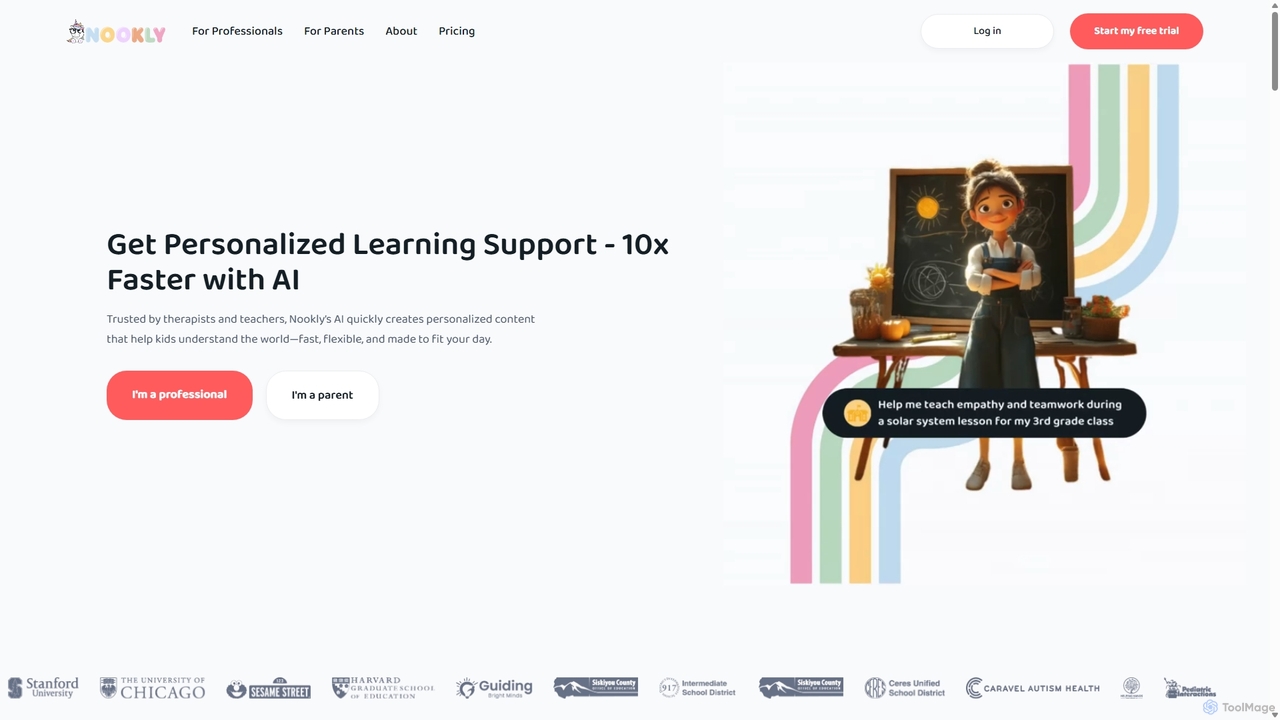
Special Needs AI tools represent a crucial and rapidly evolving category within health AI, specifically engineered to provide tailored support and innovative solutions for individuals facing diverse physical, cognitive, or developmental challenges. These cutting-edge tools leverage advanced artificial intelligence, machine learning, and natural language processing to significantly enhance accessibility, facilitate seamless communication, and offer deeply personalized assistance. Their overarching mission is to empower users, dramatically improve their quality of life, and foster greater independence by addressing unique needs with intelligent, adaptive, and empathetic technologies.
Core Features
- Adaptive Accessibility Interfaces: AI-driven interfaces that dynamically adjust to individual user abilities, incorporating advanced voice control, precise eye-tracking, and highly customizable display options to ensure intuitive and effective interaction.
- Personalized Communication Aids: Sophisticated tools for accurate text-to-speech conversion, reliable speech-to-text transcription, or real-time sign language interpretation, designed to effectively bridge communication gaps and promote clearer expression.
- Cognitive Support & Learning Platforms: Intelligent AI assistants that aid in memory recall, streamline task management, and deliver personalized educational content specifically tailored for neurodivergent learners, enhancing comprehension and engagement.
- Rehabilitation & Proactive Monitoring: AI-guided physical therapy exercises that provide real-time feedback, comprehensive progress tracking, and proactive alerts for potential safety or health events, significantly supporting recovery processes and overall well-being.
- Emotional & Mental Well-being Companions: AI companions or therapeutic bots offering personalized emotional support, practical coping strategies, and assistance with emotional regulation, contributing to improved mental health outcomes.
Applicable Scenarios
These specialized AI tools are indispensable for individuals seeking enhanced autonomy and targeted support in their daily lives. For example, a person with severe mobility impairments can utilize AI voice commands to effortlessly control their smart home environment, from lighting to entertainment systems. Children with learning disabilities, such as dyslexia or ADHD, greatly benefit from AI-powered educational platforms that adapt content and pacing to their unique learning styles. Furthermore, elderly individuals experiencing early-stage memory loss can rely on AI assistants for timely medication reminders, appointment alerts, and engaging cognitive stimulation exercises, promoting independent living.
How to Choose
When selecting a Special Needs AI tool, it is paramount to prioritize its precise alignment with the specific challenge it aims to solve for the individual. Thoroughly evaluate its customization and adaptability features, ensuring the tool can be finely tuned to personal preferences, learning styles, or physical capabilities. Critically consider the ease of use and overall accessibility of its interface, especially for users with varying technical proficiencies. Additionally, investigate robust data privacy and security measures, given the sensitive nature of personal health information. Finally, verify its compatibility with existing assistive technologies or smart devices to guarantee seamless integration into the user's daily routine.