Healthcare Best in category 1 results Healthtech AI Tool

Popular AI tools in the Healthtech field of Healthcare include Artivatic, etc., helping you quickly improve efficiency.

Artivatic

Artivatic

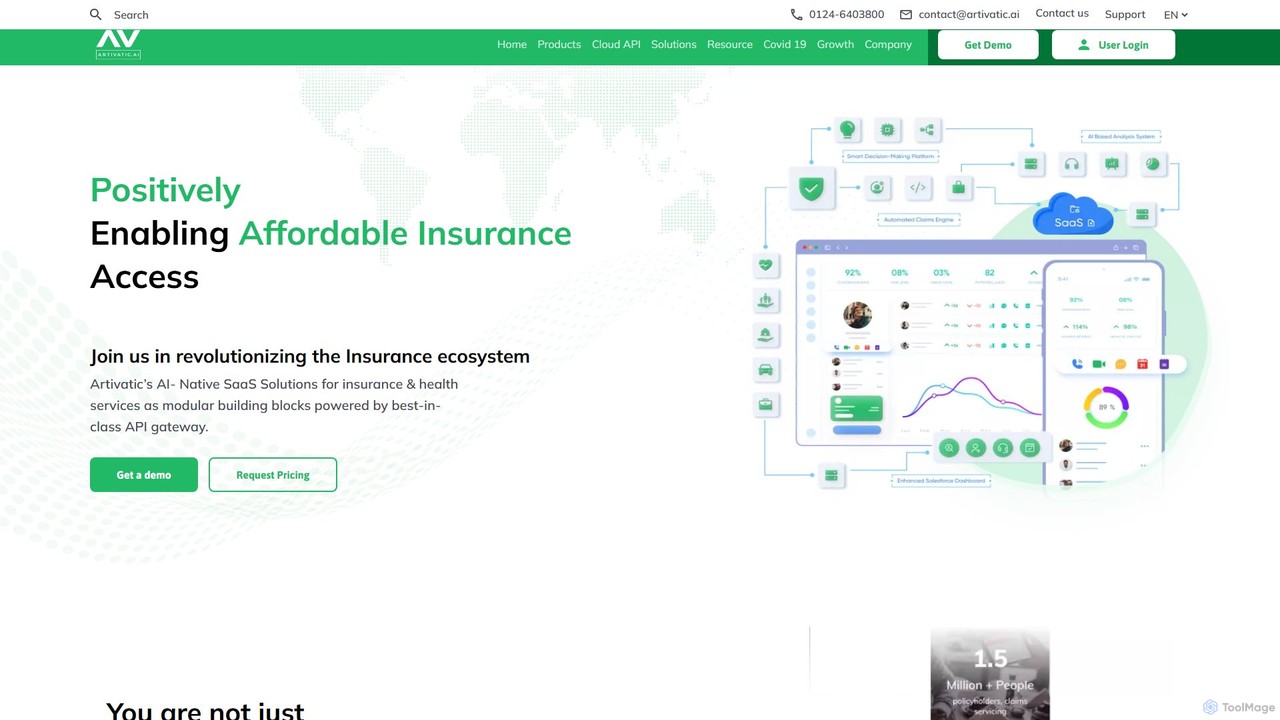
Artivatic is an AI-native SaaS platform designed to revolutionize the insurance and healthcare industries. It provides end-to-end solutions, …

5.1K

About Healthtech

Healthtech AI tools are a specialized class of software and applications that use artificial intelligence to improve healthcare delivery, diagnostics, and patient management. These tools leverage machine learning for predictive analytics, computer vision for medical image analysis, and natural language processing for clinical documentation. Their primary purpose is to enhance diagnostic accuracy, personalize treatment plans, streamline administrative workflows, and make healthcare more accessible and efficient. Unlike general healthcare software, AI-powered Healthtech tools focus on generating data-driven insights to actively support clinical decision-making.

Core Features

  • Predictive Analytics: Analyzes patient data to forecast disease risks, predict patient outcomes, and identify at-risk populations for preventive care.
  • AI-Assisted Diagnostics: Utilizes computer vision to detect and highlight anomalies in medical images like X-rays, CT scans, and MRIs, aiding radiologists and clinicians.
  • Clinical Documentation Automation: Employs NLP to transcribe doctor-patient conversations, summarize clinical notes, and automatically populate electronic health records (EHR).
  • Personalized Treatment Planning: Processes genomic, clinical, and lifestyle data to recommend tailored treatment protocols and drug therapies for individual patients.
  • Virtual Health Assistants: Provides AI-powered chatbots for patient triage, appointment scheduling, medication reminders, and answering health-related queries.

Use Cases

Healthtech AI tools are widely used in hospitals and clinics to accelerate diagnostic processes and improve accuracy. Pharmaceutical companies and research institutions apply them to speed up drug discovery and analyze clinical trial data. They are also integral to telemedicine platforms for remote patient monitoring and in personalized health applications that empower patients to manage chronic conditions.

How to Choose

When selecting a Healthtech AI tool, prioritize solutions with proven clinical validation and regulatory compliance (e.g., FDA clearance, HIPAA compliance). Assess its ability to integrate seamlessly with existing Electronic Health Record (EHR) systems. Scrutinize the data security and privacy protocols to ensure patient confidentiality. Finally, evaluate the AI model's accuracy, specificity, and performance on datasets relevant to your specific clinical needs.

HealthtechUse Cases

1

AI-Assisted Radiological Image Analysis

A radiologist uses a Healthtech AI tool to analyze hundreds of chest X-rays for early signs of pneumonia. The AI automatically flags suspicious areas, ranking them by probability of malignancy. This allows the radiologist to focus their attention on the most critical cases first, significantly reducing turnaround time for reports and improving diagnostic accuracy by providing a second, data-driven opinion. The tool integrates directly with the hospital's PACS system, making the workflow seamless.

2

Predictive Risk Stratification for Chronic Diseases

A healthcare provider uses an AI platform to analyze its patient population's electronic health records (EHR). The model identifies individuals at high risk of developing Type 2 diabetes within the next five years based on factors like lab results, family history, and lifestyle data. The care management team can then proactively engage these patients with personalized prevention programs, such as dietary coaching and regular monitoring, ultimately reducing the incidence of the disease and lowering long-term healthcare costs.

3

Automating Clinical Documentation with an AI Scribe

During a patient consultation, a physician uses an AI scribe application running on a tablet. The application listens to, transcribes, and structures the natural conversation into a standard clinical note format (SOAP note). It accurately identifies medical terms, medications, and dosages, and populates the relevant fields in the EHR. This eliminates the need for manual note-taking, saving the physician up to two hours of administrative work per day and allowing them to focus more on patient interaction.

4

Accelerating Drug Discovery with AI

A team of researchers at a pharmaceutical company uses an AI platform to analyze vast datasets of genomic information and molecular structures. The AI identifies potential drug candidates that are likely to be effective against a specific cancer cell line, predicting their efficacy and potential side effects. This process narrows down millions of possibilities to a few hundred promising compounds for lab testing, drastically reducing the time and cost of the early stages of drug development from years to months.

5

Personalized Patient Engagement via Virtual Health Assistant

A patient recovering from heart surgery interacts with a virtual health assistant on their smartphone. The AI-powered chatbot provides personalized medication reminders, suggests appropriate physical activities based on their recovery progress, and answers common questions about their condition 24/7. If the patient reports concerning symptoms like severe chest pain, the assistant immediately escalates the issue to a human nurse and provides a summary of the conversation, ensuring timely and appropriate care.

6

Optimizing Hospital Operations with Predictive Analytics

A hospital administrator uses an AI-powered dashboard to forecast patient admission rates for the upcoming week based on historical data, seasonal trends, and local events. This allows for optimized staff scheduling and resource allocation, ensuring enough beds and medical personnel are available during peak times. The system also predicts potential bottlenecks in departments like the emergency room or imaging labs, enabling managers to take preemptive action to improve patient flow and reduce wait times.

HealthtechFrequently Asked Questions