
Healthcare Best in category 1 results Medical Diagnosis AI Tool

Popular AI tools in the Medical Diagnosis field of Healthcare include Oatmeal Health, etc., helping you quickly improve efficiency.

Oatmeal Health

Oatmeal Health

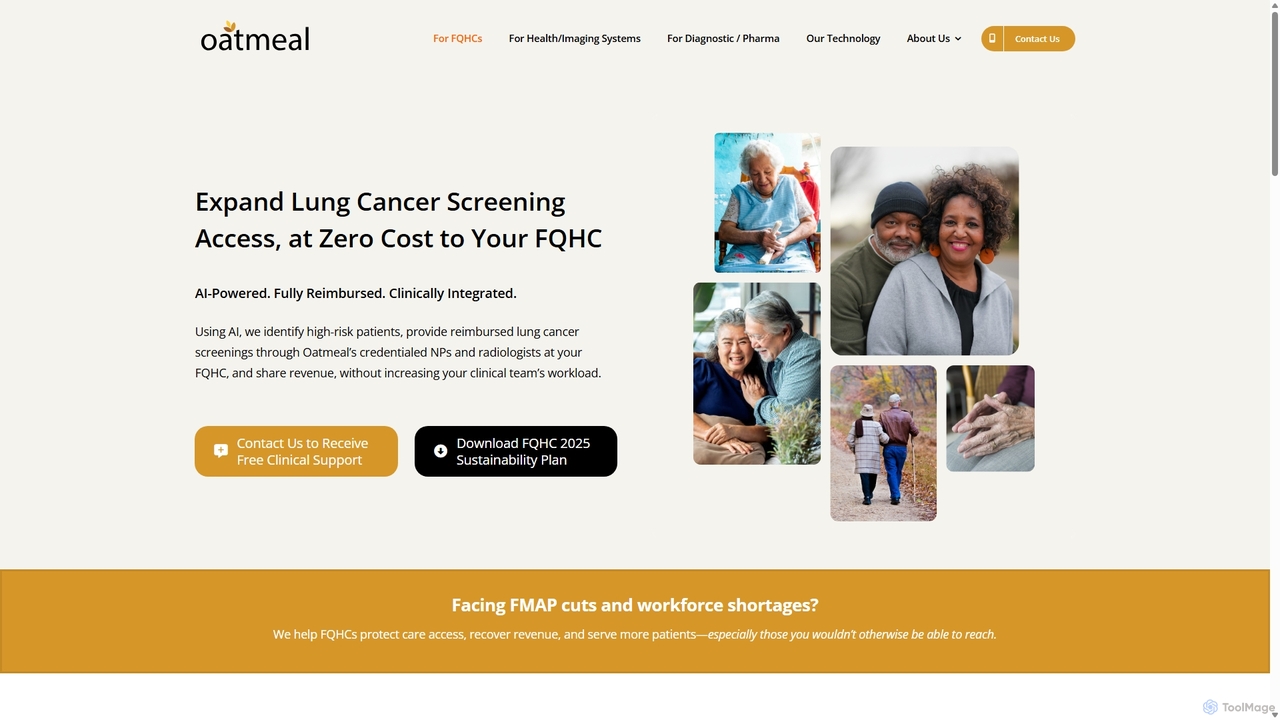
Oatmeal Health is an AI-powered cancer screening platform designed for Federally Qualified Health Centers (FQHCs). It provides a …

11.2K

About Medical Diagnosis

AI Medical Diagnosis tools are a specialized class of software that uses machine learning algorithms to analyze medical data and assist clinicians in identifying diseases. These tools process complex inputs like radiological images, pathology slides, and electronic health records to detect patterns that may be imperceptible to the human eye. Their primary value lies in enhancing diagnostic accuracy, accelerating the review process, and enabling earlier detection of critical conditions, ultimately supporting better patient outcomes within the broader healthcare ecosystem.

Core Features

  • Medical Image Analysis: Automatically detects anomalies, lesions, or tumors in X-rays, CT scans, and MRIs.
  • Predictive Modeling: Uses patient history and lab results to forecast disease risk and progression.
  • Pathology Slide Interpretation: Digitally analyzes tissue samples to identify cancerous cells and grade tumors.
  • Genomic Data Analysis: Interprets genetic sequences to identify markers for hereditary diseases and guide personalized medicine.
  • Symptom Triage: Processes patient-reported symptoms to suggest potential diagnoses and urgency levels.

Use Cases

These tools are predominantly used in clinical settings by specialists. Radiologists leverage them for faster image screening, pathologists for automated slide analysis, and oncologists for interpreting genomic data to guide personalized treatment plans. They are also increasingly used in cardiology for ECG analysis and dermatology for skin lesion assessment.

How to Choose

When selecting an AI Medical Diagnosis tool, prioritize solutions with regulatory approvals (e.g., FDA, CE mark). Verify its clinical validation through peer-reviewed studies, ensure seamless integration with existing Electronic Health Record (EHR) systems, and confirm strict compliance with data privacy regulations like HIPAA or GDPR.

Medical DiagnosisUse Cases

1

Accelerating Lung Nodule Detection in CT Scans

A radiologist in a busy hospital department uses an AI medical diagnosis tool to analyze hundreds of chest CT scans daily. The AI automatically flags scans with suspicious pulmonary nodules, highlighting their size, location, and characteristics. This allows the radiologist to prioritize the most critical cases, reduce review time per scan, and decrease the risk of missing small, early-stage cancers that might otherwise be overlooked.

2

Automating Diabetic Retinopathy Screening

In a primary care clinic, a nurse uses an AI-powered fundus camera to screen diabetic patients for retinopathy. The AI algorithm analyzes the retinal images on the spot and provides an immediate risk assessment. This system identifies patients who need an urgent referral to an ophthalmologist, enabling early intervention and preventing vision loss, especially in underserved areas with limited access to specialists.

3

Prioritizing Pathology Slides for Review

A pathologist in a large lab receives hundreds of digital pathology slides each day. An AI diagnosis tool pre-screens these slides, identifying and ranking them based on the probability of malignancy. This workflow allows the pathologist to focus their expertise on the most complex and suspicious cases first, significantly improving turnaround times and ensuring that critical diagnoses are not delayed.

4

Real-time Arrhythmia Detection from ECG Data

In a cardiac monitoring unit, an AI system continuously analyzes electrocardiogram (ECG) streams from multiple patients. The tool is trained to detect various types of arrhythmias, such as atrial fibrillation, in real-time. When an abnormal rhythm is detected, it sends an immediate alert to the nursing staff, enabling prompt clinical intervention long before a serious cardiac event might occur.

5

Assessing Skin Lesion Malignancy Risk

A dermatologist uses a mobile application integrated with an AI diagnostic tool during patient consultations. By taking a high-resolution photo of a mole or skin lesion, the AI provides an instant analysis, classifying the lesion's risk of being malignant (e.g., melanoma). This serves as an immediate second opinion, helping the dermatologist decide whether to perform a biopsy or simply monitor the lesion over time.

6

Predicting Sepsis Onset in ICU Patients

In an Intensive Care Unit (ICU), an AI diagnostic system continuously monitors data streams from patient vitals, lab results, and electronic health records. The tool uses a predictive model to identify subtle patterns that indicate a high risk of sepsis onset, often hours before clinical symptoms become apparent. This early warning allows the medical team to initiate preventative treatment, drastically reducing mortality rates associated with sepsis.

Medical DiagnosisFrequently Asked Questions