
Healthcare Best in category 2 results Medical Information AI Tool

Popular AI tools in the Medical Information field of Healthcare include npilookup、Medbriefs, etc., helping you quickly improve efficiency.

Medbriefs

Medbriefs

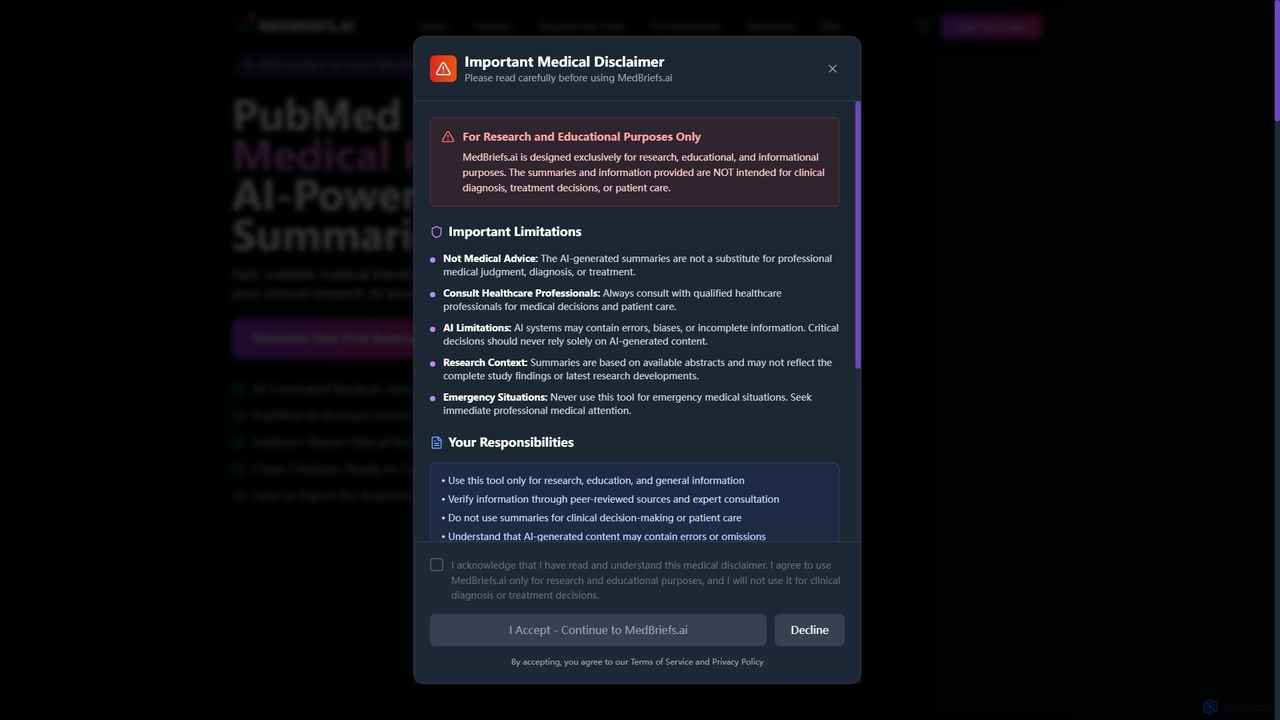
Medbriefs is an AI-powered research assistant that generates fast, credible summaries of medical literature from PubMed abstracts. It …

3.4K
Free
npilookup

npilookup

An advanced AI-powered platform for searching and validating National Provider Identifier (NPI) numbers for healthcare providers in the …

5.0K

About Medical Information

Medical Information AI tools are specialized platforms that leverage artificial intelligence to process, analyze, and manage vast amounts of healthcare data. These tools utilize machine learning, natural language processing, and computer vision to extract insights from patient records, research literature, and diagnostic images. Their primary value lies in enhancing diagnostic accuracy, personalizing treatment plans, and streamlining information access for medical professionals and researchers. They contribute significantly to evidence-based medicine and operational efficiency within the broader healthcare sector.

Core Features

  • Clinical Data Analysis: Processes electronic health records (EHRs), lab results, and patient histories to identify patterns and risks.
  • Medical Image Interpretation: Utilizes computer vision to assist in analyzing X-rays, MRIs, CT scans for anomaly detection.
  • Natural Language Processing (NLP): Extracts structured information from unstructured clinical notes, research papers, and medical literature.
  • Drug Discovery & Research Support: Accelerates the analysis of molecular data, clinical trial results, and scientific publications.
  • Personalized Treatment Recommendations: Suggests tailored therapies based on individual patient data, genetic profiles, and disease progression.

Use Cases

Medical professionals use these tools for faster diagnosis and treatment planning. Researchers apply them to sift through vast scientific literature for new insights. Healthcare administrators leverage them for operational efficiency and predictive analytics in patient flow and resource management.

How to Choose

Evaluate the tool's data integration capabilities with existing EHR systems, its accuracy and validation in clinical settings, compliance with privacy regulations (e.g., HIPAA, GDPR), and the level of explainability for AI-driven insights. Consider the specific medical domain it targets and the user interface's ease of use for clinical staff.

Medical InformationUse Cases

1

Automated Diagnostic Support for Radiologists

Radiologists use AI medical information tools to analyze medical images (X-rays, CT scans, MRIs) for subtle anomalies that might be missed by the human eye. The AI highlights suspicious areas, provides quantitative measurements, and cross-references findings with vast databases of similar cases, significantly improving diagnostic speed and accuracy for conditions like early-stage cancers or neurological disorders.

2

Personalized Treatment Plan Generation for Oncologists

Oncologists leverage AI tools to synthesize a patient's genetic profile, tumor characteristics, medical history, and response to previous treatments. The AI then compares this data against global clinical trial results and research, suggesting personalized treatment regimens, predicting potential side effects, and identifying suitable clinical trials, thereby optimizing patient outcomes.

3

Accelerated Medical Literature Review for Researchers

Medical researchers utilize AI-powered platforms to rapidly search, summarize, and synthesize information from millions of scientific papers, clinical guidelines, and drug databases. This allows them to quickly identify relevant studies, track emerging trends, and uncover novel connections between diseases, genes, and treatments, drastically reducing the time spent on manual literature review.

4

Predictive Analytics for Hospital Resource Management

Hospital administrators employ AI medical information tools to analyze historical patient data, admission patterns, and disease outbreaks. The AI predicts future patient volumes, potential surges in specific conditions, and resource needs (e.g., ICU beds, ventilators, staff), enabling proactive allocation of resources and improved operational efficiency, especially during public health crises.

5

Drug Repurposing and Discovery for Pharmaceutical Companies

Pharmaceutical researchers use AI to analyze vast datasets of molecular structures, drug interactions, and disease pathways. The AI identifies existing drugs that could be repurposed for new indications or discovers novel compounds with therapeutic potential, accelerating the drug discovery process and reducing development costs by identifying promising candidates earlier.

6

Enhanced Clinical Trial Matching for Patients

Patients and clinicians use AI tools to match individuals with suitable clinical trials based on their specific medical condition, genetic markers, and eligibility criteria. The AI sifts through thousands of active trials globally, presenting the most relevant options, which increases patient access to innovative treatments and accelerates the recruitment process for research studies.

Medical InformationFrequently Asked Questions