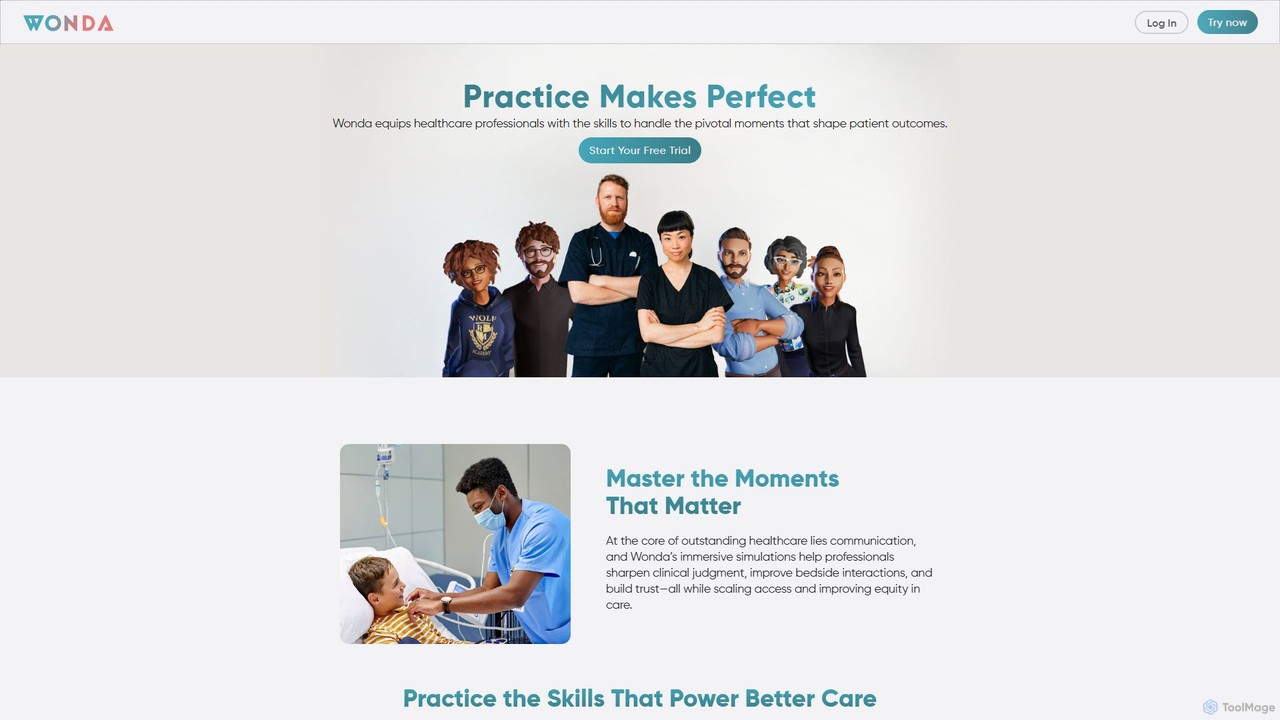
Medical Simulation tools are AI-powered platforms designed to replicate real-world clinical scenarios for training, assessment, and research. Leveraging advanced AI, these tools provide immersive and interactive environments that allow healthcare professionals and students to practice complex procedures, diagnose conditions, and refine decision-making skills without risk to actual patients. They offer a safe, controlled, and repeatable setting for skill development and competency evaluation within the broader healthcare domain.
Core Features
- Realistic Patient Models: AI-driven virtual patients with dynamic physiological responses to interventions.
- Procedural Training: Interactive modules for practicing surgical techniques, injections, intubation, and other medical procedures.
- Diagnostic Scenarios: Simulations presenting complex patient cases requiring differential diagnosis and treatment planning.
- Performance Feedback: Real-time analysis and objective scoring of user actions, identifying areas for improvement.
- Multi-user Collaboration: Platforms supporting team-based training for complex medical emergencies or surgical teams.
Use Cases
These tools are indispensable for medical schools, hospitals, and pharmaceutical companies. They enable students to gain hands-on experience before clinical rotations, allow residents to refine advanced surgical skills, and facilitate the testing of new medical devices or drug protocols in a controlled environment.
How to Choose
When selecting a medical simulation tool, consider the fidelity and realism of the simulation, the range of medical conditions and procedures covered, the quality of performance feedback mechanisms, and its integration capabilities with existing learning management systems. Evaluate the customization options for scenarios and the overall user interface for ease of use.