
ToolMage
Sign in

Best 1 Patient Intake AI tools for Healthcare

Popular Patient Intake AI tools in Healthcare include Formisoft, helping you work more efficiently.

Formisoft
Freemium

Formisoft

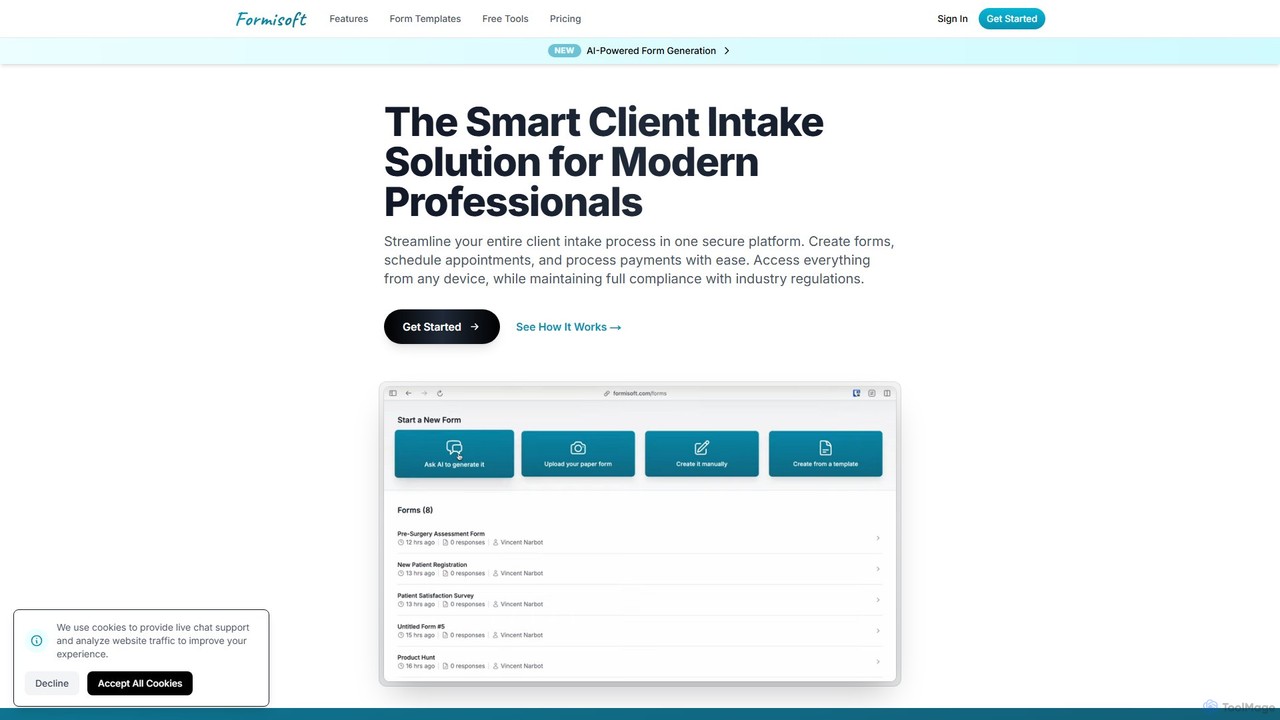
Formisoft is an AI-powered, secure client intake platform for modern professionals. It streamlines form creation, appointment scheduling, and payment processing in one compliant solution. Digitize paper forms, build dynamic forms with AI, and enhance the client experience with mobile-friendly, easy-to-use interfaces.

Client Management
Visits 8KFavorites 132Likes 147

About Patient Intake

AI Patient Intake tools are specialized platforms that automate the collection and processing of patient information before a medical visit. Using technologies like Optical Character Recognition (OCR) and Natural Language Processing (NLP), these tools convert static forms into dynamic, interactive experiences. This process streamlines administrative workflows, reduces manual data entry errors, and provides clinicians with structured, comprehensive patient data from the outset. The primary value lies in creating a more efficient, accurate, and patient-friendly registration process.

Core Features

  • Intelligent Forms: Forms that dynamically adapt questions in real-time based on patient responses and medical history.
  • Automated Data Extraction: Utilizes OCR to capture information from documents like insurance cards and photo IDs automatically.
  • EHR/EMR Integration: Seamlessly syncs collected patient data with existing Electronic Health Record (EHR) systems.
  • Insurance Eligibility Verification: Automatically checks and verifies patient insurance coverage and benefits in real-time.
  • Conversational AI Chatbots: Engages patients in a guided conversation to gather symptom information and medical history before the visit.

Applicable Scenarios

These tools are widely used in hospitals, specialty clinics, dental offices, and telehealth platforms. Administrative staff use them to eliminate paperwork and reduce patient wait times. Clinicians and nurses benefit from receiving accurate, pre-structured patient data directly in the EHR, allowing for more focused consultations.

Selection Criteria

When choosing a tool, prioritize its integration capabilities with your specific EHR/EMR system. Evaluate its compliance with healthcare regulations like HIPAA. Assess the accuracy of its data extraction technology (OCR/NLP) and the user-friendliness of the patient-facing interface to ensure a smooth experience.

Patient Intake use cases

1

Automating New Patient Registration

A new patient at a specialty clinic receives an SMS link before their first appointment. They use their smartphone to complete the registration process. The AI tool guides them through medical history questions, uses the phone's camera to scan their insurance card and ID, and automatically extracts and populates all necessary fields. This process is completed in 5-7 minutes at home, eliminating 15-20 minutes of paperwork in the waiting room and reducing data entry errors for administrative staff by over 90%.

2

Pre-Surgical Information Gathering

A hospital's surgical department uses an AI intake tool to send detailed pre-operative questionnaires. The system's branching logic asks patients specific questions based on the type of surgery and their previous answers about allergies or medications. This ensures all critical information is collected consistently. The structured data is then automatically flagged in the EHR for the anesthesiologist and surgical team to review, improving patient safety and pre-op efficiency.

3

Streamlining Telehealth Onboarding

A telehealth provider integrates an AI intake chatbot into their app. Before connecting with a doctor, the patient interacts with the bot, which conversationally asks about their symptoms, duration, and severity. The NLP technology understands free-text descriptions and converts them into a structured clinical summary. This summary is presented to the doctor right as the video call begins, saving valuable consultation time and allowing the doctor to immediately focus on diagnosis and treatment.

4

Real-time Insurance Eligibility Verification

An administrative staff member at a dental office schedules an appointment for a patient. As they enter the patient's insurance information, the AI intake system automatically pings the insurer's database in real-time. Within seconds, it confirms that the patient's plan is active and provides a summary of their co-pay and deductible. This proactive verification prevents billing issues and claim denials later, ensuring a smoother financial experience for both the patient and the clinic.

5

Managing Patient Intake for Recurring Visits

For a patient with a chronic condition requiring regular check-ups, the AI intake tool simplifies recurring visits. Instead of filling out a full form each time, the system presents them with their previously submitted information and asks them to confirm or update any changes, such as new symptoms or medications. This 'review and confirm' process takes less than a minute, respecting the patient's time while ensuring the clinical record is always up-to-date for every appointment.

6

Screening Patients for Specific Programs

A large healthcare system wants to identify patients eligible for a new diabetes management program. They use their AI intake tool to add a set of screening questions to the standard check-in process. The tool's logic automatically identifies patients who meet the criteria based on their answers about diagnosis, A1c levels, and lifestyle. This automates the screening process, helping the care management team efficiently connect with eligible patients without manual chart reviews.

Patient Intake FAQ

What is an AI Patient Intake tool?

An AI Patient Intake tool is a software solution that automates the collection of patient information before a healthcare visit. Unlike simple digital forms, it uses AI technologies like OCR to scan documents and NLP to understand patient responses. Its primary purpose is to reduce administrative workload, minimize data entry errors, and provide clinicians with accurate, structured data directly within the Electronic Health Record (EHR) system.

How to choose the right AI Patient Intake tool?

When selecting a tool, consider these key factors:

  • EHR/EMR Integration: Ensure it seamlessly integrates with your existing electronic health record system to avoid manual data transfer.
  • HIPAA Compliance: Verify that the tool meets all necessary healthcare data privacy and security standards.
  • Patient Experience: The interface should be simple, intuitive, and accessible for patients of all ages and technical abilities.
  • Customization: Check if you can customize forms, workflows, and question logic to fit your clinic's specific needs.
What's the difference between AI Patient Intake and a standard digital form?

A standard digital form is a static, electronic version of a paper form. An AI Patient Intake tool is far more advanced. Key differences include:

  • Dynamic Logic: AI tools adapt questions based on patient answers, whereas digital forms are fixed.
  • Data Extraction: AI can automatically pull data from images of insurance cards using OCR, which standard forms cannot do.
  • Integration: AI intake tools are built to deeply integrate with EHRs, automatically placing data in the correct fields. Standard forms often require manual data transfer.
  • Verification: Many AI tools can perform real-time checks, like insurance eligibility, which is beyond the scope of a simple form.
Is the data collected by AI Patient Intake tools secure?

Yes, security is a top priority for these tools. Reputable providers design their platforms to be compliant with strict healthcare data regulations, such as HIPAA in the United States. This typically involves end-to-end encryption for all data, secure cloud hosting on platforms like AWS or Azure, and robust access controls to ensure that only authorized personnel can view patient information. Always confirm a vendor's specific security protocols and compliance certifications before implementation.

Who benefits most from using AI Patient Intake tools?

Multiple groups benefit significantly. Administrative Staff save hours on manual data entry and reduce paperwork. Patients enjoy a more convenient, modern, and faster check-in experience, often from the comfort of their home. Clinicians (doctors and nurses) receive more accurate and complete patient information before the appointment begins, allowing them to spend more time on patient care rather than data gathering. Finally, the Healthcare Organization benefits from improved operational efficiency, reduced claim denials, and higher patient satisfaction.