
ToolMage
Sign in

Best 1 Price Transparency AI tools for Healthcare

Popular Price Transparency AI tools in Healthcare include smithtech, helping you work more efficiently.

smithtech
Freemium

smithtech

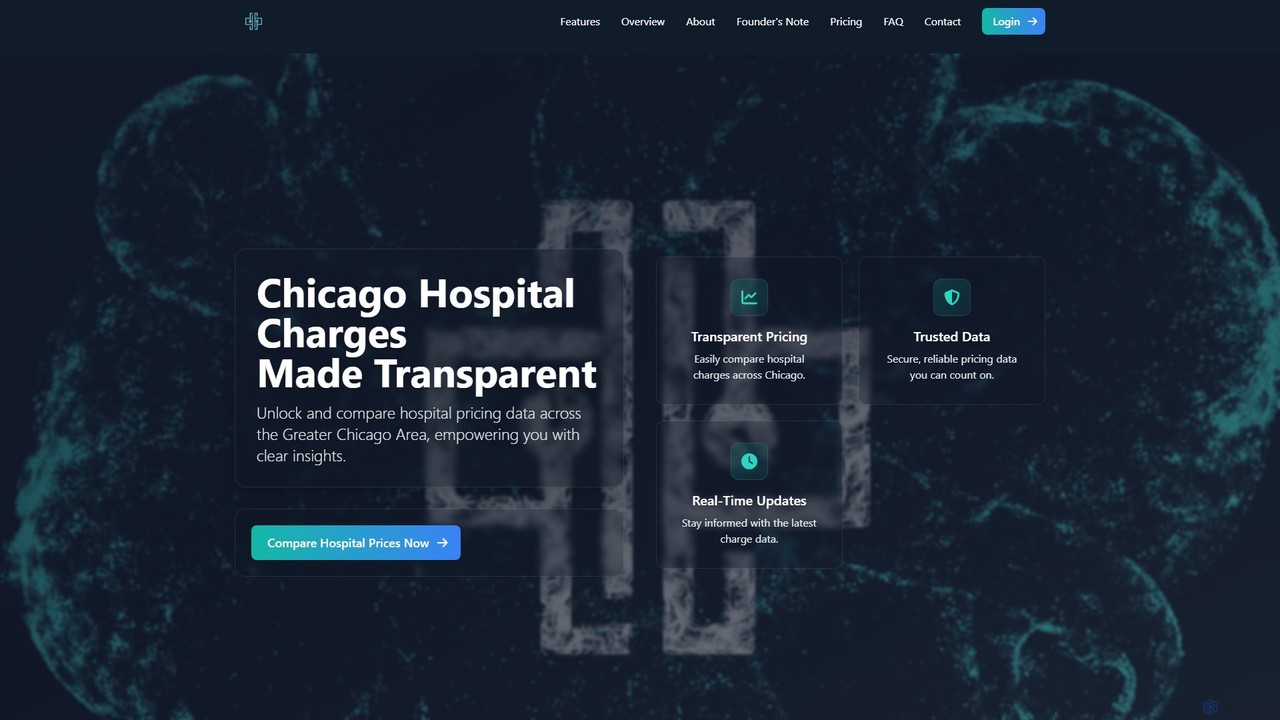
smithtech is an AI-powered platform dedicated to healthcare price transparency, focusing on the Greater Chicago Area. It enables patients, healthcare professionals, and insurance agents to compare hospital charges, search medical procedure costs using a natural language AI assistant, and analyze complex billing data. With features like the ChargeMaster AI Assistant, detailed analytics, and full HIPAA compliance, smithtech empowers users to make informed healthcare decisions and achieve better financial outcomes.

Business Intelligence
Visits 6.1KFavorites 165Likes 165

About Price Transparency

Price Transparency tools are AI-driven platforms designed to clarify and predict healthcare costs. They leverage machine learning algorithms to analyze vast datasets, including insurer rate sheets, hospital chargemasters, and claims data, to provide accurate cost estimates for medical procedures and services. This empowers patients to make financially informed decisions and helps healthcare providers comply with pricing disclosure regulations. These tools transform complex billing data into understandable, actionable information for consumers and organizations.

Core Features

  • Procedure Cost Estimation: Provides detailed cost breakdowns for specific medical services based on location, provider, and insurance plan.
  • Provider Comparison: Allows users to compare prices for the same procedure across different hospitals and clinics in a specific region.
  • Out-of-Pocket Cost Calculation: Analyzes an individual's insurance benefits to predict deductibles, copayments, and total patient responsibility.
  • Regulatory Compliance Tools: Helps healthcare facilities generate and maintain machine-readable files and consumer-friendly price lists as required by government mandates.

Applicable Scenarios

These tools are essential for patients planning elective surgeries or treatments, enabling them to budget and avoid surprise bills. They are also used by corporate HR departments to select cost-effective health plans for employees and by healthcare providers to streamline their compliance with price transparency laws. Financial advisors and insurance brokers also utilize them to guide clients.

Selection Criteria

When choosing a Price Transparency tool, evaluate the accuracy and breadth of its data sources. Consider the user interface's simplicity for patients versus the robust features needed by provider administrators. Key factors include integration capabilities with existing Electronic Health Record (EHR) or billing systems and the tool's ability to model complex insurance plan designs accurately.

Price Transparency use cases

1

Patient Estimating Surgery Costs

A patient scheduled for an elective knee replacement surgery uses a price transparency tool to understand their financial responsibility. They input their insurance information, desired hospital, and the specific procedure code. The AI tool analyzes the hospital's negotiated rates with their insurer and their plan's details (deductible, coinsurance). It then provides a detailed estimate of their out-of-pocket costs, allowing them to compare this with two other local hospitals. This empowers the patient to choose a cost-effective, high-quality provider and financially prepare for the surgery, avoiding unexpected medical bills.

2

Hospital Ensuring Regulatory Compliance

A hospital's compliance officer uses a price transparency platform to meet government mandates. The tool connects to the hospital's chargemaster and billing systems, automatically pulling data for the top 300 shoppable services. It then formats this information into both a consumer-friendly, searchable list for the hospital's website and a comprehensive, machine-readable file. The AI helps standardize service descriptions and ensures all required data fields are present, reducing manual effort by over 90% and minimizing the risk of non-compliance penalties.

3

Employer Analyzing Health Plan Options

An HR manager for a mid-sized company is evaluating two new health insurance plans for the upcoming year. Using a price transparency tool, they upload anonymized employee census data. The platform simulates the company's total healthcare spending under each plan by modeling likely utilization of services (e.g., check-ups, common procedures) against the negotiated rates of in-network providers. The resulting report clearly compares projected premium costs, employer contributions, and average employee out-of-pocket expenses, enabling the manager to choose the plan that offers the best value for both the company and its employees.

4

Medical Biller Benchmarking Service Prices

A billing manager at a specialty clinic wants to ensure their pricing for a common diagnostic imaging service is competitive. They use a price transparency tool to access aggregated, anonymized data on what commercial insurers pay for the same service in their metropolitan area. The tool provides a dashboard showing the 25th, 50th, and 75th percentile reimbursement rates. This data allows the manager to adjust their chargemaster rates strategically, ensuring they are aligned with the market without under- or over-valuing their services, which aids in contract negotiations with payers.

5

Health System Analyzing Network Adequacy

A large health system is planning to launch its own insurance plan. A market analyst uses a price transparency tool to evaluate the competitiveness of its provider network. By mapping its contracted provider rates against regional benchmarks for key specialties like cardiology and oncology, they can identify pricing gaps. The tool helps them see where their network's costs are higher or lower than competitors, informing their strategy for negotiating with provider groups to build a cost-effective and attractive network for potential members.

6

Researcher Studying Healthcare Price Variation

A health policy researcher uses a price transparency platform's anonymized, aggregated dataset to study regional price variations for MRI scans. They can filter the data by state, insurer type (commercial, public), and facility type (hospital outpatient vs. standalone imaging center). The tool generates visualizations and statistical summaries showing vast price discrepancies for the identical service. This research provides evidence-based insights for policymakers, journalists, and the public, highlighting the inefficiencies in the healthcare market and informing potential policy interventions.

Price Transparency FAQ

What are AI-powered Price Transparency tools in healthcare?

AI-powered Price Transparency tools are software platforms that use artificial intelligence to collect, standardize, and analyze complex healthcare pricing data. Their primary goal is to provide clear, accurate, and personalized cost estimates for medical services to patients, employers, and providers. Unlike static price lists, these tools can factor in a user's specific insurance plan, deductible status, and location to calculate estimated out-of-pocket expenses. They are crucial for navigating the healthcare system financially and complying with pricing disclosure laws.

How to choose a Price Transparency tool for a hospital?

When selecting a price transparency tool for a hospital, consider these key factors:

  • Compliance Features: Ensure the tool specifically addresses current government mandates, such as generating machine-readable files and consumer-friendly shoppable service lists.
  • Data Integration: The platform should seamlessly integrate with your existing Electronic Health Record (EHR) and billing systems to automate data updates and ensure accuracy.
  • User Experience: Evaluate both the patient-facing interface for ease of use and the administrative dashboard for its reporting and management capabilities.
  • Accuracy of Estimation: Assess the tool's methodology for calculating patient out-of-pocket costs, including its ability to handle complex insurance plan rules.
What's the difference between a hospital's chargemaster and a price transparency tool?

A hospital's chargemaster is a comprehensive, raw list of prices for every single procedure and item, similar to a manufacturer's sticker price. It's often complex, not reflective of negotiated insurance rates, and difficult for a consumer to understand. In contrast, an AI-powered price transparency tool is a user-friendly application built on top of this data. It translates the chargemaster and insurance contract data into a meaningful, personalized cost estimate for a patient, showing what they will likely pay out-of-pocket after their insurance benefits are applied.

Who benefits from using healthcare price transparency tools?

Multiple groups benefit from these tools. Patients can avoid surprise medical bills and make informed decisions about where to receive care based on cost and quality. Employers can analyze healthcare costs to choose more effective and affordable insurance plans for their employees. Healthcare Providers can build patient trust by being upfront about costs and more easily comply with federal and state pricing regulations. Finally, Researchers and Policymakers can use the aggregated data to understand market dynamics and develop more effective health policies.

Where do price transparency tools get their data?

These tools aggregate data from a wide variety of sources to create their models. Key sources include:

  • Hospital Chargemasters: Publicly available master lists of a hospital's standard prices.
  • Insurer Rate Files: Machine-readable files published by insurance companies detailing their negotiated rates with different providers.
  • Public and Private Claims Data: Anonymized data from actual medical claims, showing what was actually paid for services.
  • Government Data: Information from public programs like Medicare and Medicaid, which provides a baseline for reimbursement rates.

AI and machine learning are then used to clean, standardize, and synthesize this disparate data into a coherent and accurate estimation engine.