Healthcare Best in category 1 results Safety Monitoring AI Tool

Popular AI tools in the Safety Monitoring field of Healthcare include Chooch, etc., helping you quickly improve efficiency.

Chooch

Chooch

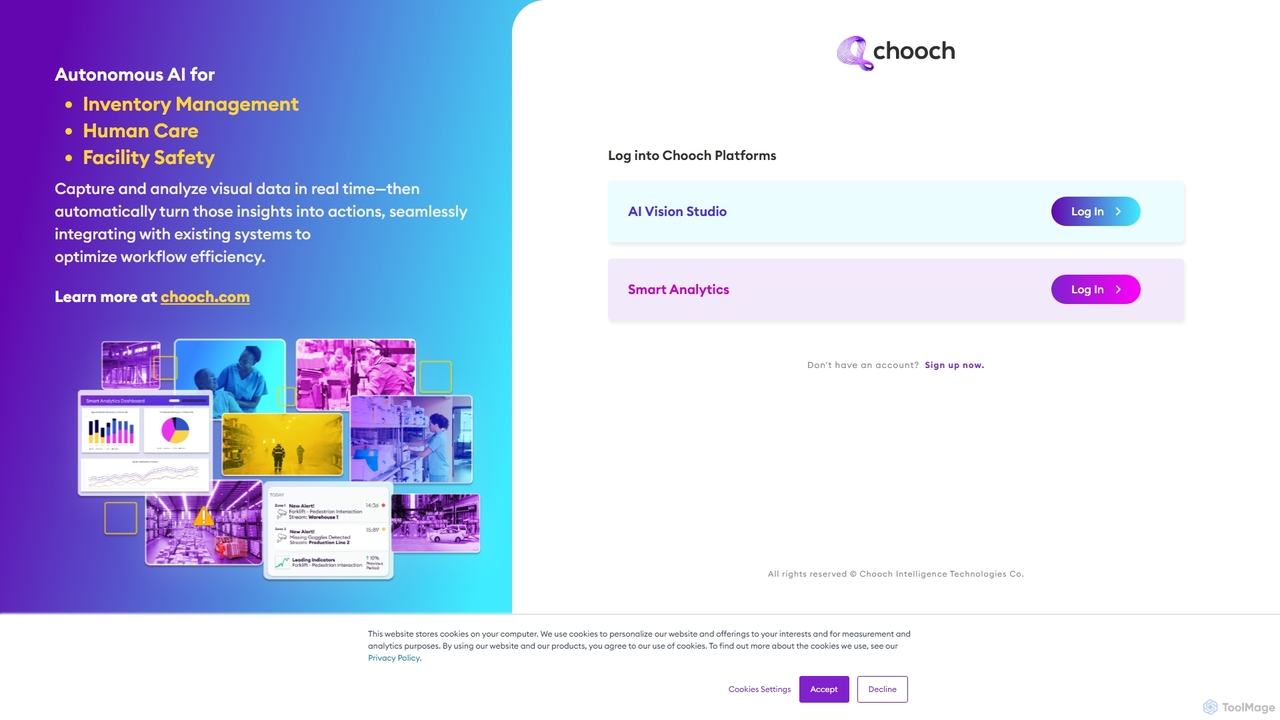
Chooch is an advanced AI computer vision platform that enables real-time analysis of visual data from any camera …

3.4K

About Safety Monitoring

AI Safety Monitoring tools are a specialized class of software within healthcare that use machine learning to proactively identify, track, and predict potential health risks and adverse events. These tools analyze vast datasets, including electronic health records (EHRs), clinical trial data, and real-world evidence, to detect subtle patterns that may indicate safety concerns. Their primary value lies in enhancing patient safety, improving pharmacovigilance, and ensuring regulatory compliance. Unlike traditional methods, these AI systems offer real-time analysis and predictive alerts, enabling early intervention before harm occurs.

Core Features

  • Adverse Event Detection: Automatically identifies potential adverse reactions or safety incidents from unstructured text like clinical notes or patient reports.
  • Risk Stratification: Classifies patients or populations based on their risk levels for specific safety events, such as hospital-acquired infections or falls.
  • Predictive Analytics: Forecasts the likelihood of future safety events using historical and real-time data, enabling preventative action.
  • Signal Detection: Analyzes large-scale data to discover new, unexpected safety signals or correlations related to drugs or medical devices.

Use Cases

These tools are crucial for pharmaceutical companies conducting post-market drug surveillance (pharmacovigilance), hospitals monitoring in-patient safety, and clinical research organizations (CROs) ensuring participant safety during trials. They help automate the detection of safety issues that are difficult to spot through manual review alone.

How to Choose

When selecting an AI Safety Monitoring tool, consider its data source compatibility with your existing systems (e.g., EHR, CTMS). Verify its compliance with healthcare regulations like HIPAA and FDA guidelines. Assess the model's transparency and explainability (XAI), and ensure it can scale to handle growing data volumes.

Safety MonitoringUse Cases

1

Automating Adverse Event Reporting in Pharmacovigilance

A drug safety team at a pharmaceutical company uses an AI Safety Monitoring tool to continuously scan millions of data points from sources like medical literature, social media, and electronic health records. The system's natural language processing (NLP) capabilities automatically identify and classify potential adverse drug reactions (ADRs). This process reduces manual review time by over 70%, allowing safety officers to focus on investigating the most critical signals and ensuring faster regulatory reporting.

2

Predicting In-Hospital Patient Fall Risk

A hospital's quality improvement team implements an AI monitoring system integrated with its Electronic Health Record (EHR). The system analyzes real-time patient data, including age, medications, diagnoses, and mobility scores. It generates a dynamic risk score for each patient, alerting nursing staff via their mobile devices when a patient's fall risk becomes critical. This allows for timely interventions like bed alarms or assisted movement, leading to a measurable reduction in fall incidents across the facility.

3

Real-Time Safety Monitoring in Clinical Trials

A Clinical Research Organization (CRO) uses an AI platform to oversee a multi-center clinical trial. The tool aggregates and analyzes safety data from all trial sites in real-time, including lab results, patient-reported outcomes, and adverse event logs. The system automatically flags statistical anomalies or potential Serious Adverse Events (SAEs) that might be missed in periodic reviews. This enables the central safety committee to investigate potential issues immediately, enhancing participant protection and ensuring trial integrity.

4

Monitoring Medical Device Post-Market Surveillance

A medical device manufacturer employs an AI tool to analyze post-market surveillance data for its new implantable device. The system processes data from device registries, customer complaints, and service logs. It identifies patterns of device malfunction or user-related safety issues that are not immediately obvious. For instance, it might detect a higher-than-expected failure rate in a specific patient demographic, prompting a targeted investigation and potentially preventing a large-scale recall.

5

Early Detection of Sepsis in Intensive Care Units

An ICU team receives alerts from an AI system that continuously monitors patient vital signs, lab results, and clinical notes from the EHR. The system's predictive algorithm identifies subtle combinations of factors that indicate the early onset of sepsis, often hours before it becomes clinically apparent. This early warning allows physicians to initiate treatment protocols sooner, significantly improving patient outcomes and reducing mortality rates associated with sepsis.

6

Monitoring for Public Health Threats and Outbreaks

A public health agency uses an AI surveillance platform to analyze anonymized data from hospital admissions, emergency room visits, and social media trends. The tool is trained to detect unusual clusters of symptoms or keywords that could signal an emerging infectious disease outbreak or an environmental health hazard. By identifying these patterns early, the agency can deploy resources for investigation and public communication more effectively, potentially containing a threat before it spreads widely.

Safety MonitoringFrequently Asked Questions