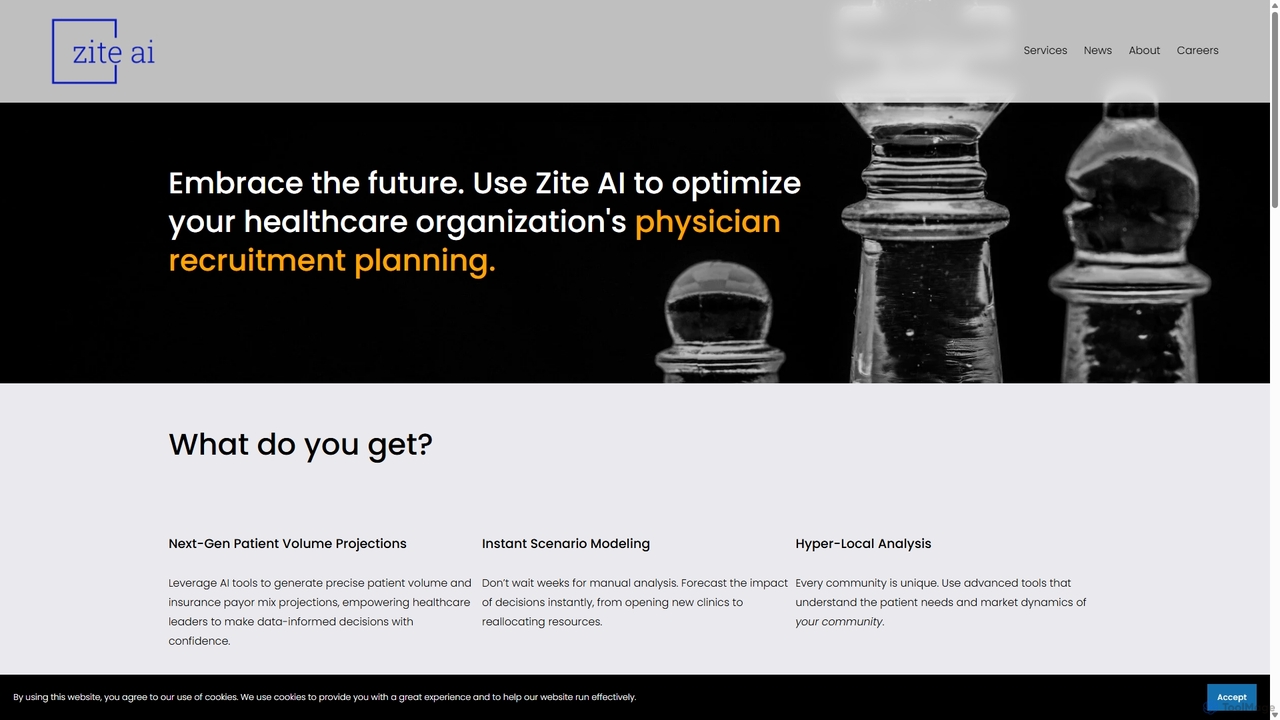
AI Strategic Planning tools for healthcare are a specialized class of software that uses predictive analytics and simulation to guide long-term decision-making for medical organizations. These tools analyze vast datasets, including patient demographics, clinical outcomes, and market trends, to forecast future scenarios and identify growth opportunities. They empower hospital administrators and executives to develop data-driven strategies for service expansion, resource allocation, and financial sustainability. This approach moves beyond traditional spreadsheets by offering dynamic modeling and risk assessment capabilities.
Core Features
- Predictive Forecasting: Analyzes historical data to predict future patient volumes, disease prevalence, and resource demands.
- Scenario Modeling & Simulation: Creates digital models of a healthcare system to test the impact of strategic decisions before implementation.
- Market Opportunity Analysis: Identifies underserved patient populations and gaps in competitor services to guide expansion.
- Resource Optimization: Recommends optimal allocation of staff, beds, and capital equipment for maximum efficiency.
- Financial Viability Assessment: Models the long-term financial implications of new service lines or technology investments.
Use Cases
These tools are primarily used by C-level executives, hospital administrators, financial planners, and public health strategists in healthcare systems. For instance, a hospital network might use them to plan the location of a new specialty clinic, while a public health agency could model resource distribution for a potential pandemic.
How to Choose
When selecting a tool, consider its data integration capabilities (EHR, financial systems), the sophistication of its predictive models, and its compliance with healthcare regulations like HIPAA. Also, evaluate the user-friendliness of its dashboard for non-technical executives and the vendor's specific expertise in the healthcare sector.