
Human Resources Best in category 1 results Compensation And Benefits AI Tool

Popular AI tools in the Compensation And Benefits field of Human Resources include Tiered, etc., helping you quickly improve efficiency.

Tiered

Tiered

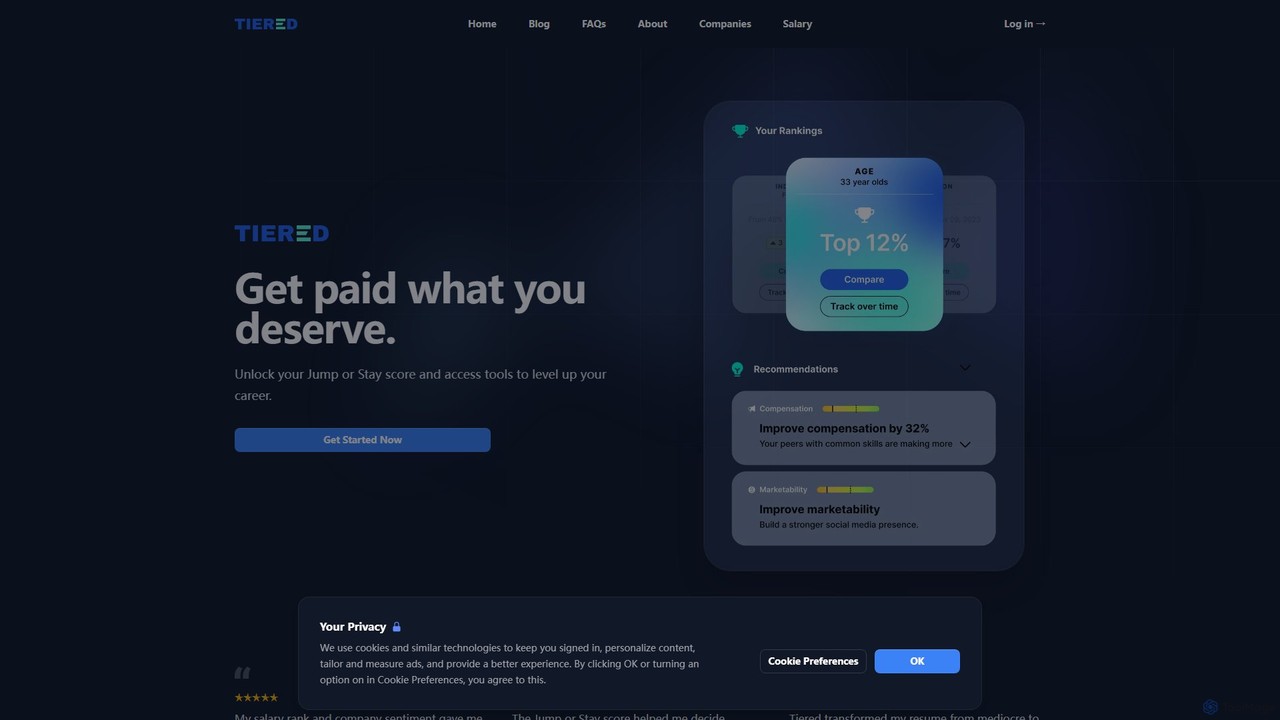
Tiered is an AI-driven career advisor that empowers professionals with data-backed insights. It calculates your 'Jump or Stay' …

7.2K

About Compensation And Benefits

AI Compensation and Benefits tools are specialized platforms that use data analytics and machine learning to help organizations design, manage, and optimize employee remuneration packages. These tools analyze vast datasets, including market salary benchmarks and internal performance metrics, to automate complex calculations and provide data-driven insights. Their primary value lies in creating fair, competitive, and compliant compensation strategies that attract and retain top talent. As a key component of Human Resources technology, they focus specifically on the financial and non-financial rewards that constitute an employee's total compensation.

Core Features

  • Salary Benchmarking: Utilizes real-time market data to recommend competitive salary ranges for various roles and locations.
  • Pay Equity Analysis: Identifies and helps rectify wage gaps based on factors like gender, ethnicity, or role without bias.
  • Benefits Optimization: Models different benefits packages to find the optimal mix that maximizes employee satisfaction within budget constraints.
  • Commission & Bonus Automation: Automates the calculation of complex, variable pay structures, such as sales commissions and performance bonuses.
  • Total Rewards Communication: Generates personalized statements that clearly illustrate the full value of an employee's compensation, including salary, benefits, and equity.

Applicable Scenarios

These tools are essential for HR departments, compensation specialists, and business leaders in mid-to-large enterprises. They are particularly valuable in competitive industries like tech and finance for attracting talent, and for global companies managing complex pay scales across different regions. Use cases range from annual salary reviews and bonus cycle management to ensuring compliance with pay transparency laws.

Selection Criteria

When choosing a tool, evaluate the quality and scope of its market data sources. Assess its integration capabilities with your existing HRIS and payroll systems. Consider the platform's flexibility to customize compensation rules and workflows to match your company's philosophy. Finally, prioritize tools with robust analytics for pay equity audits and compliance reporting.

Compensation And BenefitsUse Cases

1

Design Competitive Salary Structures

An HR manager at a fast-growing tech startup needs to attract senior engineers in a competitive market. Using an AI compensation tool, they input the job role, seniority level, and location. The AI instantly analyzes real-time salary data from thousands of sources, providing a recommended salary band that is competitive yet within budget. It also models the impact of offering equity options, allowing the manager to create a compelling total rewards package that reduces hiring time and attracts higher-caliber candidates.

2

Conduct Proactive Pay Equity Audits

A large corporation's compliance officer is tasked with ensuring fair pay across its 10,000 employees. They use an AI pay equity tool to analyze payroll data against employee demographics and performance ratings. The system flags statistically significant pay gaps between male and female employees in the marketing department, even when controlling for experience and performance. This allows the company to proactively investigate and adjust salaries before they become a legal or reputational issue, demonstrating a commitment to fairness.

3

Automate Complex Sales Commission Calculations

A sales operations manager for a software company struggles with manually calculating commissions for a 100-person sales team with a multi-tiered commission structure. By implementing an AI-powered commission tool, they can set up complex rules based on deal size, product type, and quota attainment. The system automatically calculates payouts in real-time as deals are closed, providing a transparent dashboard for salespeople to track their earnings. This eliminates calculation errors, reduces administrative work by over 80%, and boosts sales team morale.

4

Model Annual Compensation Review Cycles

A compensation analyst is preparing for the annual salary review process for 5,000 employees. Using an AI tool, they can model different budget scenarios, such as a 3% overall budget increase. The AI allocates the budget based on customizable rules, factoring in employee performance, position in salary range (compa-ratio), and market adjustments. The platform provides managers with data-driven recommendations for individual raises, ensuring a fair and consistent process across the organization and saving weeks of manual spreadsheet work.

5

Generate Personalized Total Rewards Statements

To improve employee retention, an HR department wants to better communicate the full value of its compensation packages. They use an AI tool to automatically generate personalized Total Rewards Statements for each employee. The tool pulls data from HRIS, payroll, and benefits providers to create a visual summary of salary, bonuses, health insurance value, retirement contributions, and stock options. These statements are delivered electronically, helping employees understand their true earning potential and increasing appreciation for their overall package, which has been shown to boost loyalty.

6

Optimize Employee Benefits Packages

A benefits manager is tasked with designing a new benefits plan that appeals to a diverse workforce without increasing costs. They use an AI benefits optimization tool, which surveys employees on their preferences and analyzes demographic data. The AI then models hundreds of package combinations of health, dental, wellness, and retirement plans. It identifies a plan that reallocates funds from less-valued benefits to more desired ones, like mental health support and flexible work stipends, ultimately increasing employee satisfaction by 15% with no change in overall budget.

Compensation And BenefitsFrequently Asked Questions