WellHR
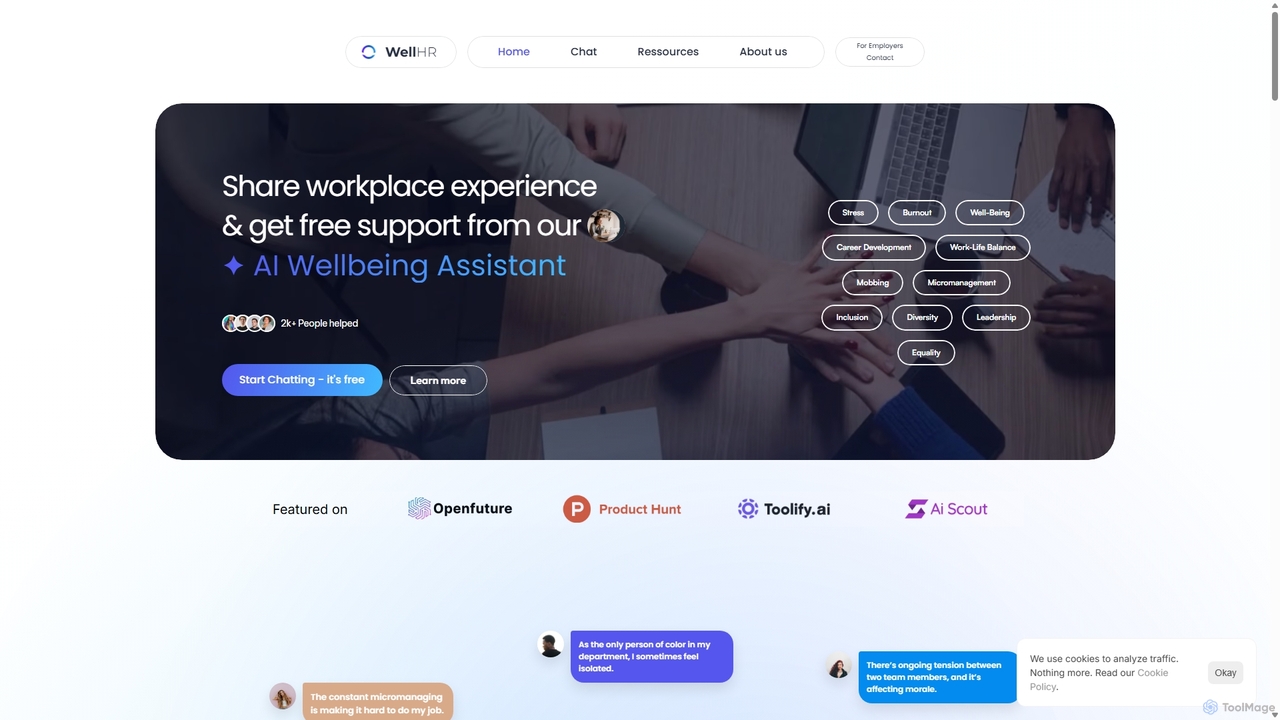
WellHR is an AI-powered wellbeing assistant that provides a safe, anonymous platform for employees to share workplace experiences. …
WellHR is an AI-powered wellbeing assistant that provides a safe, anonymous platform for employees to share workplace experiences. It offers instant support and guidance on issues like stress, burnout, and career development, while enabling anonymous feedback to HR departments to foster a healthier work environment.
About Employee Wellbeing
Employee Wellbeing tools are AI-powered solutions designed to support and enhance the physical, mental, and financial health of an organization's workforce. These tools leverage advanced analytics, natural language processing, and machine learning to proactively identify wellbeing risks, offer personalized support, and foster a positive work environment. By integrating into existing HR frameworks, they help companies cultivate a resilient and engaged employee base, ultimately contributing to higher productivity and retention.
Core Features
- Proactive Risk Detection: AI analyzes data patterns to identify early signs of stress, burnout, or disengagement among employees.
- Personalized Support & Resources: Delivers tailored recommendations for mental health services, physical activity, financial planning, and professional development.
- Sentiment Analysis: Monitors employee feedback and communication channels (anonymously) to gauge overall morale and identify areas for improvement.
- Work-Life Balance Optimization: Provides insights and tools to help employees manage workloads, optimize schedules, and prevent overwork.
- Anonymous Feedback & Insights: Offers secure platforms for employees to share concerns, which AI then aggregates into actionable insights for HR.
Use Cases
HR departments utilize these tools to gain a holistic view of employee health trends, enabling them to implement targeted interventions and support programs. Employees benefit from accessible, confidential resources that address their individual wellbeing needs. Leadership can leverage aggregated, anonymized data to make informed decisions about workplace policies and culture, fostering a more supportive and productive environment for everyone.
How to Choose
When selecting an AI Employee Wellbeing tool, prioritize data privacy and security features, ensuring compliance with regulations like GDPR. Evaluate the breadth of wellbeing aspects covered (mental, physical, financial, social) and the tool's ability to integrate seamlessly with existing HRIS. Consider the level of personalization offered, the user-friendliness for employees, and the quality of analytics and reporting provided to HR teams.

Employee WellbeingUse Cases
Proactive Identification of Burnout Risks
HR managers can utilize AI Employee Wellbeing tools to analyze anonymized communication patterns, workload data, and feedback surveys. The AI identifies subtle shifts or indicators that suggest an increased risk of burnout within specific teams or individuals. This allows HR to proactively offer support, adjust workloads, or recommend stress management resources before issues escalate, fostering a healthier and more sustainable work environment.
Personalized Mental Health Resource Recommendations
Employees seeking mental health support can interact with an AI wellbeing assistant. Based on their (anonymous) input regarding stress levels, mood, and preferences, the AI recommends tailored resources such as meditation apps, counseling services, or relevant articles. This personalized approach ensures employees receive relevant and timely support, improving access to mental health care and fostering a culture of self-care within the organization.
Enhancing Employee Engagement Through Feedback Analysis
Organizations can deploy AI Employee Wellbeing tools to collect and analyze anonymous employee feedback from various sources, such as pulse surveys and suggestion boxes. The AI processes this qualitative data to identify recurring themes, sentiment trends, and actionable insights related to engagement and satisfaction. HR teams then use these insights to design targeted initiatives, improve workplace policies, and communicate more effectively with employees, leading to higher engagement rates and a more positive company culture.
Optimizing Work-Life Balance with AI Coaching
Employees struggling with work-life balance can leverage AI-powered coaching modules within wellbeing platforms. These modules analyze individual work habits, meeting schedules, and self-reported stress levels to provide personalized recommendations. For example, the AI might suggest blocking focus time, scheduling short breaks, or identifying periods for deep work, helping employees manage their time more effectively and reduce the risk of overwork, thereby improving overall wellbeing.
Facilitating Financial Wellness Education
Companies can use AI Employee Wellbeing tools to offer personalized financial wellness education. The AI assesses an employee's financial situation (anonymously, with consent) and provides access to relevant educational content, budgeting tools, or financial advisor referrals. This helps employees improve their financial literacy, manage debt, and plan for the future, reducing financial stress which is a significant contributor to overall wellbeing issues and improving their sense of security.
Monitoring and Improving Physical Activity Habits
AI Employee Wellbeing platforms can integrate with wearable devices or self-reported data to monitor employees' physical activity levels. The AI then provides personalized nudges, challenges, and recommendations for exercise routines or healthy habits. This encourages employees to maintain an active lifestyle, offers insights into collective activity trends for HR, and can be used to organize company-wide wellness challenges, promoting physical health and team cohesion.