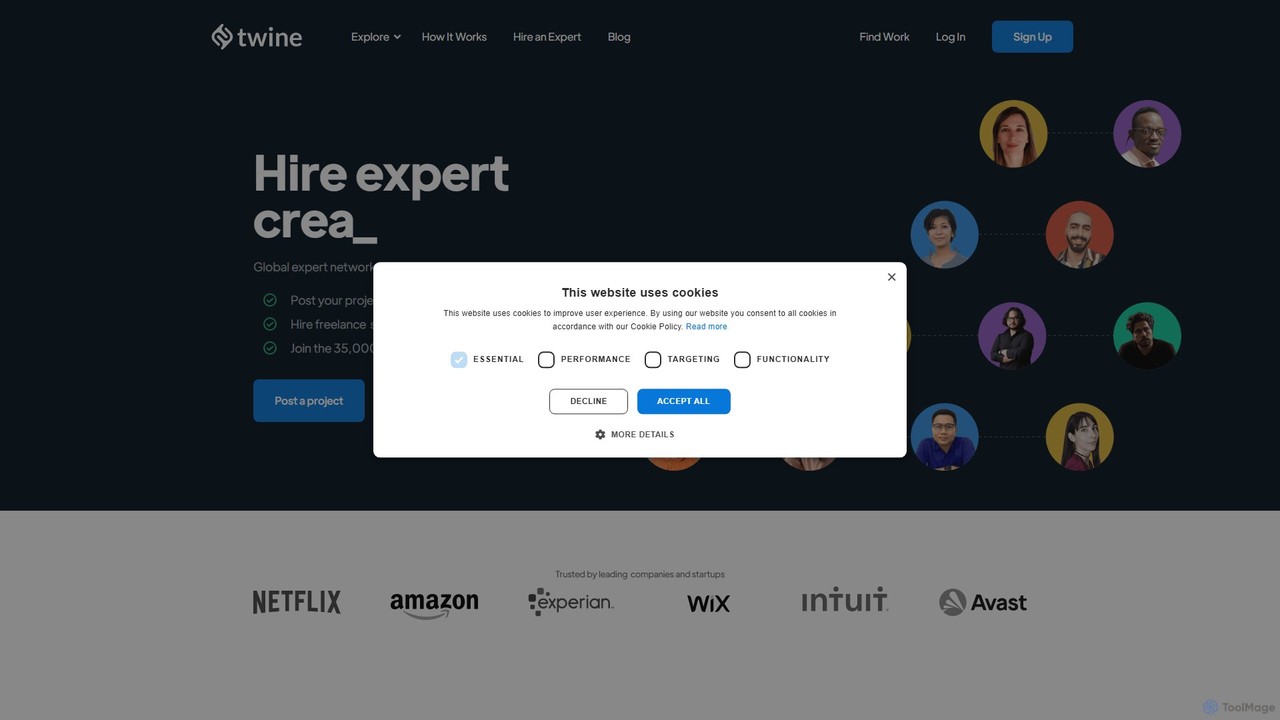
Freelance Platforms are online marketplaces that connect independent professionals with clients seeking specialized skills and services. These platforms leverage advanced algorithms and AI-driven matching to efficiently pair talent with project requirements. They streamline the hiring process, project management, and payment systems, offering flexible work solutions for businesses and diverse opportunities for freelancers.
Core Features
- AI-Powered Matching: Utilizes algorithms to connect clients with the most suitable freelancers based on skills, experience, and project needs.
- Secure Payment Systems: Provides escrow services and secure transaction methods, ensuring timely payments for freelancers and project completion for clients.
- Project Management Tools: Offers integrated dashboards, communication channels, and milestone tracking to facilitate smooth project execution.
- Talent Vetting & Reviews: Features robust profiles, skill assessments, and client review systems to help clients evaluate freelancer credibility and performance.
- Dispute Resolution: Provides mechanisms and support for resolving conflicts between clients and freelancers, ensuring fair outcomes.
Use Cases
Businesses of all sizes, from startups to large enterprises, use freelance platforms to quickly scale their teams for specific projects, access niche expertise, or manage fluctuating workloads without the overhead of traditional hiring. Individual entrepreneurs and small businesses also benefit by finding affordable, high-quality talent for tasks like graphic design, content writing, or web development.
How to Choose
When selecting a freelance platform, consider the platform's specialization (e.g., tech, creative, general), its fee structure for both clients and freelancers, the quality and breadth of its talent pool, and the robustness of its project management and dispute resolution features. Evaluate user reviews and the platform's reputation for reliability and support.