ToolMage
Sign in

Best 2 Api AI tools for Image Generation

Popular Api AI tools in Image Generation include FluxAPI and MidAPI, helping you work more efficiently.

MidAPI
Freemium

MidAPI

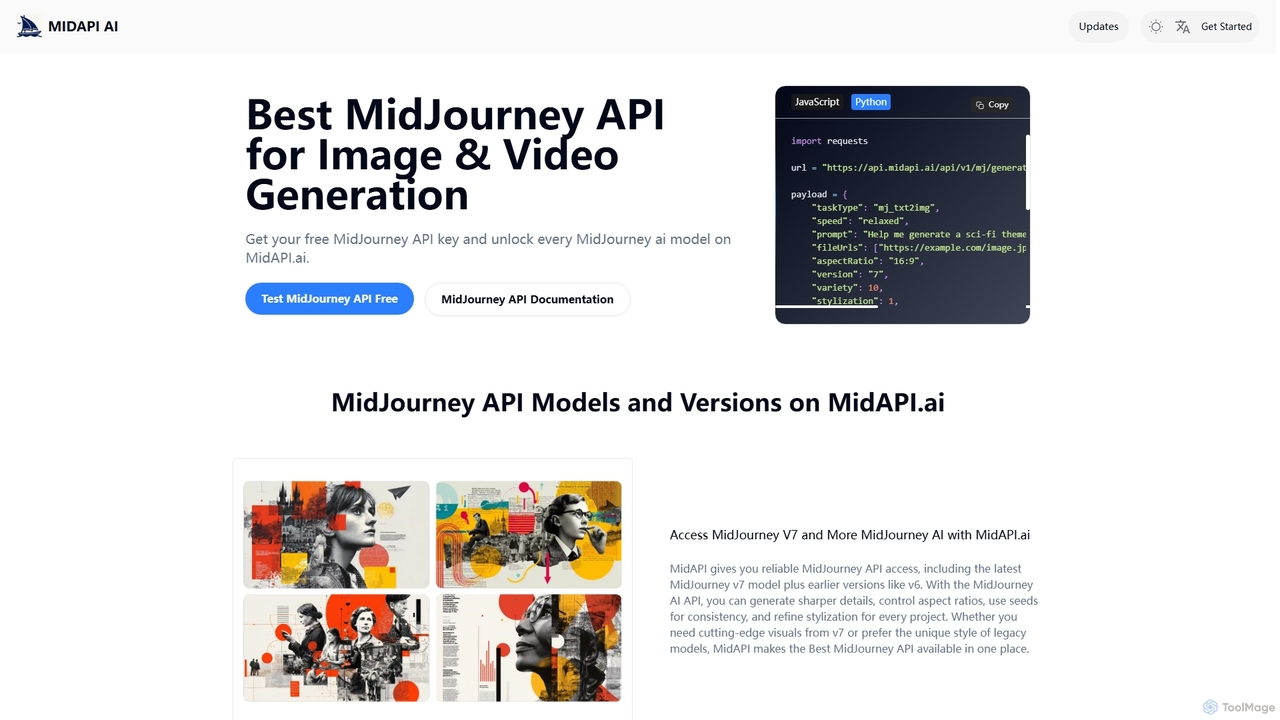
MidAPI provides reliable API access to MidJourney's powerful AI models, including the latest V7 for image generation and V1 for video creation. It enables developers and creators to programmatically generate high-quality images and animated clips, offering a free playground for testing.

Api & Integration
Visits 4.2KFavorites 173Likes 157
FluxAPI
Freemium

FluxAPI

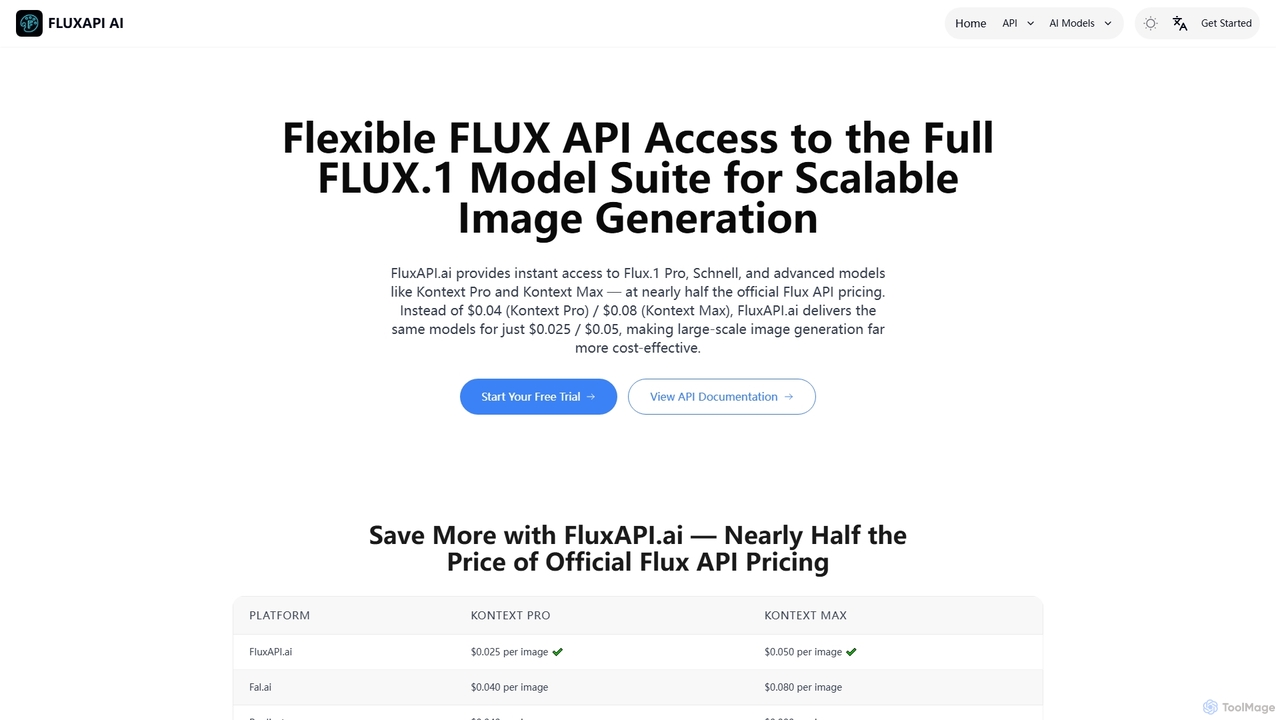
FluxAPI provides developers with programmatic access to the FLUX.1 model family, enabling fast and affordable text-to-image generation and advanced image-to-image editing. It offers a suite of specialized AI models like Kontext Pro and Kontext Max at competitive, credit-based pricing, making large-scale visual content creation efficient and cost-effective.

Visual Content
Visits 12.2KFavorites 143Likes 144

About Api

Image Generation APIs provide programmatic access for developers to integrate AI-powered image creation into their applications and services. These APIs function as a bridge, allowing software to send text prompts or image inputs and receive newly generated visuals without a graphical user interface. This enables the automation of creative workflows and the development of custom tools with powerful visual capabilities. By leveraging these services, developers can build scalable solutions that generate unique images on demand.

Core Features

  • Programmatic Access: Integrate image generation via standard HTTP requests, compatible with various programming languages.
  • Parameter Control: Offers fine-grained control over generation settings like model selection, resolution, style, and negative prompts.
  • Scalable Infrastructure: Built to handle high volumes of requests, ensuring reliable performance for applications with many users.
  • Asynchronous Processing: Supports webhooks or callbacks to notify your application when a time-consuming image generation task is complete.
  • Diverse Model Access: Provides access to a range of foundational models, such as Stable Diffusion variants, through a single interface.

Use Cases

These APIs are primarily used by developers and businesses. Common applications include e-commerce platforms automatically creating product mockups, social media tools generating unique post visuals, gaming studios producing in-game assets, and marketing platforms embedding creative generation into their campaign builders.

How to Choose

When selecting an Image Generation API, evaluate the quality and style of the available models. Prioritize clear, comprehensive documentation and the availability of SDKs for your preferred programming language. Analyze the pricing structure (per-call vs. subscription) and consider performance metrics like generation speed and API uptime. Finally, check for support of advanced features like inpainting, outpainting, or ControlNet if your project requires them.

Featured tool rankings

Api use cases

1

Automate E-commerce Product Mockups

E-commerce businesses can integrate an Image Generation API into their backend systems. When a new product is added, the system automatically sends the product photo and a prompt (e.g., 'product on a marble countertop with soft morning light') to the API. The API returns multiple lifestyle images and mockups, eliminating the need for expensive photoshoots and enabling rapid creation of diverse marketing visuals for different platforms.

2

Powering Custom Avatar Creator Apps

Mobile app developers can use an Image Generation API as the core engine for an avatar creation application. Users upload a photo of themselves or select characteristics, and the app sends this data to the API. The API generates unique, stylized avatars in various themes (e.g., sci-fi, fantasy, cartoon). This provides a dynamic and engaging user experience without the developer needing to build and maintain complex AI models.

3

Dynamic Content for Social Media Schedulers

A social media management platform can integrate an Image Generation API to offer its users unique visual content. When a user schedules a post, they can input a text description, and the platform's backend calls the API to generate a relevant and original image. This helps content creators overcome creative blocks and ensures their social media feeds remain visually fresh and engaging, improving audience retention.

4

Procedural Asset Generation in Game Development

Game developers can use an Image Generation API during the development process to rapidly create textures, concept art, or in-game items like icons and portraits. By sending descriptive prompts, a small team can generate a vast library of assets for prototyping or even final use. This significantly speeds up the creative workflow and allows for more visual variety within the game world.

5

Personalized Marketing Campaign Visuals

A marketing automation platform can leverage an Image Generation API to create personalized images for email or ad campaigns at scale. The system can combine user data (e.g., name, location) with a template prompt to generate a unique image for each recipient. For example, an ad for a travel agency could feature an image of a destination with the user's name subtly integrated, increasing engagement and conversion rates.

6

Internal Design Prototyping Tool

A large design agency can build an internal web tool powered by an Image Generation API. Designers can use this tool to quickly visualize concepts for ad campaigns, logos, or website layouts by simply typing descriptions. This allows for rapid iteration and brainstorming, enabling the team to explore more creative directions in less time before committing to a specific design in tools like Photoshop or Figma.

Api FAQ

What is an Image Generation API?

An Image Generation API is a service that allows developers to programmatically create images using AI models. Instead of using a website interface, developers send requests with text prompts or other parameters via code and receive an image file in return. This enables the integration of AI image creation directly into software, websites, and automated workflows.

How do I choose the right Image Generation API?

To choose the right API, consider these factors:

  • Model Quality: Does the API provide models that produce the visual style you need?
  • Documentation & SDKs: Is the documentation clear and are there libraries for your programming language?
  • Pricing: Does the cost structure (e.g., per-image, subscription) fit your budget and usage volume?
  • Performance: Evaluate the API's speed, reliability (uptime), and rate limits.
  • Features: Check if it supports advanced functionalities like image-to-image, inpainting, or custom model training.
What's the difference between an Image Generation API and a web-based generator?

The main difference is the user. A web-based generator is a tool for end-users (artists, marketers) with a graphical interface for manual image creation. An Image Generation API is a tool for developers to build image generation capabilities into their own applications. The API is controlled by code for automated, scalable, and integrated use cases, while the web tool is for one-off, manual creations.

Who are Image Generation APIs for?

Image Generation APIs are primarily for software developers, engineers, and tech-savvy businesses. They are used by those who want to build applications or automate processes that require on-demand image creation, such as e-commerce platforms, social media tools, game development studios, and marketing automation companies. They are not intended for casual users who just want to create a few images.

What programming languages can I use with an Image Generation API?

Most Image Generation APIs are based on REST principles, meaning they can be used with any programming language that can make HTTP requests. This includes popular languages like Python, JavaScript (Node.js), Java, C, PHP, Go, and Ruby. Many providers also offer official or community-supported Software Development Kits (SDKs) to simplify integration in these languages.