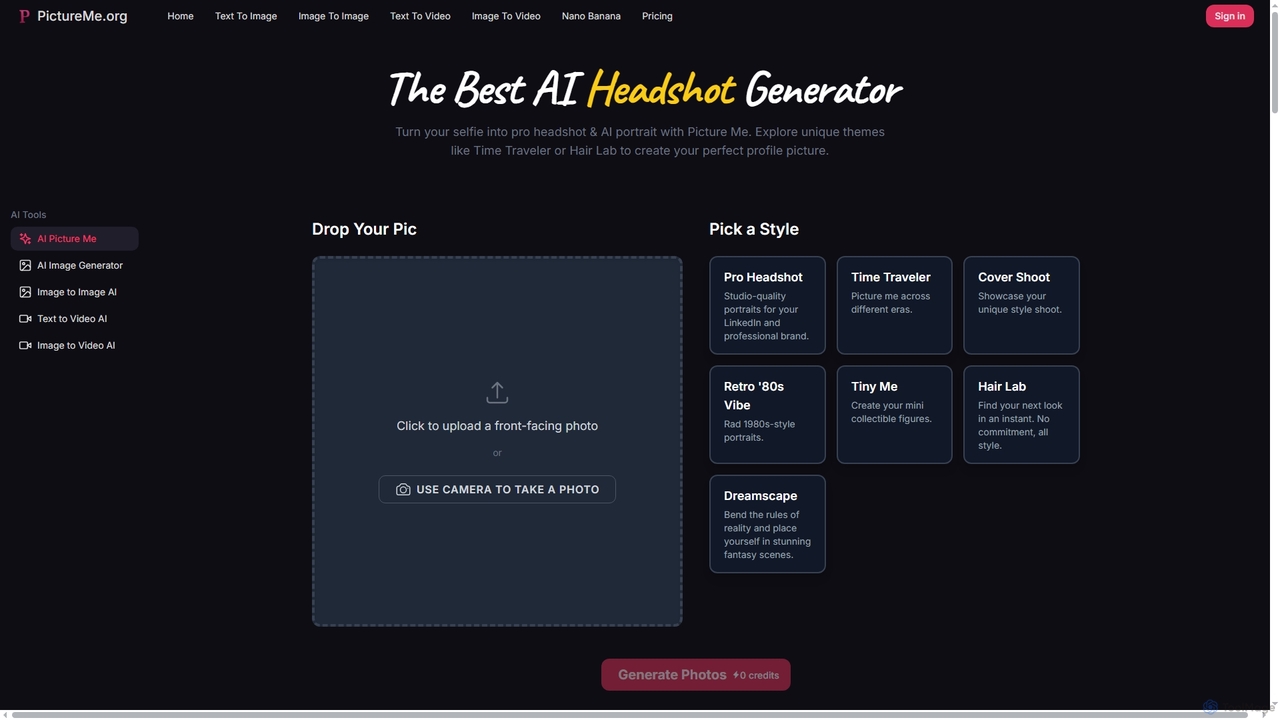
Portrait Generation tools are AI-powered platforms specifically designed to create realistic or stylized human faces and figures. Leveraging advanced generative adversarial networks (GANs) and diffusion models, these tools can produce diverse portraits from text prompts, reference images, or specific parameters. They offer immense value for artists, designers, marketers, and individuals seeking unique visual representations, enabling rapid iteration and customization of human imagery for various digital and creative projects. This specialized subset of image generation focuses on the intricate details of human likeness, from facial expressions to unique characteristics.
Core Features
- Realistic Face Generation: Create highly lifelike human faces with varied ages, genders, and ethnicities.
- Style Transfer & Customization: Apply artistic styles, adjust features like hair, eyes, and clothing, or generate portraits based on specific aesthetic preferences.
- Expression & Pose Control: Manipulate facial expressions (e.g., happy, sad, surprised) and body poses to convey desired emotions or actions.
- Age & Gender Modification: Easily adjust the apparent age or gender of generated subjects, offering flexibility for character development.
- Background Integration: Seamlessly blend generated portraits into various backgrounds or create transparent cutouts for easy compositing.
Use Cases
These tools are widely adopted in fields like game development for creating unique non-player characters, in marketing for generating diverse model imagery without photoshoots, and in social media for personalized avatars. They also serve digital artists for concept art and illustrators needing specific character designs.
How to Choose
When selecting a Portrait Generation tool, consider the desired level of realism and stylistic flexibility. Evaluate the range of customization options for facial features, expressions, and clothing, as well as the ability to control age, gender, and ethnicity. Check for ease of use, integration with existing workflows, and the quality of output for commercial or personal projects. Finally, assess the pricing model and the availability of advanced features like pose control or background manipulation.