Imamind
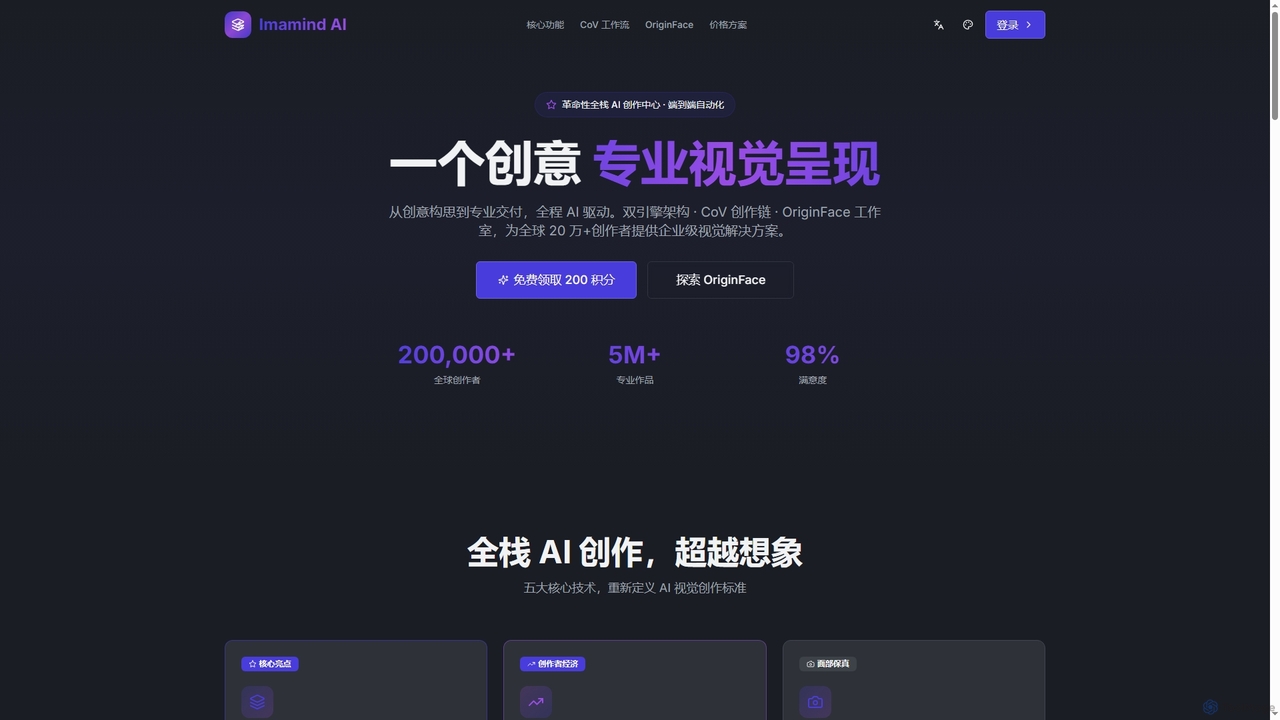
Imamind is a revolutionary full-stack AI visual design platform that automates the entire creative process from concept to …
Imamind is a revolutionary full-stack AI visual design platform that automates the entire creative process from concept to professional delivery. It offers dual-engine architecture, intelligent AI workflows, precise face fidelity for portraits, and advanced AI editing tools, empowering over 200,000 creators globally.
About Visual Design
AI Visual Design tools are a specialized category of image generators focused on creating structured, purpose-driven visual assets for commercial use. They leverage generative AI to automate the production of marketing materials, brand content, and product mockups, often within template-based workflows. This allows users, including non-designers, to rapidly produce high-quality, on-brand graphics for specific channels like social media, advertisements, and websites. These tools prioritize consistency, efficiency, and commercial application over the purely artistic exploration found in general image generators.
Core Features
- Template-Based Generation: Creates designs from a vast library of customizable templates for social media posts, ads, banners, and more.
- Brand Kit Integration: Automatically applies your brand's logos, color palettes, and fonts to ensure consistency across all visuals.
- AI Mockup Creation: Generates realistic mockups by placing product images or UI designs onto devices, apparel, and packaging.
- Multi-Format Output: Produces variations of a single design optimized for different platforms and aspect ratios simultaneously.
- Scene Composition: Generates custom backgrounds or entire scenes to place products or subjects in specific contexts.
Use Cases
These tools are widely used by marketing teams, e-commerce store owners, social media managers, and startups. For example, a marketer can generate a dozen ad creative variations for A/B testing in minutes, or an e-commerce brand can create an entire catalog of product mockups without a physical photoshoot.
How to Choose
When selecting an AI Visual Design tool, consider the variety and quality of its templates, the robustness of its brand kit features, and its ability to export in required formats. Also, evaluate its ease of use for non-designers and any integrations it offers with marketing platforms or design software.
Visual DesignUse Cases
Automate Social Media Ad Creatives
A social media manager for an e-commerce brand needs to run A/B tests for a new product campaign on Instagram and Facebook. Instead of manually creating dozens of variations, they use an AI Visual Design tool. They upload the product image, input several ad copy headlines, and select a brand kit. The tool instantly generates 20+ ad creatives in various formats (stories, square posts, carousels), each with different layouts, backgrounds, and call-to-action button styles. This reduces design time from days to minutes and provides a wide range of assets for performance testing.
Generate High-Quality E-commerce Product Mockups
An entrepreneur running a print-on-demand store wants to showcase their new t-shirt designs. Without the budget for a professional photoshoot, they use an AI Visual Design tool's mockup feature. They upload their design files (e.g., PNGs) and the tool automatically places them on a wide variety of high-resolution t-shirt mockups, featuring different models, settings, and angles. They can then generate an entire product catalog for their online store and marketing channels in under an hour, achieving a professional look that increases customer trust and conversion rates.
Create Consistent Branding for Presentations
A startup founder needs to create a compelling pitch deck for investors but lacks design skills. Using an AI Visual Design tool with a brand kit feature, they first input their company's logo, primary and secondary colors, and font choices. Then, they use the presentation templates. As they add new slides for different sections (problem, solution, market size), the tool automatically applies the correct branding, ensuring every slide has a consistent and professional look. It can also suggest layouts and generate relevant icons or illustrations that match the brand's aesthetic, saving hours of manual formatting.
Design UI/UX Concept Visuals Rapidly
A UX designer is in the early stages of designing a new mobile app and needs to quickly visualize different interface concepts for stakeholder feedback. They use an AI Visual Design tool to generate various screen layouts based on simple descriptions like "a user profile screen with a large profile picture and a grid of photos." The tool produces multiple design options instantly. The designer can then place these generated screens into realistic smartphone mockups provided by the same tool, creating a polished presentation of the app concept in a fraction of the time it would take with traditional design software.
Produce Unique Blog Post Banners
A content creator manages a blog with multiple new articles published weekly. To improve visual appeal and engagement, they need a unique banner image for each post. Instead of using generic stock photos, they use an AI Visual Design tool. For an article titled "The Future of Remote Work," they input the title and a few keywords. The tool generates several on-brand banner options, incorporating their blog's color scheme and typography. This ensures every article has a fresh, relevant, and professional-looking header image, enhancing the reader's experience without requiring any graphic design work.
Localize Marketing Campaigns Across Regions
A global CPG brand is launching a new beverage and needs to adapt its core visual campaign for markets in North America, Japan, and Brazil. The marketing team uses an AI Visual Design tool to streamline this process. They upload the base campaign template. The AI then helps generate localized versions by swapping background scenes to reflect local environments, changing model ethnicities to be more representative, and adjusting text overlays for different languages and cultural nuances. This allows the team to maintain a consistent global brand identity while ensuring each regional campaign is culturally relevant, all completed in a fraction of the time and cost of traditional agency work.