Best of the Year 6 results Industry Specific AI Tools

Popular AI tools in the Industry Specific field include Aurora Solar、Coperniq、Cogram、Potion AI、Picterra、Aiviue, etc., helping you quickly improve efficiency.

Aiviue

Aiviue

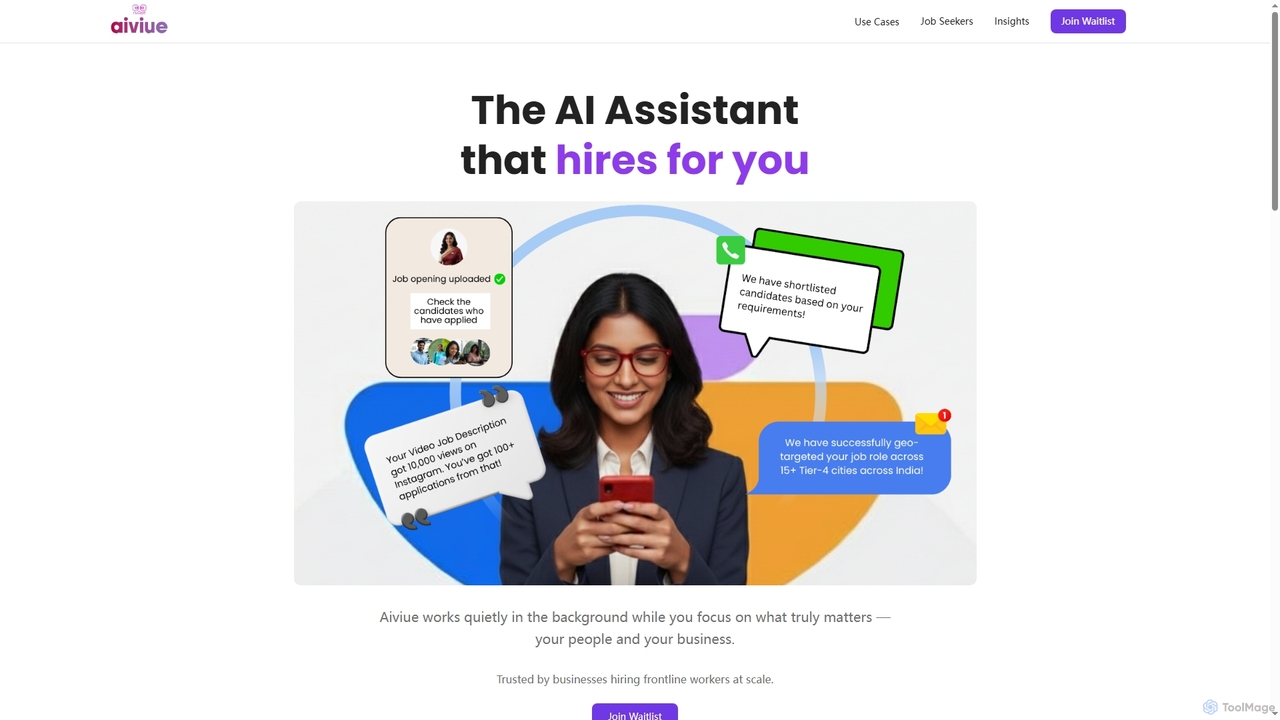
Aiviue is an AI hiring copilot designed to automate and accelerate recruitment for frontline teams across various industries. …

2.2K
Picterra

Picterra

Picterra is a GeoAI platform that enables users to analyze satellite and drone imagery to extract insights. It …

2.8K
Potion AI

Potion AI

Potion AI is an AI-native platform for the beauty and personal care industry, designed to accelerate innovation. It …

6.0K
Aurora Solar

Aurora Solar

Aurora Solar is an all-in-one software platform for solar professionals, streamlining the entire project lifecycle from sales and …

373.1K
Coperniq

Coperniq

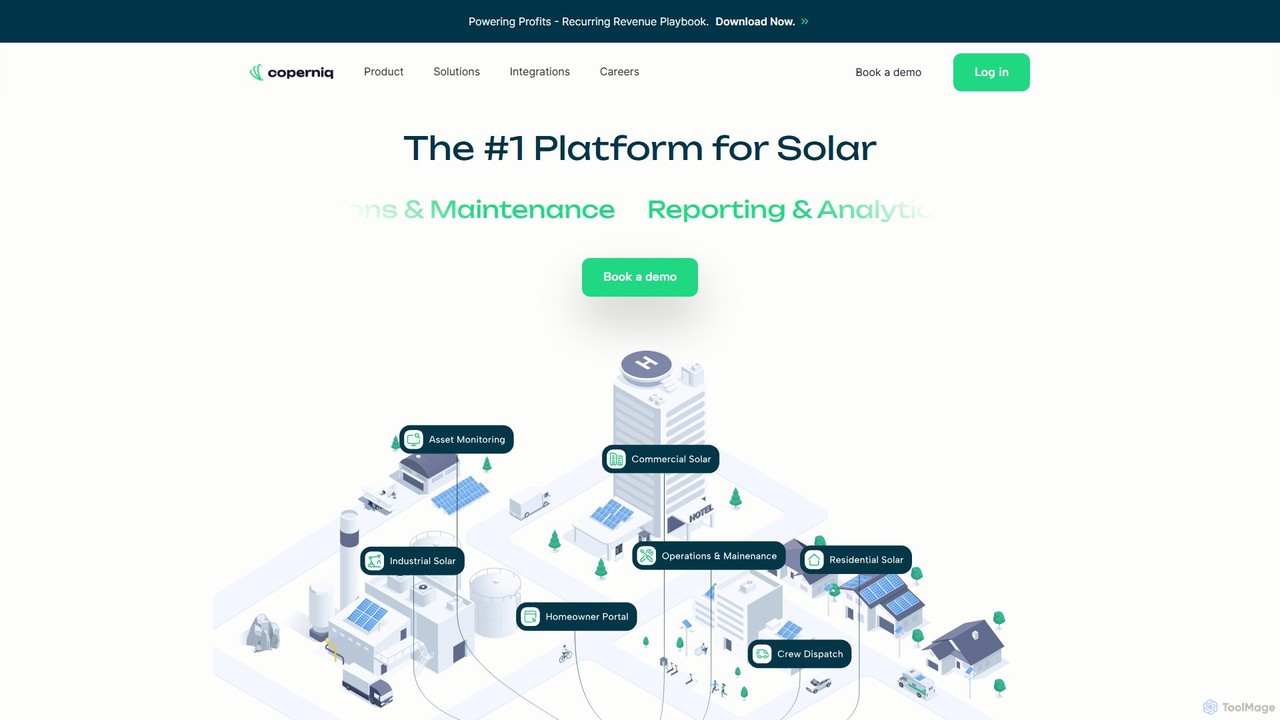
Coperniq is the #1 all-in-one platform for solar installers, providing a comprehensive suite of tools for project management, …

30.4K
Cogram

Cogram

Cogram is an AI-powered platform specifically designed for the Architecture, Engineering, and Construction (AEC) industry. It acts as …

6.0K

About Industry Specific

Industry Specific AI tools are applications engineered to address the unique challenges, data sets, and workflows of a particular sector. These tools are built on models trained with domain-specific information, enabling them to understand specialized terminology and operational contexts with high accuracy. They provide targeted solutions for tasks like medical diagnostics, legal document analysis, or financial fraud detection, offering greater precision than general-purpose AI. The primary advantage is their ability to deliver relevant, compliant, and deeply integrated insights that drive efficiency and innovation within a specific field.

Core Features

  • Domain-Specific Models: Trained on curated datasets from a specific industry, such as legal case law or clinical trial data, for superior contextual understanding.
  • Workflow Integration: Designed to connect seamlessly with existing industry software like Electronic Health Records (EHRs) or legal practice management systems.
  • Regulatory Compliance: Incorporates features to help organizations adhere to strict industry standards, such as HIPAA in healthcare or FINRA in finance.
  • Specialized Terminology Processing: Accurately interprets and utilizes industry-specific jargon, acronyms, and concepts that general models may misunderstand.

Use Cases

These tools are critical in fields requiring deep domain knowledge. For example, in healthcare, they assist radiologists in identifying anomalies in medical scans. In the legal sector, they automate the review of contracts and discovery documents. Financial institutions use them for algorithmic trading and real-time fraud detection, while manufacturers deploy them for predictive maintenance on factory equipment.

How to Choose

When selecting an Industry Specific AI tool, first evaluate its domain accuracy and the quality of its training data. Assess its integration capabilities with your current software stack. Verify that it meets all relevant regulatory and compliance requirements for your sector. Finally, consider the tool's scalability and whether it can be customized or fine-tuned with your organization's proprietary data for enhanced performance.

Industry SpecificUse Cases

1

AI-Powered Medical Image Analysis

A radiologist in a busy hospital uses an AI tool to perform a preliminary analysis of hundreds of CT scans. The tool, trained on millions of anonymized medical images, highlights potential anomalies and areas of concern with a high degree of accuracy. This allows the radiologist to prioritize critical cases, reduce diagnostic time, and improve the overall accuracy of their reports, ultimately leading to faster patient treatment plans. The system integrates directly with the hospital's Picture Archiving and Communication System (PACS).

2

Automated Legal Contract Review

A corporate legal team needs to review a 200-page acquisition agreement under a tight deadline. They use a legal-specific AI tool to analyze the document. The AI instantly identifies non-standard clauses, potential risks, and missing provisions based on the firm's predefined playbooks and historical contract data. This reduces the manual review time by over 70%, minimizes the risk of human error, and allows lawyers to focus on strategic negotiation rather than tedious proofreading.

3

Real-Time Financial Fraud Detection

A financial services company employs an AI platform to monitor millions of credit card transactions per second. The system uses machine learning to analyze transaction patterns, user behavior, and geographical data to identify suspicious activities that deviate from a customer's normal spending habits. When a potential fraudulent transaction is flagged, it triggers an instant alert or an automated block, preventing financial loss for both the customer and the company while maintaining a low false-positive rate.

4

Predictive Maintenance in Manufacturing

A factory manager uses an AI system connected to sensors on their production line machinery. The AI continuously analyzes data on vibration, temperature, and performance to predict potential equipment failures before they occur. The system automatically schedules maintenance tasks during planned downtime, preventing costly unexpected shutdowns. This approach increases equipment uptime, extends the lifespan of machinery, and optimizes the maintenance budget.

5

Personalized Customer Offers in Retail

An e-commerce manager utilizes a retail-focused AI engine to analyze customer browsing history, purchase data, and real-time behavior. The tool generates highly personalized product recommendations and dynamic pricing offers for each individual visitor. This hyper-personalization increases conversion rates, boosts average order value, and improves customer loyalty by creating a more relevant and engaging shopping experience without manual segmentation.

6

Crop Health Monitoring for Agriculture

An agronomist uses an AI platform that processes satellite and drone imagery of large farm fields. The AI analyzes the images to detect early signs of disease, pest infestation, or nutrient deficiencies in specific areas of the crop. This enables targeted application of fertilizers or pesticides, reducing chemical usage, lowering costs, and increasing overall crop yield. The system provides precise, actionable insights for sustainable and efficient farm management.

Industry SpecificFrequently Asked Questions