ToolMage
Sign in

Best 1 Chatbot AI tools for Lead Generation

Popular Chatbot AI tools in Lead Generation include Bot The Builder, helping you work more efficiently.

Bot The Builder
Freemium

Bot The Builder

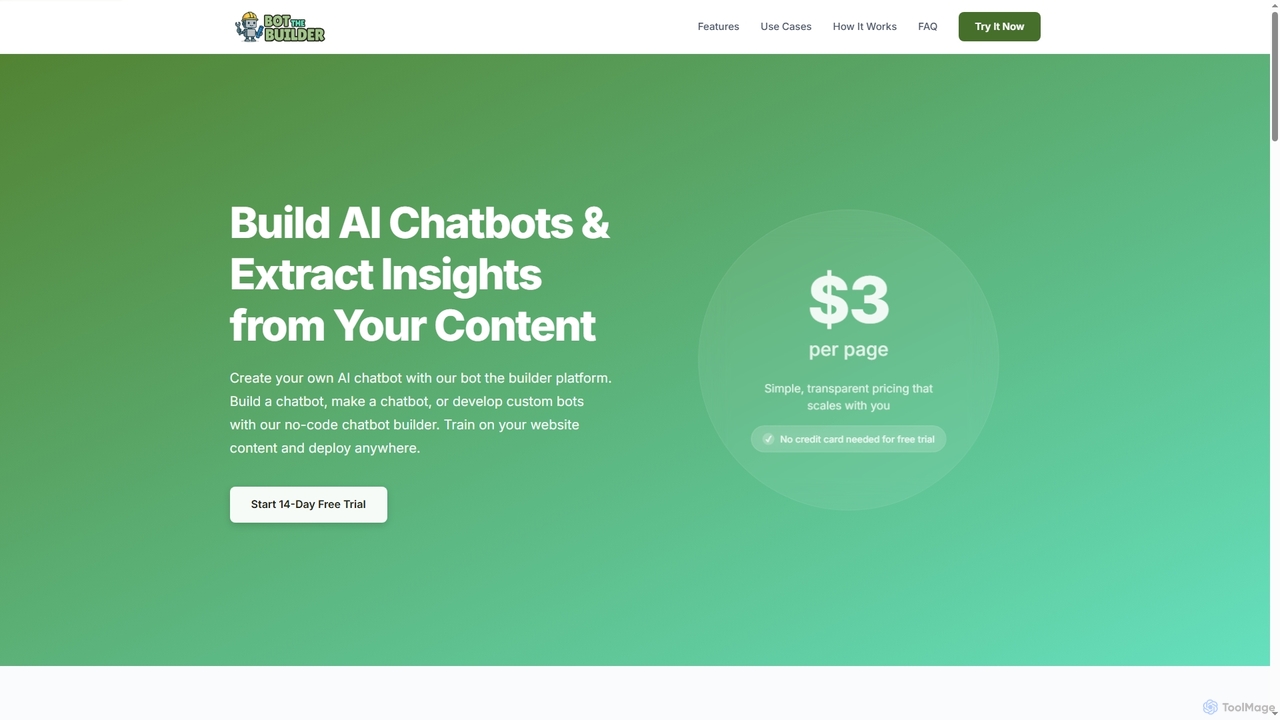
A no-code AI chatbot builder that allows businesses to create and deploy intelligent chatbots trained on their own website content in minutes. Automate customer support, generate leads, and gain insights without any coding skills.

Chatbot
Visits 6.5KFavorites 121Likes 130

About Chatbot

Chatbots are AI-powered conversational agents designed to interact with users in real-time, primarily through text or voice. Leveraging Natural Language Processing (NLP), they understand user queries, provide instant answers, and execute automated tasks. Within the context of lead generation, chatbots proactively engage website visitors, qualify potential customers through targeted questions, and capture contact information 24/7. This automated engagement significantly increases conversion rates by providing immediate assistance and guiding users through the sales funnel.

Core Features

  • 24/7 Automated Engagement: Proactively interacts with website visitors at any time, capturing leads outside of business hours.
  • Lead Qualification: Asks predefined questions to assess a visitor's interest, budget, and needs, filtering for high-quality leads.
  • Appointment Scheduling: Integrates with calendars to book meetings or demos directly within the chat interface.
  • CRM Integration: Automatically syncs captured lead information like names, emails, and conversation history to CRM systems.
  • Personalized Conversations: Uses visitor data, such as browsing history, to tailor conversations and product recommendations.

Use Cases

Chatbots are widely used on websites for B2B SaaS, real estate, and e-commerce, where immediate engagement is crucial for capturing user interest. Marketing managers use them to automate lead capture funnels, while sales development representatives rely on them to pre-qualify prospects and schedule meetings, freeing up time for high-value interactions.

How to Choose

When selecting a chatbot, evaluate its integration capabilities with your existing CRM and marketing tools. Assess the ease of use of its conversation builder for creating and modifying scripts without coding. Consider the sophistication of its NLP for understanding user intent beyond simple keywords. Finally, review its analytics features to track conversation performance, lead quality, and conversion rates.

Chatbot use cases

1

Automate B2B Lead Qualification on SaaS Websites

A marketing manager for a SaaS company implements a chatbot on their pricing page. The bot proactively engages visitors by asking qualifying questions like 'What is your team size?' and 'What is your main business challenge?'. Based on the answers, it identifies high-potential leads and offers to book a demo with a sales representative directly. This process filters out unqualified traffic, automatically syncs lead data into the CRM, and shortens the sales cycle by connecting sales with warm leads faster.

2

Automate Lead Qualification on a Website

A marketing manager for a B2B SaaS company needs to ensure their sales team spends time only on high-quality leads. Instead of a static contact form, they implement a chatbot on their homepage. The chatbot proactively engages visitors, asking a series of qualifying questions such as company size, user's role, and specific challenges. Based on the answers, it scores the lead in real-time. High-scoring leads are immediately offered to book a demo, while others are directed to relevant resources, nurturing them for the future. This process filters out 70% of unqualified traffic, allowing the sales team to focus on prospects with the highest conversion potential.

3

Schedule Real Estate Viewings 24/7

A real estate agent wants to capture leads from property listings, even after business hours. They add a chatbot to each listing page. When a visitor shows interest, the chatbot answers common questions about the property (e.g., square footage, price, availability). It then offers to schedule a viewing by integrating with the agent's calendar. The visitor can select an available time slot directly within the chat interface. This provides immediate service to potential buyers and ensures the agent's calendar is filled with qualified appointments without manual back-and-forth emails.

4

Schedule Property Viewings 24/7

A real estate agency uses a chatbot on its property listing pages. When a visitor shows interest, the bot provides additional details, answers common questions, and asks if they'd like to schedule a viewing. The user can select an available time slot from the agent's calendar directly in the chat. This captures serious inquiries as qualified leads even when agents are unavailable, ensuring no opportunity is missed and improving customer experience.

5

Increase Webinar Registration Conversions

An event marketer aims to boost sign-ups for an upcoming webinar. Instead of a traditional landing page with a form, they use a chatbot as the primary registration tool. The chatbot greets visitors, highlights the key benefits of attending the webinar, and answers questions about the speakers or agenda. It then collects registration details like name and email conversationally, making the process feel more engaging and less like a chore. This interactive approach reduces friction and has been shown to increase registration conversion rates by up to 30% compared to static forms.

6

Generate Leads with Interactive Quizzes

A digital marketing agency uses a chatbot to run an interactive quiz like 'What's Your Marketing Score?'. The bot asks a series of questions about the user's current marketing efforts. To receive their personalized results and a free improvement guide, the user provides their email address. This gamified approach increases engagement, provides value upfront, and generates a list of qualified leads who have already shown interest in improving their marketing.

7

Recover Abandoned Carts and Capture Leads

An e-commerce store manager deploys a chatbot that triggers when a user is about to leave the checkout page with items in their cart. The bot offers a small, time-sensitive discount code to incentivize completion. If the user is still hesitant, it asks for their email to save the cart for later and send a reminder. This strategy not only recovers potentially lost sales but also captures a valuable lead for future email marketing campaigns, turning a near-miss into an opportunity.

8

Capture Leads from Social Media Ads

A digital marketer running a Facebook Messenger ad campaign wants to convert clicks directly into leads without sending users to an external website. They configure the ad's call-to-action to open a conversation in Messenger. A chatbot immediately engages the user, asks a few questions to understand their interest, and collects their email address in exchange for a discount code or a valuable resource. The entire lead capture process happens within the familiar Messenger interface, reducing drop-off rates and providing a seamless user experience. This lead data is then automatically sent to the company's CRM for follow-up.

9

Guide Visitors to High-Value Content

A content marketer for a financial services firm wants to ensure visitors find the most relevant whitepapers and case studies to demonstrate expertise. They deploy a chatbot that acts as a content concierge. It asks visitors about their industry and financial goals. Based on the responses, the chatbot recommends and provides direct links to the most appropriate content pieces. To access the content, the user provides their email address, converting an engaged reader into a qualified lead for the nurturing pipeline. This personalized guidance improves content discovery and lead generation effectiveness.

10

Streamline Webinar and Event Registration

A tech company promoting a webinar places a chatbot on the event landing page. The bot greets visitors, highlights key topics, and answers questions about the speakers. It then presents a simple registration form within the chat window, collecting names and email addresses without requiring the user to navigate away. This conversational approach reduces friction, boosts sign-up rates, and captures leads who are highly interested in the event's subject matter.

11

Distribute Gated Content to Capture Leads

A content marketer at a consulting firm uses a chatbot to promote a new industry report. Instead of a static form, the chatbot engages visitors on relevant blog posts, explains the value of the report, and asks for their business email to send the download link. This conversational approach feels less transactional, allows for pre-qualification questions, and helps capture high-intent leads who are actively seeking expert information, making them ideal prospects for the sales team.

12

Pre-qualify Leads for High-Ticket Services

A consultant offering high-value coaching services needs to filter applicants to ensure they are a good fit before scheduling a discovery call. They use a chatbot on their services page to initiate a conversation. The bot asks about the prospect's business revenue, current challenges, and investment capacity for coaching. This pre-qualification process ensures that only serious and financially capable prospects can book a call. This saves the consultant hours of wasted time on calls with unqualified individuals and significantly increases the closing rate of their initial consultations.

Chatbot FAQ

What is a Chatbot for lead generation?

A chatbot for lead generation is an AI-powered tool that automates conversations with website visitors to identify, qualify, and capture potential customers. Unlike general-purpose chatbots, they are specifically designed with features like targeted questioning, appointment scheduling, and CRM integration to move users through the sales funnel. Their primary goal is to convert anonymous website traffic into actionable leads for the sales team.

What is a Chatbot for lead generation?

A lead generation chatbot is an automated conversational AI tool used on websites and messaging platforms to engage visitors. Its primary purpose is to interact with potential customers 24/7, ask qualifying questions to identify their needs and intent, and capture their contact information. Unlike static forms, chatbots provide an interactive, real-time experience that can guide users, answer questions, and book meetings, significantly increasing lead conversion rates.

How do I choose the right lead generation Chatbot?

To choose the right chatbot, consider these factors:

  • Integration Capabilities: Ensure it connects seamlessly with your CRM, email marketing platform, and calendar tools to automate your workflow.
  • Ease of Use: Look for a user-friendly conversation builder (e.g., a drag-and-drop interface) that allows your marketing team to create and modify flows without coding.
  • Customization: The ability to customize the chatbot's appearance and conversation logic to match your brand and specific lead qualification criteria is crucial.
  • Analytics and Reporting: Choose a tool that provides clear insights into conversation performance, lead quality, and conversion rates to optimize your strategy.
What's the difference between a Chatbot and live chat?

The main difference is automation and availability. A Chatbot is an automated program that can handle multiple conversations 24/7 without human intervention, making it ideal for initial engagement and qualification. Live chat requires a human agent to be available to respond in real-time. Many businesses use a hybrid approach: a chatbot handles initial queries and qualifies leads, then transfers complex conversations or high-value prospects to a live agent for a human touch.

How do I choose the right lead generation Chatbot?

When choosing a chatbot for lead generation, consider these key factors:

  • Integration: Ensure it connects seamlessly with your CRM, email marketing platform, and calendar tools to automate your workflow.
  • Customization: Look for a user-friendly builder to create conversation flows that match your brand voice and specific qualification criteria.
  • Qualification Logic: Check if you can set up rules and branching logic to effectively qualify leads based on their responses.
  • Analytics: The tool should provide clear data on conversation rates, lead quality, and chatbot performance to help you optimize your strategy.
What's the difference between a Chatbot and a live chat tool?

The main difference lies in automation and availability. A chatbot is an AI-powered tool that automates conversations and can operate 24/7 without human intervention, making it ideal for qualifying leads at scale. A live chat tool requires a human agent to be online to respond to queries. While live chat is excellent for complex, high-touch sales conversations, chatbots excel at handling high volumes of initial inquiries, filtering leads, and scheduling meetings, freeing up human agents to focus on high-value interactions.

Can Chatbots replace my website's contact forms?

Yes, chatbots can supplement or even entirely replace traditional contact forms. They offer a more engaging and interactive way to capture leads. While a form is passive, a chatbot proactively engages visitors, qualifies them in real-time, and can answer their questions instantly. This reduces friction in the lead capture process and often results in higher conversion rates and better quality leads, as the chatbot has already gathered valuable context about the prospect's needs before they are passed to the sales team.

What are the key features of a lead generation Chatbot?

Essential features for a lead generation chatbot include proactive conversation starters, customizable scripts for lead qualification, and direct integration with calendars for appointment booking. Crucially, it must have robust CRM integration to automatically sync lead data. Advanced features often include conversation personalization based on user behavior (like pages visited) and A/B testing for different chat scripts to maximize lead capture rates.

Who should use a lead generation Chatbot?

Lead generation chatbots are highly beneficial for businesses with significant website traffic, particularly in sectors like B2B SaaS, real estate, education, and high-value e-commerce. Marketing teams use them to increase conversion rates from their campaigns. Sales teams use them to get more qualified meetings booked automatically. Small business owners also benefit by capturing leads efficiently without needing a large, 24/7 support team.

What key features should a lead generation Chatbot have?

A powerful lead generation chatbot should include several key features:

  • Proactive Messaging: The ability to initiate conversations based on visitor behavior, such as time on page or pages visited.
  • Lead Qualification Logic: Customizable conversation flows that can ask specific questions to score and segment leads.
  • Calendar Integration: Direct connection to sales reps' calendars to book meetings automatically.
  • Human Handover: A seamless process to transfer a conversation from the bot to a live sales agent when a high-value lead is identified.