
ToolMage
Sign in

Best 1 Lead Qualification AI tools for Lead Generation

Popular Lead Qualification AI tools in Lead Generation include SalesCloser, helping you work more efficiently.

SalesCloser
Paid

SalesCloser

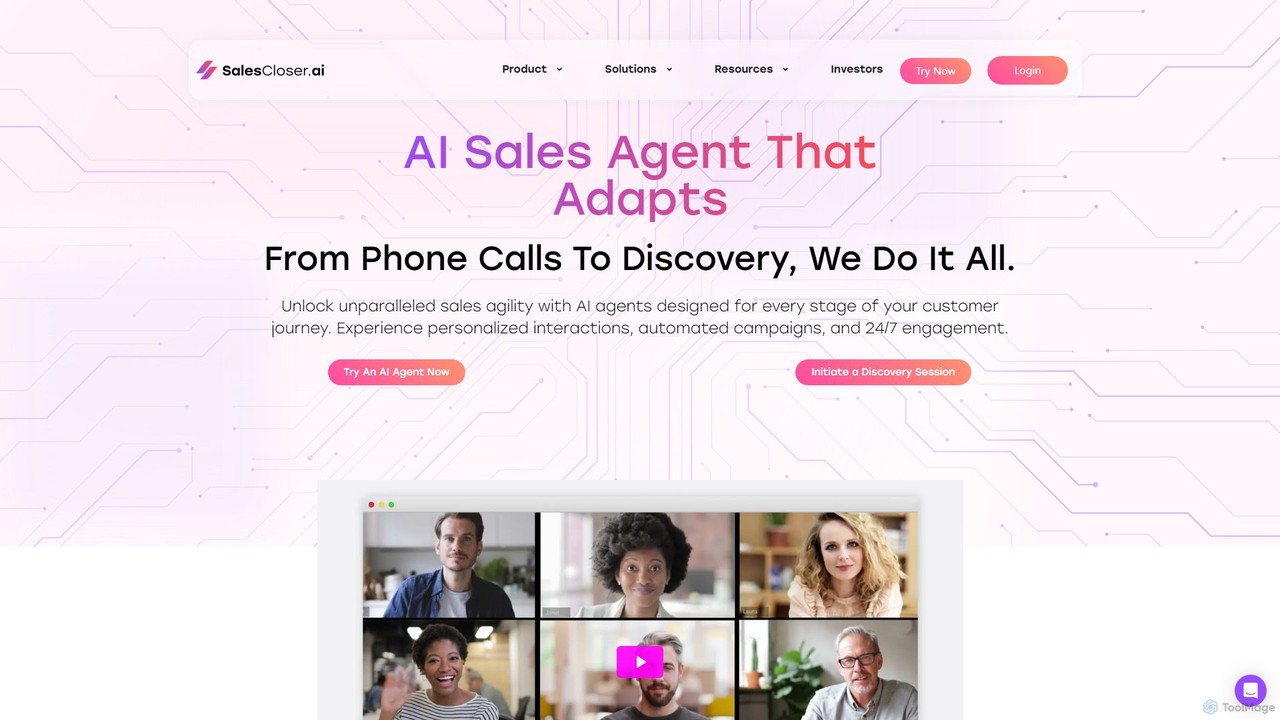
SalesCloser is an AI-powered sales platform that deploys intelligent AI agents to automate the entire sales cycle. These agents handle phone calls, personalized demos, lead qualification, and 24/7 customer support without any coding required. It's designed for businesses to scale sales efforts, enhance customer engagement, and boost conversion rates by personalizing interactions based on your company's knowledge base.

Virtual Assistant
Visits 23.6KFavorites 140Likes 132

About Lead Qualification

Lead Qualification tools are AI-powered solutions designed to assess and prioritize potential customers based on their likelihood to convert into paying clients. These tools leverage advanced algorithms to analyze various data points, including demographic information, behavioral patterns, and engagement history. By providing data-driven insights and scores, they enable sales and marketing teams to focus their efforts on the most promising prospects, significantly enhancing efficiency and improving conversion rates within the broader lead generation process.

Core Features

  • Lead Scoring: Automatically assigns a numerical score to leads based on predefined criteria and AI analysis.
  • Behavioral Analysis: Tracks and interprets user interactions with websites, emails, and content to gauge interest.
  • Demographic & Firmographic Matching: Verifies and enriches lead profiles with relevant personal and company data.
  • Intent Detection: Identifies signals of purchase intent through keyword analysis, content consumption, and online activity.
  • Automated Prioritization: Ranks leads and routes them to the appropriate sales representatives based on their qualification level.

Use Cases

These tools are crucial for sales teams seeking to optimize their outreach by focusing on high-potential leads, and for marketing departments aiming to refine campaign targeting. They are also vital for B2B companies needing to efficiently identify and nurture prospects that align with their ideal customer profile, ensuring resources are allocated effectively.

How to Choose

When selecting a Lead Qualification tool, consider its integration capabilities with existing CRM and marketing automation platforms. Evaluate the flexibility of its lead scoring models and the accuracy of its data sources. Assess its scalability to handle growing lead volumes and its reporting features for actionable insights into lead quality and sales performance.

Featured tool rankings

Lead Qualification use cases

1

Prioritizing High-Value Sales Outreach

Sales development representatives (SDRs) use AI lead qualification tools to automatically score and rank inbound leads. Instead of contacting every lead, SDRs can focus their efforts on the top 20% of leads identified as "hot" or "sales-ready," based on their engagement, company size, and industry fit. This approach significantly reduces wasted time on unqualified prospects and boosts the team's conversion efficiency by up to 30%.

2

Optimizing Targeted Marketing Campaigns

Marketing managers leverage lead qualification data to segment their audience more effectively for email marketing and ad campaigns. By identifying leads with specific qualification scores or behavioral traits (e.g., high intent, specific product interest), they can create highly personalized messages. This results in higher open rates, click-through rates, and ultimately, a more efficient allocation of marketing budget towards prospects most likely to convert.

3

Automating Inbound Lead Routing and Assignment

Businesses with high volumes of inbound inquiries utilize these tools to automatically qualify and route leads to the most suitable sales representative or department. For instance, a lead from a large enterprise in a specific industry might be immediately assigned to a senior account executive specializing in that sector. This automation ensures rapid follow-up, reduces manual sorting time, and improves the overall customer experience by connecting leads with the right expert faster.

4

Identifying Upsell and Cross-sell Opportunities

Customer success teams or account managers can use lead qualification principles to analyze their existing client base. By scoring current customers based on their product usage, engagement with new features, and firmographic data, they can identify those most likely to benefit from additional products or services. This proactive approach helps in nurturing customer relationships and expanding revenue from existing accounts, leading to increased customer lifetime value.

5

Refining Ideal Customer Profile (ICP) Definition

Product and marketing teams employ lead qualification insights to continuously refine their Ideal Customer Profile. By analyzing the characteristics of highly qualified leads that successfully convert, they gain a clearer understanding of what makes a prospect valuable. This data-driven feedback loop helps in adjusting marketing strategies, sales messaging, and even product development to better align with the needs of their most profitable customers.

6

Reducing Sales Cycle Length for B2B Deals

B2B sales organizations integrate lead qualification tools to accelerate their sales cycles. By quickly identifying decision-makers and key stakeholders within qualified accounts who exhibit strong buying signals, sales teams can bypass early-stage discovery calls with less promising contacts. This allows them to engage directly with influential individuals, present tailored solutions sooner, and move deals through the pipeline more efficiently, potentially shortening the sales cycle by weeks.

Lead Qualification FAQ

What are AI Lead Qualification tools?

AI Lead Qualification tools are software solutions that use artificial intelligence to evaluate and score potential sales leads based on their likelihood to become paying customers. They analyze various data points like demographics, firmographics, online behavior, and engagement to provide a qualification score, helping businesses prioritize their sales and marketing efforts effectively.

How do AI Lead Qualification tools differ from Lead Generation tools?

Lead Generation tools focus on identifying and attracting potential customers, filling the sales funnel with raw contacts. In contrast, Lead Qualification tools take these generated leads and assess their quality and readiness to buy. While lead generation is about quantity and initial contact, lead qualification is about quality and prioritizing engagement, acting as a crucial filter in the sales process.

What are the key benefits of using AI for Lead Qualification?

Using AI for lead qualification brings several benefits, including increased sales efficiency by focusing on high-potential leads, improved conversion rates due to better targeting, reduced wasted effort on unqualified prospects, and faster sales cycles. AI provides data-driven insights, automates the scoring process, and ensures consistent, objective evaluation of leads, leading to more predictable revenue growth.

What factors should I consider when choosing an AI Lead Qualification tool?

When selecting an AI Lead Qualification tool, consider its integration capabilities with your existing CRM and marketing automation platforms, the customizability of its scoring models to fit your specific business needs, and the accuracy and breadth of its data sources. Also, evaluate its ability to detect intent, provide actionable insights, and scale with your business growth, along with its user-friendliness and reporting features.

How do AI Lead Qualification tools use data to score leads?

AI Lead Qualification tools utilize a wide array of data points to score leads. This includes explicit data such as job title, company size, industry, and location, as well as implicit data like website visits, content downloads, email opens, and social media engagement. AI algorithms analyze these patterns, compare them against historical conversion data, and assign a dynamic score that reflects a lead's potential and readiness to engage with sales.