
Lead Generation Best in category 1 results Prospecting AI Tool

Popular AI tools in the Prospecting field of Lead Generation include aomni, etc., helping you quickly improve efficiency.

aomni

aomni

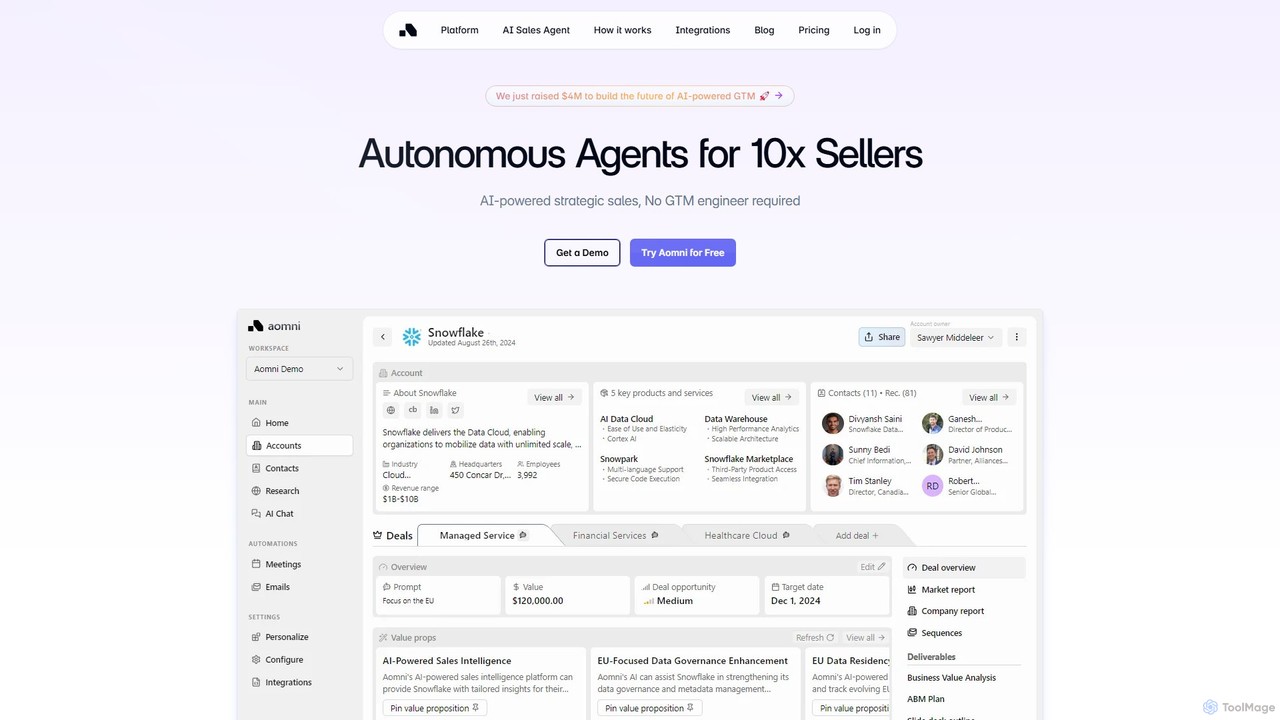
aomni is an AI-powered platform with autonomous agents designed for revenue and sales teams. It automates in-depth account …

20.9K

About Prospecting

Prospecting tools are AI-powered solutions designed to identify and qualify potential customers for sales and marketing efforts. These tools leverage advanced algorithms to analyze vast datasets, pinpointing individuals or companies that match an ideal customer profile. Their primary value lies in automating the initial, often time-consuming, stages of the sales funnel, enabling businesses to focus on engaging high-potential leads more effectively.

Core Features

  • Target Audience Identification: Automatically finds individuals or companies matching predefined criteria like industry, company size, role, or technology stack.
  • Contact Data Enrichment: Gathers and verifies contact information such as email addresses, phone numbers, and social media profiles.
  • Lead Scoring & Qualification: Assesses the likelihood of a prospect becoming a customer based on various data points and behavioral signals.
  • Market Trend Analysis: Identifies emerging markets, industry shifts, and new opportunities for targeted outreach.
  • Competitor Analysis: Uncovers prospects engaging with competitors or similar solutions, providing actionable insights.

Applicable Scenarios

Sales teams utilize AI prospecting tools to build highly targeted lead lists, reducing manual research time and improving outreach relevance. Marketing departments employ them to identify specific segments for personalized campaigns, ensuring messages resonate with the right audience. Business development professionals leverage these tools to discover new market opportunities and potential strategic partners, accelerating growth initiatives.

How to Choose

When selecting AI prospecting tools, consider the accuracy and breadth of their data sources, especially for your target regions and industries. Evaluate their integration capabilities with your existing CRM and sales engagement platforms for seamless workflow. Assess the granularity of their targeting filters and lead scoring models to ensure they align with your ideal customer profile. Finally, compare pricing structures and scalability options to match your team's size and growth ambitions.

ProspectingUse Cases

1

Building Targeted Sales Lead Lists

A B2B sales representative needs to find decision-makers in the SaaS industry within companies of 50-200 employees in North America. Using an AI prospecting tool, they input these criteria, and the tool automatically generates a list of qualified individuals with verified contact information, saving hours of manual LinkedIn and website research. This allows the rep to immediately begin personalized outreach.

2

Identifying Ideal Customer Profiles (ICP)

A startup is launching a new product and needs to refine its ideal customer profile. By feeding existing customer data into an AI prospecting tool, the tool analyzes common attributes, behaviors, and firmographics, then suggests new, similar prospects. This helps the marketing team understand their best-fit customers and expand their reach effectively.

3

Enriching Existing CRM Data

A marketing team has an outdated CRM with incomplete contact details for many leads. An AI prospecting tool can be integrated to automatically enrich these records, adding missing email addresses, phone numbers, and company insights. This ensures sales reps have the most current information, improving communication and reducing bounce rates.

4

Monitoring Competitor Customer Activity

A competitive intelligence analyst wants to track which companies are engaging with a rival's new product. An AI prospecting tool can monitor public data sources and identify companies showing interest or recent adoption of competitor solutions. This provides valuable insights for targeted win-back campaigns or competitive positioning.

5

Discovering New Market Segments

A product manager is exploring expansion into new geographical markets or industry verticals. By using an AI prospecting tool to analyze market trends and identify underserved niches with high potential, they can quickly validate new opportunities. This data-driven approach supports strategic decision-making for market entry.

6

Personalizing Outreach at Scale

A sales development representative (SDR) needs to send personalized emails to hundreds of prospects daily. An AI prospecting tool not only provides verified contact details but also uncovers specific triggers like recent funding rounds, job changes, or technology adoptions. This allows the SDR to craft highly relevant messages that resonate, increasing reply rates.

ProspectingFrequently Asked Questions