Legal Best in category 1 results Document Drafting AI Tool

Popular AI tools in the Document Drafting field of Legal include AI.Law, etc., helping you quickly improve efficiency.

AI.Law

AI.Law

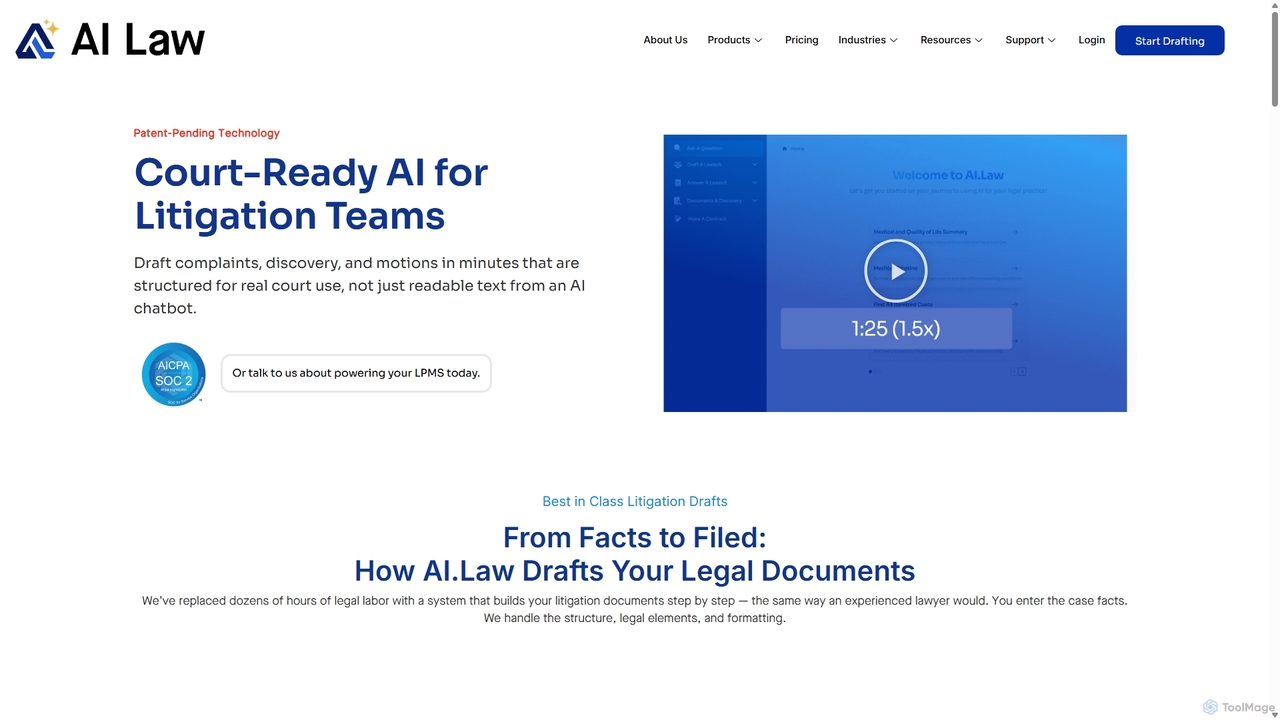
AI.Law is a patent-pending AI platform designed for litigation teams to draft court-ready legal documents in minutes. It …

14.4K

About Document Drafting

Document Drafting AI tools are specialized platforms that leverage artificial intelligence to automate and enhance the creation of various documents, particularly within the legal domain. These tools utilize advanced natural language processing (NLP) and machine learning to generate, review, and refine text based on user inputs, templates, and existing data. They significantly accelerate the drafting process, reduce human error, and ensure consistency across legal and business documents. By integrating with legal databases and compliance frameworks, they offer a powerful solution for efficient and accurate document production.

Core Features

  • Automated Document Generation: Create contracts, agreements, reports, and other documents from templates or prompts with minimal manual input.
  • Content Suggestion & Clause Library: Propose relevant clauses, phrases, and data points based on context, drawing from extensive legal libraries.
  • Compliance & Error Checking: Verify documents against legal standards, regulations, and internal policies, highlighting potential inconsistencies or errors.
  • Data Integration & Population: Automatically pull information from databases or other systems to populate document fields, ensuring accuracy and saving time.
  • Version Control & Collaboration: Manage document iterations, track changes, and facilitate collaborative review processes securely.

Applicable Scenarios

Legal professionals use these tools to efficiently draft standard contracts, wills, court filings, and legal opinions, reducing the time spent on repetitive tasks. Corporate legal departments leverage them for generating internal policies, compliance reports, and non-disclosure agreements. Businesses across various sectors also find value in automating the creation of HR documents, marketing agreements, and standard operating procedures, ensuring consistency and adherence to company guidelines.

How to Choose

When selecting a Document Drafting AI tool, prioritize its integration capabilities with your existing legal tech stack or business systems. Evaluate the breadth of document types it supports, its customization options for templates, and the accuracy of its AI-generated content. Crucial factors also include robust compliance checking features, data security protocols for sensitive information, and an intuitive user interface that minimizes the learning curve for your team.

Document DraftingUse Cases

1

Drafting Standard Legal Contracts

Legal firms and corporate legal departments frequently need to draft standard contracts like NDAs, service agreements, or employment contracts. AI document drafting tools allow legal professionals to input key variables and automatically generate a compliant, customized contract within minutes. This significantly reduces manual drafting time, ensures consistency across documents, and minimizes the risk of errors, freeing up lawyers to focus on more complex legal analysis.

2

Generating Regulatory Compliance Reports

Compliance officers and legal teams in regulated industries face the ongoing task of preparing detailed regulatory reports. AI drafting tools can integrate with internal data sources to automatically compile relevant information and generate comprehensive reports that adhere to specific regulatory frameworks. This streamlines the reporting process, enhances accuracy, and ensures timely submission, reducing potential penalties and operational overhead.

3

Creating Personalized Legal Documents for Individuals

Individuals often require personal legal documents such as wills, power of attorney forms, or residential lease agreements. AI-powered platforms guide users through a series of questions, then generate legally sound documents tailored to their specific circumstances. This makes legal document creation more accessible and affordable for the general public, providing a reliable alternative to costly legal consultations for straightforward matters.

4

Automating Legal Correspondence and Memos

Law offices and in-house legal teams handle a high volume of correspondence, including client updates, demand letters, and internal memos. Document drafting AI can automate the generation of these communications based on case details and predefined templates. This accelerates communication workflows, maintains a consistent professional tone, and ensures that all necessary information is included, improving overall operational efficiency.

5

Developing Company Policies and Procedures

HR departments and operations managers regularly need to create or update company policies, employee handbooks, and standard operating procedures. AI drafting tools can assist by generating initial drafts based on industry best practices and company-specific inputs. This ensures that policies are comprehensive, legally compliant, and clearly articulated, saving significant time in policy development and revision cycles.

6

Expediting Due Diligence Document Review

During mergers, acquisitions, or large transactions, legal teams must review vast quantities of documents for due diligence. While primarily drafting, these tools can also assist in identifying and extracting key clauses or anomalies from existing documents to inform the creation of new agreements or summaries. This accelerates the review process, highlights critical information, and ensures that new documents accurately reflect findings, reducing transactional risks.

Document DraftingFrequently Asked Questions