Legal Best in category 1 results Legal Assistance AI Tool

Popular AI tools in the Legal Assistance field of Legal include AttorneyAI, etc., helping you quickly improve efficiency.

AttorneyAI

AttorneyAI

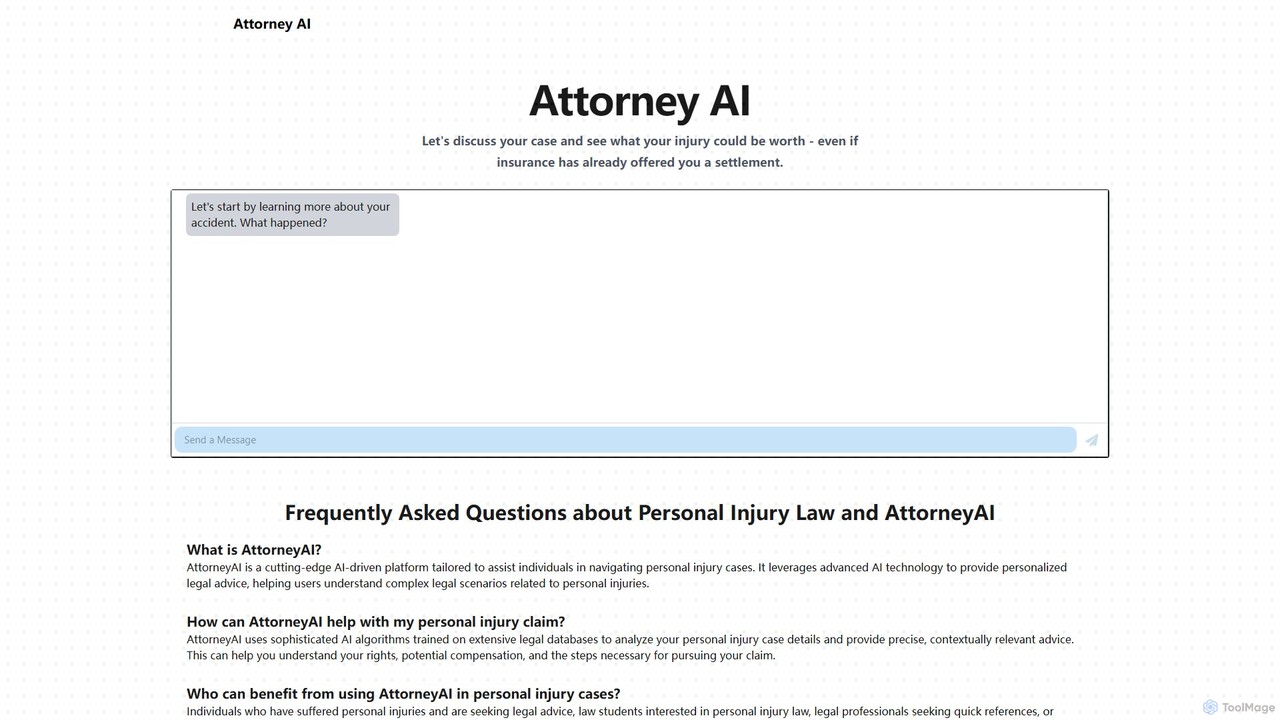
AttorneyAI is an advanced AI-powered platform offering expert legal assistance for personal injury cases. It analyzes your accident …

225

About Legal Assistance

Legal Assistance AI tools are specialized software solutions designed to support legal professionals and individuals in various legal tasks. These tools leverage advanced artificial intelligence, including natural language processing (NLP) and machine learning, to automate, streamline, and enhance legal workflows. They significantly improve efficiency and accuracy in areas like document review, legal research, and contract analysis, enabling faster decision-making and better resource allocation within the legal sector.

Core Features

  • Automated Document Review: Rapidly analyzes large volumes of legal documents to identify key information, clauses, and potential risks.
  • Intelligent Legal Research: Scans vast legal databases and precedents to find relevant cases, statutes, and scholarly articles with high precision.
  • Contract Analysis & Drafting: Assists in reviewing contracts for compliance, identifying discrepancies, and generating initial drafts of legal agreements.
  • E-Discovery Support: Streamlines the process of identifying, collecting, and producing electronically stored information for litigation.
  • Compliance Monitoring: Tracks regulatory changes and assesses internal policies to ensure ongoing legal adherence and mitigate risks.

Use Cases

Law firms utilize these tools for efficient case preparation and client advisory, while corporate legal departments deploy them for contract management and regulatory compliance. Individual lawyers and paralegals benefit from accelerated research and document drafting, reducing manual workload and allowing focus on strategic tasks. Legal tech companies also integrate these AI solutions to build more comprehensive and intelligent platforms for their clients.

How to Choose

When selecting Legal Assistance AI tools, prioritize solutions with high accuracy in document analysis and research, robust data security protocols, and seamless integration with existing legal software. Consider the scope of features offered, such as specific drafting capabilities or predictive analytics, and evaluate the user interface for ease of adoption. Finally, assess the vendor's support, training, and pricing model to ensure it aligns with your firm's or department's needs and budget.

Legal AssistanceUse Cases

1

Automate Contract Review for Corporate Legal Teams

Corporate legal departments face the challenge of reviewing thousands of contracts annually. AI legal assistance tools enable legal professionals to upload large batches of contracts, which the AI then analyzes to identify specific clauses, highlight potential risks, and flag non-compliant terms. This automation drastically reduces the manual review time by up to 70%, ensuring consistency across agreements and allowing the team to focus on high-value negotiations and strategic legal advice rather than repetitive document scrutiny.

2

Accelerate Legal Research and Precedent Analysis

Litigation lawyers often spend countless hours sifting through legal databases to find relevant case law and precedents. AI legal research tools can process natural language queries, search vast repositories of statutes, regulations, and judicial opinions, and present highly relevant results in seconds. This capability allows lawyers to quickly identify key arguments, understand judicial trends, and build stronger cases, cutting down research time by 50-80% and providing a competitive edge in complex litigation.

3

Draft Legal Documents with AI Assistance

Legal professionals, from solo practitioners to large firms, frequently need to draft various legal documents such as non-disclosure agreements (NDAs), wills, or pleadings. AI legal assistance tools can generate initial drafts of these documents based on user-defined parameters, templates, and specific case details. This significantly reduces the time spent on repetitive drafting tasks, allowing lawyers to focus on customizing and refining the content to meet unique client needs, thereby improving productivity and ensuring document accuracy.

4

Streamline E-Discovery for Litigation Support

During litigation, e-discovery involves processing vast amounts of electronically stored information (ESI) to identify relevant evidence. AI legal assistance tools can rapidly ingest, categorize, and tag millions of documents, emails, and other digital files based on relevance, keywords, and sentiment. This capability allows litigation support teams to significantly reduce the time and cost associated with manual review, ensuring that critical evidence is identified efficiently and accurately, thereby accelerating the discovery phase and improving case outcomes.

5

Ensure Regulatory Compliance and Risk Assessment

Businesses operating in highly regulated industries must constantly monitor legal and regulatory changes to ensure compliance and mitigate risks. AI legal assistance tools can continuously scan legal databases, news feeds, and regulatory updates, alerting compliance officers to relevant changes in real-time. This proactive monitoring helps organizations adapt their policies and procedures swiftly, avoiding costly penalties and legal disputes, and maintaining a strong reputation for ethical conduct and regulatory adherence.

6

Predict Litigation Outcomes for Strategic Planning

Litigators and legal strategists can leverage AI legal assistance tools to analyze historical case data, judicial behavior, and various legal factors to predict potential litigation outcomes. By inputting details of a current case, the AI can provide insights into the likelihood of success, potential settlement ranges, or even jury sentiment. This predictive analytics capability empowers legal teams to make more informed decisions regarding case strategy, settlement negotiations, and resource allocation, ultimately leading to more favorable and cost-effective resolutions for clients.

Legal AssistanceFrequently Asked Questions