withedge
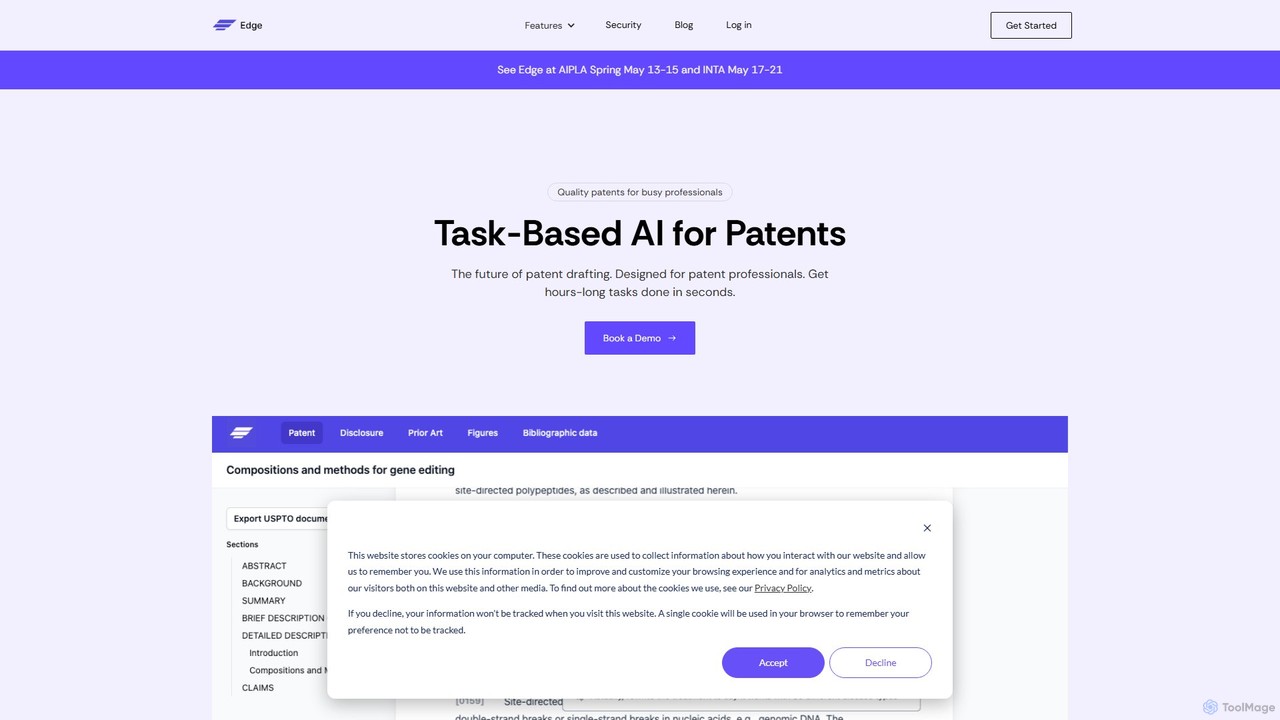
withedge is an AI-powered platform designed for legal professionals to streamline the patent drafting process. It automates tedious …
withedge is an AI-powered platform designed for legal professionals to streamline the patent drafting process. It automates tedious tasks like drafting claims, creating detailed descriptions, and managing patent figures, significantly reducing drafting time while enhancing accuracy and quality. The platform is built with top-tier security and regional compliance for USPTO and EPO.
DeepIP
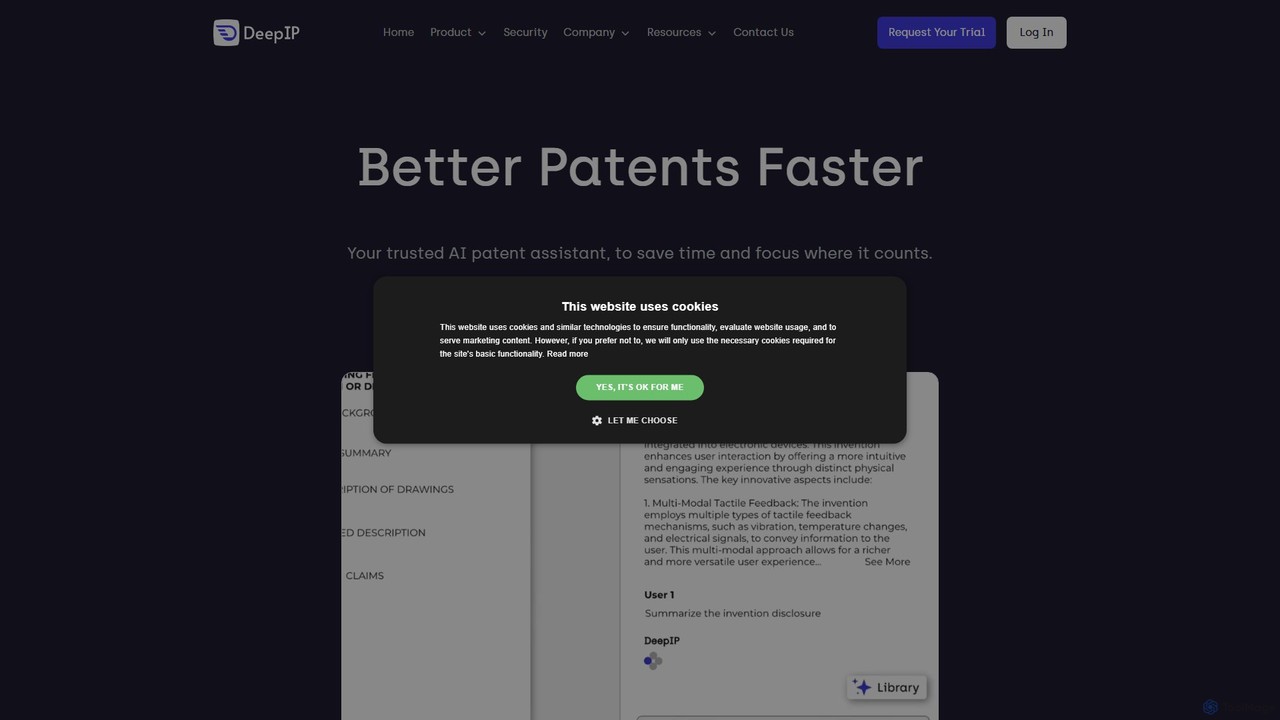
DeepIP is a generative AI assistant for patent professionals, designed to accelerate and enhance the patent drafting and …
DeepIP is a generative AI assistant for patent professionals, designed to accelerate and enhance the patent drafting and prosecution process. Integrated directly into Microsoft Word, it helps summarize inventions, draft high-quality claims and specifications, respond to office actions, and ensure document consistency, all while adhering to the highest security standards.
Gatsbi
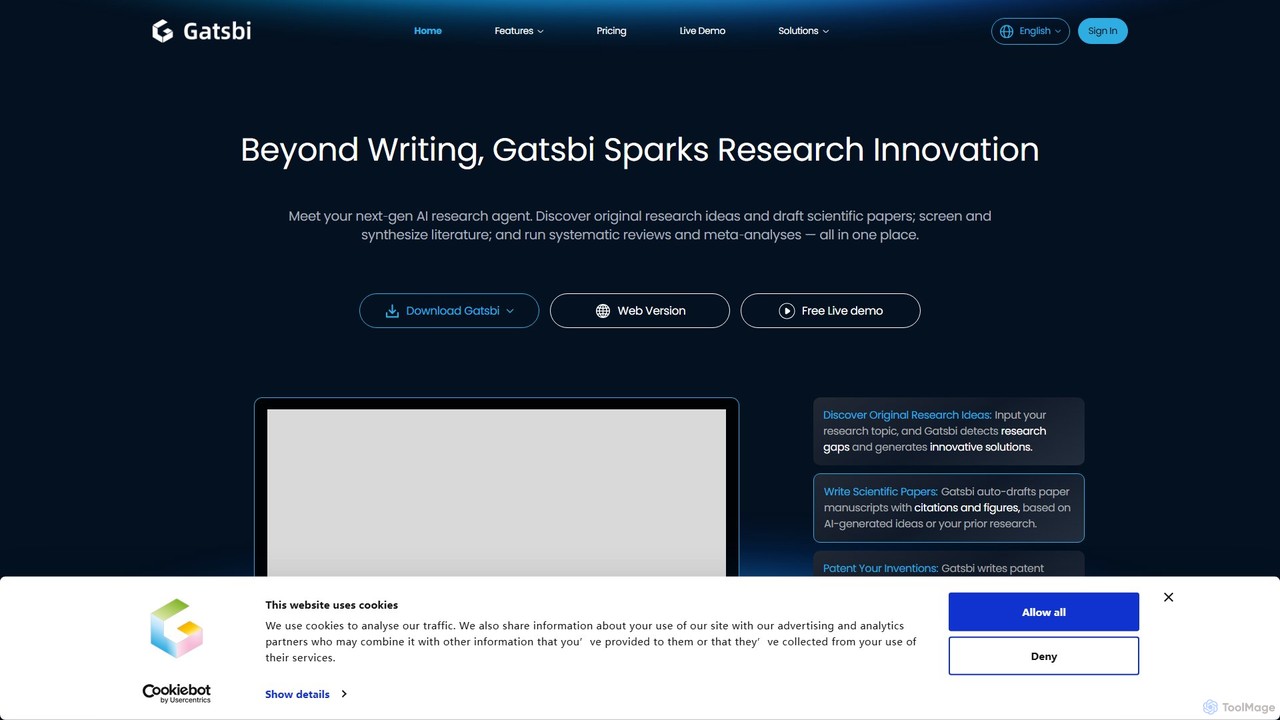
Gatsbi is an all-in-one AI research assistant designed to accelerate innovation. It helps researchers, engineers, and students discover …
Gatsbi is an all-in-one AI research assistant designed to accelerate innovation. It helps researchers, engineers, and students discover original research ideas, draft scientific papers and patent disclosures, and conduct systematic literature reviews and meta-analyses, streamlining the entire workflow from ideation to publication.

PatentDrawAI
PatentDrawAI is an AI-powered invention development engine designed to streamline the patent application process. It helps inventors, law …
PatentDrawAI is an AI-powered invention development engine designed to streamline the patent application process. It helps inventors, law firms, and enterprises draft high-quality provisional patents, generate technical drawings, and conduct prior art searches faster and more affordably. Specialized modules for software and molecular patents automate the creation of comprehensive documentation, democratizing intellectual property protection for all innovators.
PatentPal
PatentPal is a generative AI platform designed for intellectual property professionals. It automates the mechanical writing tasks in …
PatentPal is a generative AI platform designed for intellectual property professionals. It automates the mechanical writing tasks in patent applications, allowing users to generate specifications, figures, summaries, and abstracts from a set of claims with a single click, significantly speeding up the drafting process.
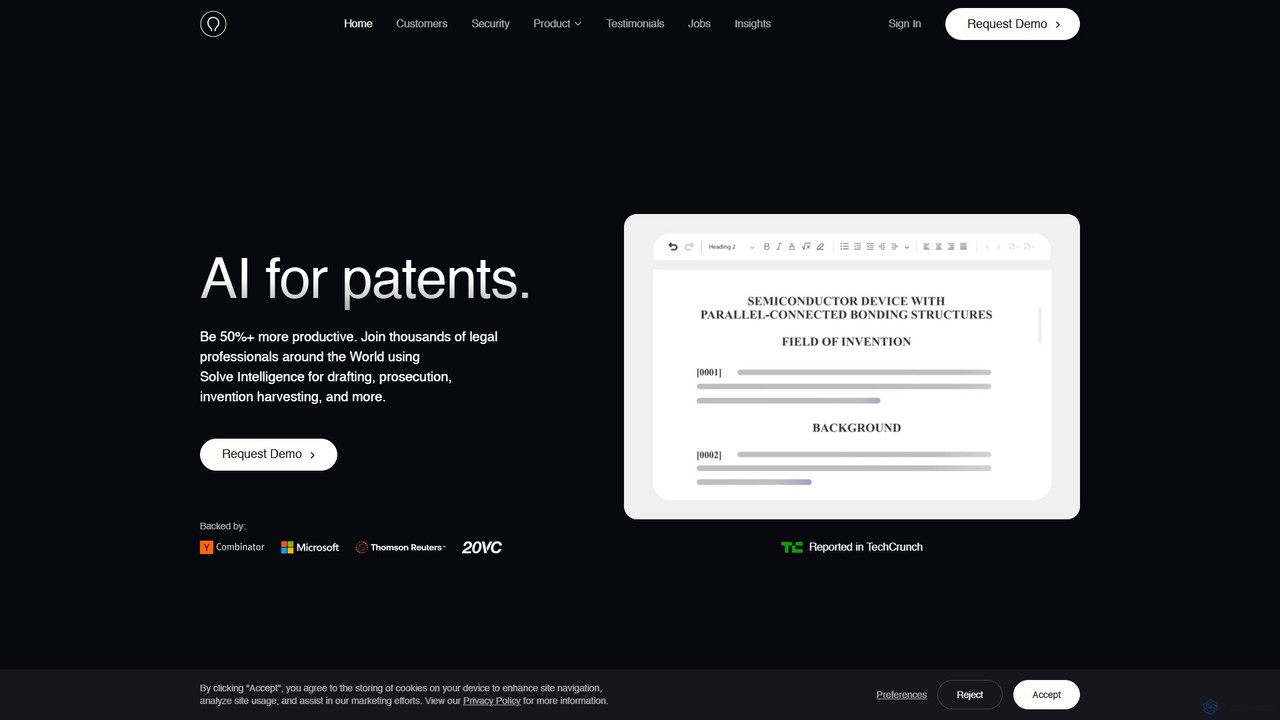
Solve Intelligence
Solve Intelligence is an AI-powered platform designed for legal professionals to enhance productivity in the patent lifecycle. It …
Solve Intelligence is an AI-powered platform designed for legal professionals to enhance productivity in the patent lifecycle. It offers tools for patent drafting, prosecution, and invention harvesting, enabling users to increase efficiency by over 50% while improving the quality of their work. The platform prioritizes security and confidentiality, making it a trusted solution for hundreds of IP teams worldwide.
About Patent
Patent AI tools are specialized artificial intelligence applications designed to streamline and enhance various aspects of the patent lifecycle. These tools leverage advanced natural language processing (NLP), machine learning, and data analytics to process vast amounts of patent data, legal documents, and technical literature. Their primary value lies in significantly improving the efficiency, accuracy, and comprehensiveness of tasks such as prior art searching, patent drafting, infringement analysis, and portfolio management, ultimately supporting innovation and intellectual property protection within the broader legal tech domain.
Core Features
- Prior Art Search: Automates the discovery of existing inventions and publications relevant to a new idea, reducing manual effort and improving search comprehensiveness.
- Claim Drafting Assistance: Provides AI-powered suggestions and analysis for patent claims, helping attorneys refine language, ensure clarity, and avoid common pitfalls.
- Infringement Analysis: Compares new products or technologies against existing patent portfolios to identify potential infringement risks or opportunities.
- Patent Landscape Mapping: Visualizes patent trends, competitor activities, and technological white spaces, aiding strategic R&D and investment decisions.
- Validity/Invalidity Search: Conducts in-depth searches to find evidence that supports or challenges the legal validity of a patent.
Use Cases
Patent AI tools are indispensable for intellectual property professionals, R&D teams, and corporate strategists. They are used by patent attorneys to accelerate claim drafting and conduct thorough validity searches, by engineers to ensure their innovations are truly novel, and by business leaders to understand competitive landscapes and identify strategic investment areas in technology.
How to Choose
When selecting a Patent AI tool, consider the breadth and depth of its patent database coverage, the accuracy and relevance of its search algorithms, and its specific functionalities like claim analysis or landscape mapping. Evaluate its integration capabilities with existing legal or R&D workflows, user interface intuitiveness, and the level of support for different patent jurisdictions. Cost-effectiveness and the tool's ability to handle specific technical domains are also crucial factors.
PatentUse Cases
Automate Prior Art Discovery for R&D
R&D engineers and innovators utilize Patent AI tools to conduct rapid and comprehensive prior art searches. By inputting invention descriptions, the AI quickly scans global patent databases and scientific literature, identifying existing technologies and preventing costly duplication of effort. This significantly accelerates the initial research phase and strengthens patentability assessments.
Enhance Patent Claim Drafting Accuracy
Patent attorneys leverage AI to refine and optimize patent claims. The tools analyze drafted claims for clarity, scope, and potential ambiguities, suggesting alternative phrasing or identifying missing elements based on legal precedents and best practices. This process improves the quality of patent applications and reduces office action responses.
Assess Infringement Risk for New Products
Legal departments and product development teams employ Patent AI to proactively assess infringement risks. By comparing features of upcoming products or services against extensive patent portfolios of competitors, the AI identifies potential overlaps, allowing companies to make informed design modifications or licensing decisions before market launch.
Strategic Patent Portfolio Management
Corporate IP managers use Patent AI to gain insights into their entire patent portfolio. The tools help categorize, analyze, and visualize patent assets, identifying underutilized patents, areas for further innovation, or patents nearing expiration. This supports strategic decision-making for renewals, licensing, and divestitures.
Map Technology Landscapes for Investment
Venture capitalists, corporate strategists, and market analysts apply Patent AI to understand emerging technology trends and competitive landscapes. By analyzing patent filing patterns, key inventors, and assignee data, the AI generates visual maps that highlight innovation hotspots, potential acquisition targets, and future market directions.
Support Patent Litigation with Validity Searches
Litigation attorneys use Patent AI tools to conduct exhaustive validity and invalidity searches. In patent disputes, the AI can quickly uncover obscure prior art or technical publications that either support the validity of a client's patent or challenge the validity of an opponent's patent, providing critical evidence for legal arguments.