ToolMage
Sign in

Best 1 Practice Management AI tools for Legal

Popular Practice Management AI tools in Legal include Filevine, helping you work more efficiently.

Filevine
Paid

Filevine

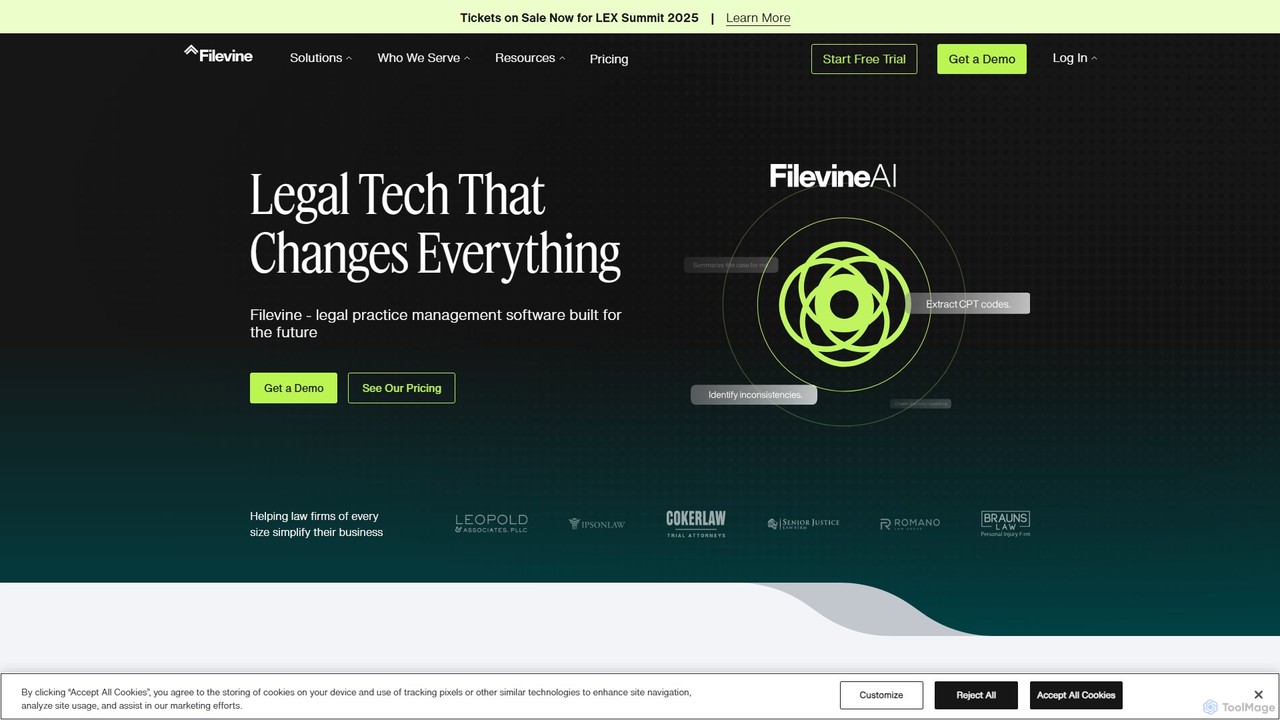
Filevine is an AI-powered legal practice management platform designed to streamline operations for law firms. It automates workflows, centralizes case management, and offers advanced AI tools for document review, data extraction, and case analysis. By handling mundane tasks, Filevine allows legal professionals to focus on strategic work, client service, and achieving better case outcomes with enhanced efficiency and accuracy.

Data Analysis
Visits 680.5KFavorites 131Likes 141

About Practice Management

Practice Management AI tools are designed to streamline the administrative, operational, and client management tasks specific to legal professionals. These tools leverage artificial intelligence to automate routine processes, enhance data organization, and provide actionable insights. They aim to boost efficiency, reduce overheads, and improve client service within law firms and legal departments, ensuring greater accuracy and compliance.

Core Features

  • Automated Document Generation & Management: Create, store, and manage legal documents efficiently with AI-assisted drafting and version control.
  • Client Relationship Management (CRM): Track client interactions, manage intake processes, and maintain comprehensive client profiles.
  • Time Tracking & Billing Automation: Automatically log billable hours, track expenses, and generate accurate invoices based on predefined rates.
  • Case & Workflow Management: Organize case files, assign tasks, monitor deadlines, and automate workflow steps for legal matters.
  • Compliance & Regulatory Monitoring: Utilize AI to track changes in legal regulations and ensure adherence, minimizing risks.

Applicable Scenarios

Law firms of all sizes, independent legal practitioners, and corporate legal departments can significantly benefit. These tools are crucial for managing high volumes of client data, complex case workflows, and stringent billing requirements, enabling legal professionals to focus more on strategic legal work.

How to Choose

When selecting Practice Management AI tools, prioritize solutions with robust security features for sensitive legal data and seamless integration with existing legal software. Evaluate scalability to accommodate firm growth, specific modules for your practice area, and user-friendliness for quick adoption. Consider vendor reputation and support for long-term reliability.

Practice Management use cases

1

Streamline Client Intake and Onboarding Processes

Law firms can use AI Practice Management tools to automate the initial client intake process. This involves AI-driven forms for data collection, automated conflict-of-interest checks, and the generation of initial engagement letters. This reduces manual data entry errors, accelerates the onboarding timeline, and ensures all necessary information is captured efficiently before legal work begins, improving the client's first impression.

2

Enhance Accuracy in Time Tracking and Billing

Legal professionals often struggle with accurate time logging. AI Practice Management tools can automatically track billable hours spent on specific cases, meetings, and document reviews. They integrate with calendars and communication platforms to suggest time entries, then automatically generate detailed invoices. This minimizes lost billable time, ensures transparent billing, and reduces administrative effort for accounting departments.

3

Optimize Legal Case Workflow and Task Management

Legal teams can leverage these tools to manage complex case workflows from inception to resolution. AI assists in assigning tasks, setting deadlines, and tracking progress across multiple cases simultaneously. Automated reminders for court dates, filing deadlines, and client communications ensure no critical step is missed. This improves team collaboration, reduces oversight risks, and keeps cases on track efficiently.

4

Accelerate Legal Document Generation and Assembly

Generating standard legal documents like contracts, pleadings, and agreements can be time-consuming. AI Practice Management tools offer intelligent document assembly features, allowing users to input specific case details and automatically generate customized documents from pre-approved templates. This significantly reduces drafting time, ensures consistency, and minimizes errors, freeing up lawyers for more complex legal analysis.

5

Ensure Regulatory Compliance and Risk Mitigation

Staying abreast of ever-changing legal regulations is a significant challenge. AI Practice Management tools can continuously monitor regulatory updates relevant to a firm's practice areas. They flag potential compliance issues, generate automated audit trails, and produce detailed compliance reports. This proactive approach helps firms avoid penalties, maintain ethical standards, and build a reputation for regulatory adherence.

6

Improve Resource Allocation and Workload Management

Law firms can utilize AI to analyze historical data on case types, durations, and required expertise to optimize resource allocation. These tools help predict future workload demands, identify underutilized or overstretched team members, and suggest optimal staffing for new cases. This ensures efficient use of legal talent, prevents burnout, and enhances overall firm productivity and profitability.

Practice Management FAQ

What are AI Practice Management tools for legal professionals?

AI Practice Management tools are specialized software solutions that use artificial intelligence to automate and streamline various administrative, operational, and client-facing tasks within law firms and legal departments. They aim to enhance efficiency, improve accuracy, and optimize resource management by automating processes like document generation, time tracking, billing, and case management, specifically tailored for the legal industry's unique demands.

How do AI Practice Management tools differ from general business management software?

While general business management software offers broad functionalities, AI Practice Management tools are specifically designed for the legal sector. They incorporate legal-specific features such as conflict-of-interest checks, compliance monitoring, secure client communication portals, and specialized legal document assembly. Their core difference lies in their deep understanding of legal workflows, regulatory requirements, and the need for stringent data confidentiality, which generic tools often lack.

What key features should I look for when choosing an AI Practice Management solution?

When selecting an AI Practice Management solution, prioritize robust security and data privacy features to protect sensitive client information. Look for comprehensive modules covering client intake, case management, time tracking, billing, and document management. Seamless integration with existing legal research platforms and accounting software is crucial. Additionally, consider the tool's scalability, user-friendliness, and the vendor's reputation for support and continuous updates.

Can AI Practice Management tools help with legal compliance?

Yes, AI Practice Management tools significantly assist with legal compliance. They can automate the monitoring of regulatory changes, flag potential compliance risks in documents or workflows, and generate audit trails for accountability. By ensuring adherence to ethical guidelines and legal standards, these tools help firms mitigate risks, avoid penalties, and maintain a strong reputation for integrity and regulatory adherence within the legal landscape.

Who benefits most from implementing AI Practice Management tools?

Law firms of all sizes, from solo practitioners to large corporate legal departments, benefit immensely. Solo lawyers gain efficiency without hiring additional administrative staff. Small to mid-sized firms can scale operations and improve client service. Large firms can optimize complex workflows, manage vast client portfolios, and ensure consistent compliance across multiple teams. Ultimately, any legal professional seeking to reduce administrative burden, enhance accuracy, and improve profitability will find these tools invaluable.