Rataify
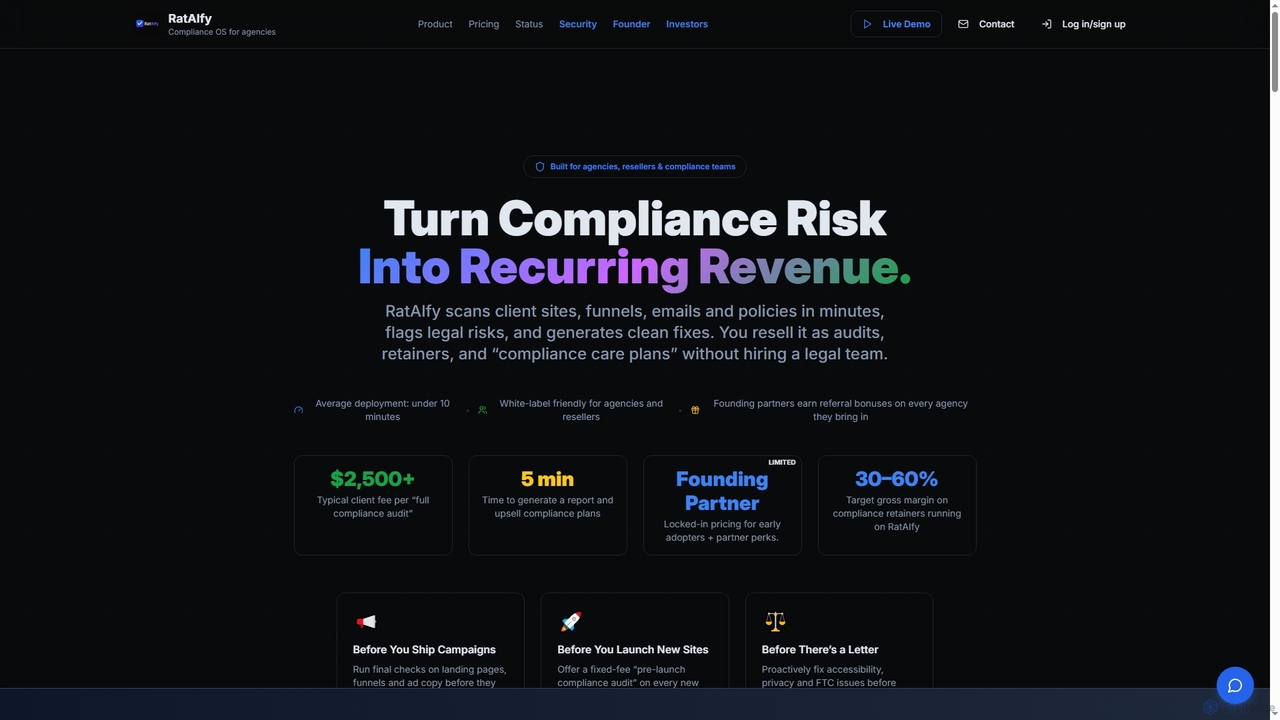
Rataify is an AI-powered compliance platform designed for agencies, resellers, and compliance teams. It automates the scanning of …
Rataify is an AI-powered compliance platform designed for agencies, resellers, and compliance teams. It automates the scanning of websites, funnels, emails, and policies to identify legal risks, generate fixes, and enable businesses to resell compliance services as a recurring revenue stream.
Cruxi
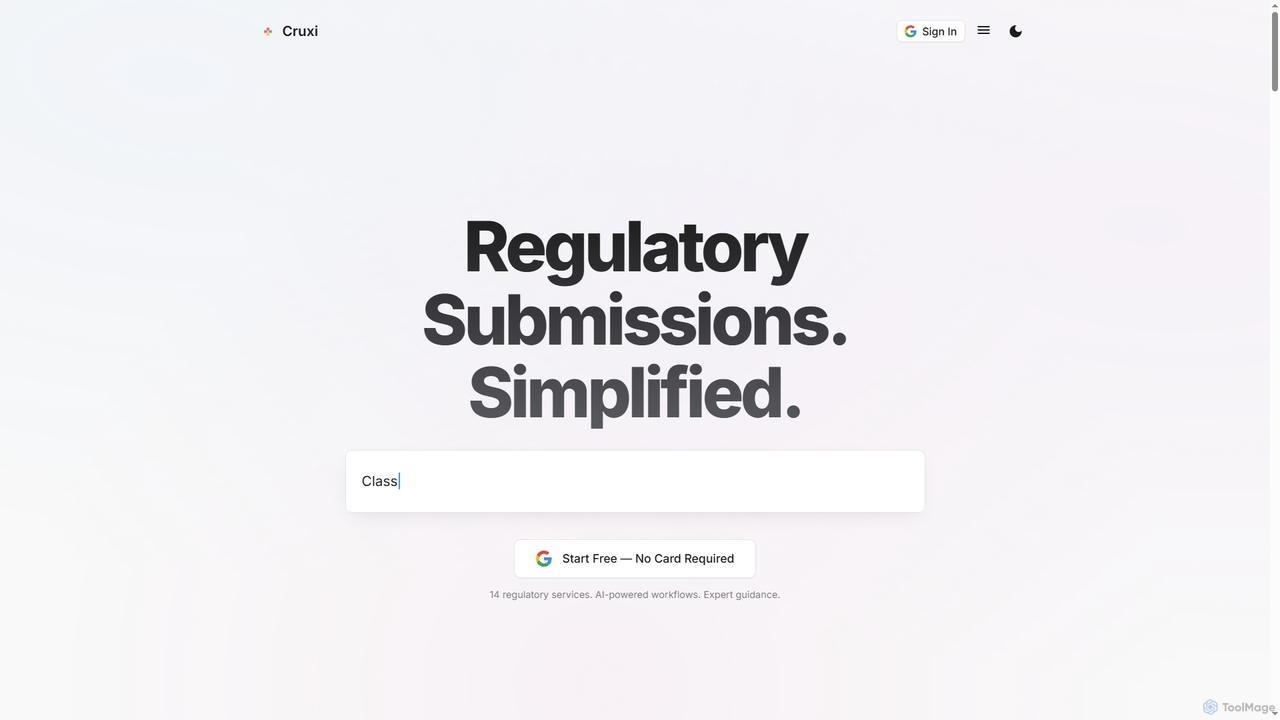
Cruxi is an AI-powered regulatory platform designed to streamline medical device submissions to the FDA and global authorities. …
Cruxi is an AI-powered regulatory platform designed to streamline medical device submissions to the FDA and global authorities. It automates workflows for 510(k), De Novo, PMA, and more, significantly reducing preparation time and preventing common rejection issues.
Pure Global
Pure Global is an AI-powered platform offering regulatory intelligence and consulting for MedTech companies. It combines real-world expertise …
Pure Global is an AI-powered platform offering regulatory intelligence and consulting for MedTech companies. It combines real-world expertise with AI to streamline global market access, providing real-time regulatory updates, product data analysis, and compliance solutions for over 30 markets worldwide, helping companies navigate complex regulations efficiently.
About Regulatory Compliance
Regulatory Compliance tools are AI-powered platforms designed to help organizations monitor, manage, and adhere to legal and industry regulations. Leveraging Natural Language Processing (NLP) and machine learning, these tools automatically track changes in laws, analyze internal data for compliance gaps, and generate required reports. They are crucial for reducing manual effort, minimizing the risk of fines, and maintaining a strong ethical and legal standing. Unlike general legal AI, they focus specifically on the dynamic, data-intensive process of ongoing compliance monitoring and risk management.
Core Features
- Automated Regulatory Tracking: Continuously scans global regulatory sources to provide real-time alerts on new laws, amendments, and guidelines.
- Compliance Gap Analysis: Analyzes internal policies, contracts, and operational data against specific regulatory frameworks (e.g., GDPR, HIPAA) to identify non-compliance areas.
- Risk Assessment & Mitigation: Uses predictive analytics to identify potential compliance risks and suggests proactive mitigation strategies.
- Automated Reporting: Generates standardized compliance reports and audit trails for internal reviews and regulatory submissions.
Use Cases
These tools are essential in highly regulated industries such as finance (for AML, KYC), healthcare (for HIPAA), and technology (for data privacy laws like GDPR/CCPA). Compliance officers, legal teams, and risk managers use them to automate routine monitoring, conduct internal audits, and ensure marketing communications adhere to advertising standards.
How to Choose
When selecting a tool, consider the specific regulations it covers and its jurisdiction. Evaluate its integration capabilities with your existing systems (e.g., CRM, ERP). Assess the accuracy of its AI models and the transparency of its risk-scoring algorithms. Finally, consider the quality of its reporting and alerting features to ensure timely action.

Regulatory ComplianceUse Cases
Automating AML & KYC Checks in Finance
For financial institutions, compliance with Anti-Money Laundering (AML) and Know Your Customer (KYC) regulations is mandatory. AI tools automate this process by verifying customer identities against global watchlists, analyzing transaction patterns for suspicious activity, and flagging high-risk accounts in real-time. This allows compliance teams to move from manual spot-checks to continuous, automated monitoring, significantly reducing the risk of hefty fines and improving the efficiency of customer onboarding.
Monitoring Data Privacy Compliance (GDPR/CCPA)
Tech companies and online businesses must comply with data privacy laws like GDPR and CCPA. AI compliance tools continuously scan websites, applications, and internal databases to ensure data handling practices are compliant. They can automatically identify personal identifiable information (PII), check for valid user consent, and audit data processing agreements with third-party vendors. This helps Data Protection Officers (DPOs) maintain an accurate record of processing activities and quickly respond to data subject access requests (DSARs).
Ensuring Healthcare Regulatory Adherence (HIPAA)
In the healthcare sector, protecting patient health information (PHI) under regulations like HIPAA is critical. AI compliance software helps providers and insurers by automatically auditing access logs to detect unauthorized access to patient records. It can also scan communications (emails, messages) for unsecured sharing of PHI and analyze third-party vendor contracts to ensure they meet HIPAA's business associate agreement requirements. This proactive monitoring helps prevent data breaches and ensures patient confidentiality.
Real-Time Regulatory Change Management
For a global corporation, keeping track of regulatory changes across multiple jurisdictions is a monumental task. AI tools automate this by monitoring thousands of sources like government gazettes, regulatory body websites, and legal news outlets. When a relevant change is detected, the system automatically alerts the appropriate compliance team, summarizes the change's impact, and creates tasks for updating internal policies. This transforms a reactive, manual process into a proactive, automated workflow, ensuring the organization is never caught off guard by new legislation.
Auditing Marketing Communications for Compliance
Marketing teams must ensure their campaigns, advertisements, and social media posts comply with industry-specific rules (e.g., FTC guidelines, financial promotion rules). An AI tool can scan marketing copy before publication to flag potentially misleading claims, missing disclaimers, or improper use of regulated terms. This provides a rapid, automated first-line-of-defense review, allowing legal and compliance teams to focus their manual reviews on high-risk content, accelerating campaign launches while reducing legal exposure.
Automating Internal Policy Management and Training
When regulations change, internal policies must be updated and employees retrained. AI tools can streamline this by automatically identifying which internal documents are affected by a new regulation. They can then generate draft updates for these policies and even create micro-training modules or FAQs based on the changes. This ensures that the organization's internal guidelines are always aligned with external laws and that employees are quickly brought up to speed on new compliance requirements, creating a verifiable audit trail of policy updates and training completion.