DevBlogs
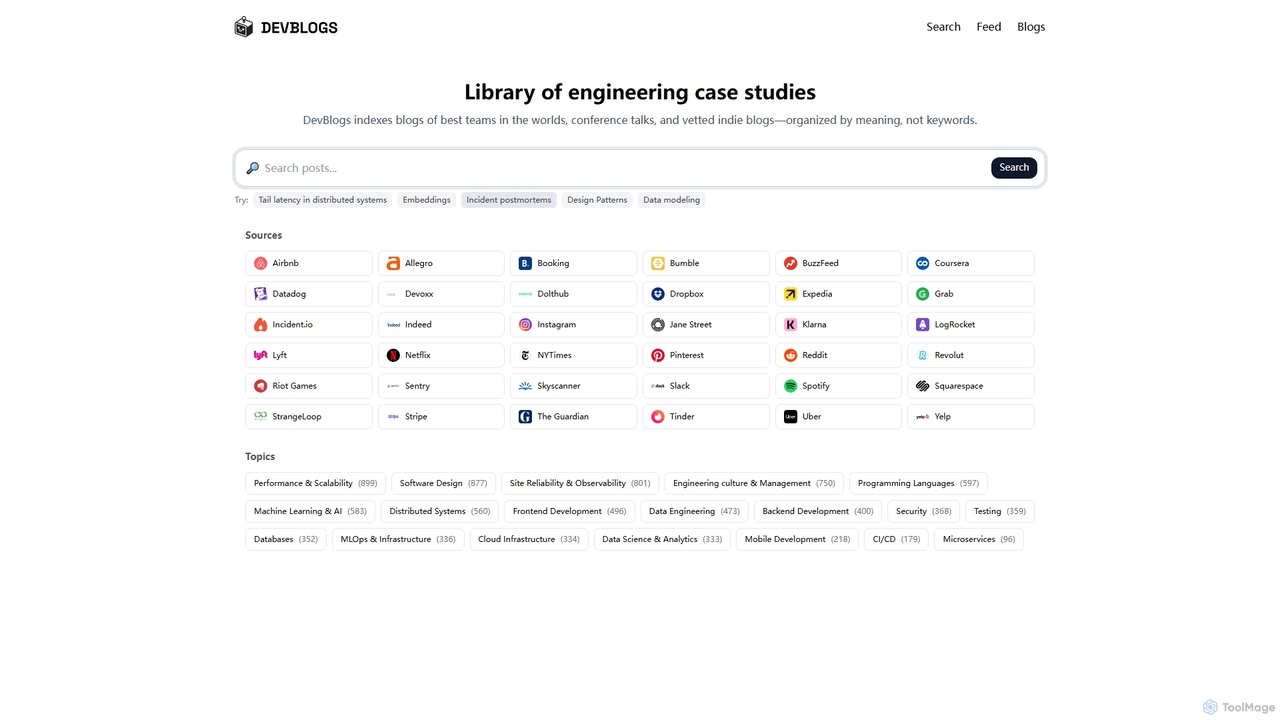
DevBlogs is a curated library indexing engineering case studies, tech blogs, and conference talks from leading global teams. …
DevBlogs is a curated library indexing engineering case studies, tech blogs, and conference talks from leading global teams. It organizes content by meaning and specific technical topics, providing a valuable resource for developers and engineers to discover insights and best practices.
About Ai Engineering
AI Engineering is a specialized discipline focused on applying engineering principles to design, build, deploy, and maintain robust, scalable, and reliable artificial intelligence systems. It bridges the gap between theoretical machine learning research and practical, production-ready AI solutions. These tools streamline the entire AI lifecycle, ensuring models perform optimally, are continuously monitored, and integrate seamlessly into existing infrastructure, delivering tangible business value and accelerating innovation across industries.
Core Features
- MLOps & Deployment: Automate the deployment, monitoring, and management of machine learning models in production environments, ensuring continuous integration and delivery.
- Data Pipeline Management: Design and optimize scalable data ingestion, processing, and transformation pipelines for AI training and inference, guaranteeing data quality and availability.
- Performance Optimization: Tools for fine-tuning AI models, optimizing resource utilization, and ensuring low-latency inference, critical for real-time applications.
- AI System Architecture: Frameworks for designing resilient and modular AI system architectures, from edge devices to large-scale cloud deployments, ensuring scalability and fault tolerance.
- Ethical AI & Governance: Features for bias detection, explainability, and compliance to ensure responsible, fair, and transparent AI deployment in regulated sectors.
Applicable Scenarios
AI Engineering tools are crucial for organizations looking to move beyond AI prototypes to production-grade systems. They are extensively used by AI engineers, MLOps specialists, and data scientists to manage complex AI projects, ensuring models are reliable, scalable, and deliver consistent performance in real-world applications. This includes scenarios in finance for fraud detection, healthcare for diagnostic support, and manufacturing for predictive maintenance, where robust AI operations are paramount.
How to Choose
When selecting AI Engineering tools, consider their comprehensive MLOps capabilities for automated deployment, continuous monitoring, and efficient model retraining. Evaluate their integration with your existing data infrastructure, cloud platforms, and development tools. Assess scalability to handle growing data volumes and model complexity, robust security features, and strong support for ethical AI practices like explainability and bias detection. Finally, factor in ease of use, community support, vendor reliability, and the total cost of ownership to ensure it aligns with your team's specific needs and long-term strategy.

Ai EngineeringUse Cases
Deploying and Monitoring Production ML Models
AI engineers use these tools to automate the deployment of trained machine learning models into production, set up real-time performance monitoring, and establish alerts for model drift or data anomalies. This ensures continuous model reliability and immediate detection of issues, minimizing downtime and maintaining prediction accuracy for critical business applications like fraud detection or recommendation engines.
Building Scalable Data Pipelines for AI
Data engineers leverage AI Engineering platforms to design, implement, and manage robust data pipelines that feed high-quality, pre-processed data to AI models. This involves automating data ingestion from various sources, performing transformations, and ensuring data consistency and availability, which is vital for training large-scale deep learning models and maintaining data integrity.
Optimizing AI Model Performance for Real-time Applications
Developers and AI specialists utilize these tools to fine-tune deployed AI models for optimal performance, especially in latency-sensitive scenarios such as autonomous driving or real-time recommendation systems. This includes techniques like model quantization, distributed inference, and hardware acceleration, ensuring rapid response times and efficient resource utilization.
Managing the End-to-End AI Model Lifecycle
MLOps teams employ AI Engineering suites to oversee the entire lifecycle of AI models, from initial experimentation and version control to deployment, monitoring, retraining, and eventual deprecation. This structured approach ensures traceability, reproducibility, and efficient management of multiple models across different stages of development and production.
Ensuring Ethical AI Deployment and Bias Detection
AI ethicists and engineers use specialized features within these platforms to identify and mitigate biases in AI models before and after deployment. These tools help analyze model fairness across different demographic groups, provide explainability for predictions, and ensure compliance with regulatory standards, fostering responsible and trustworthy AI systems.
Designing Robust AI Infrastructure for Enterprise Solutions
Enterprise architects and AI infrastructure teams use AI Engineering tools to design and implement scalable, secure, and fault-tolerant infrastructure for hosting and serving AI applications. This involves selecting appropriate cloud services, containerization strategies, and orchestration tools to support complex AI workloads and ensure high availability for mission-critical AI services.