Raven
Raven is a self-hosted, real-time ML model monitoring platform designed to simplify observability for AI pipelines. It detects …
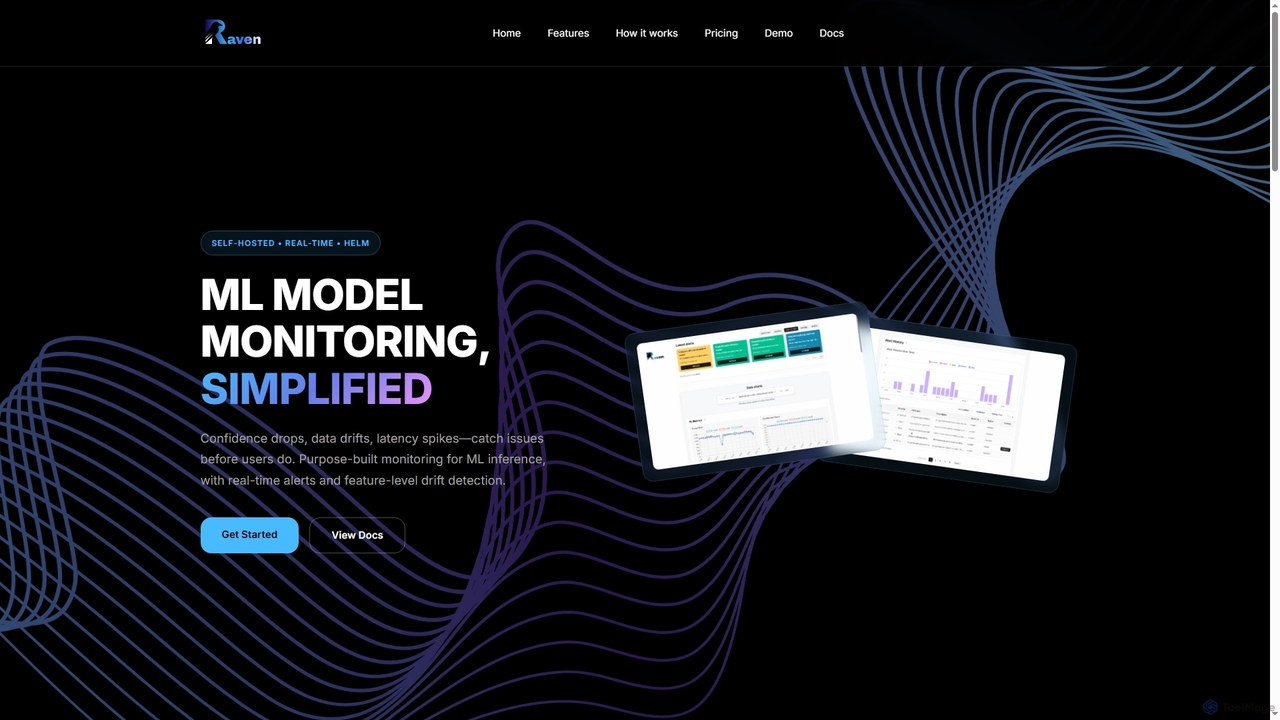
Raven is a self-hosted, real-time ML model monitoring platform designed to simplify observability for AI pipelines. It detects data drift, latency spikes, and confidence drops, providing instant alerts to ensure model reliability and performance in production environments.
About Model Monitoring
Model Monitoring tools are a critical component of the machine learning lifecycle, designed to continuously track the performance, health, and integrity of deployed AI models. These tools automatically detect issues like data drift, concept drift, model degradation, and anomalies, ensuring models remain accurate and reliable over time. By providing real-time insights and alerts, Model Monitoring helps maintain the effectiveness of AI systems in production environments, preventing costly failures and ensuring business objectives are met.
Core Features
- Data & Concept Drift Detection: Identifies shifts in input data distributions or changes in the relationship between inputs and outputs.
- Model Performance Tracking: Monitors key metrics like accuracy, precision, recall, F1-score, and AUC over time.
- Anomaly Detection: Flags unusual model predictions or input data patterns that deviate from expected behavior.
- Bias & Fairness Monitoring: Assesses and tracks potential biases in model predictions across different demographic groups.
- Explainability Integration: Provides insights into why a model made a particular prediction, aiding in debugging and trust.
Use Cases
Model Monitoring is essential for maintaining the reliability of AI systems across various sectors. For instance, in finance, it ensures fraud detection models adapt to new patterns. In healthcare, it verifies diagnostic models remain accurate with evolving patient data. E-commerce platforms use it to keep recommendation engines relevant as user preferences shift, preventing outdated suggestions and maintaining user satisfaction.
How to Choose
When selecting a Model Monitoring solution, consider its integration capabilities with your existing MLOps stack and data sources. Evaluate the range of drift detection algorithms and performance metrics supported, ensuring they align with your model types. Look for robust alerting mechanisms, customizable dashboards, and the ability to scale with your model portfolio. Finally, assess the ease of use and the level of explainability features offered to facilitate debugging and compliance.

Model MonitoringUse Cases
Financial Fraud Detection Model Health Check
Financial institutions deploy AI models to detect fraudulent transactions. Data scientists use Model Monitoring tools to continuously track the model's precision and recall, identifying any degradation caused by new fraud patterns or shifts in transaction data. This ensures the model remains effective in minimizing financial losses and adapting to evolving threats, triggering alerts for retraining when performance drops below a threshold.
E-commerce Recommendation System Relevance Maintenance
E-commerce platforms rely on AI to provide personalized product recommendations. Data scientists leverage Model Monitoring to detect concept drift in user preferences or product trends. By observing changes in click-through rates or conversion rates linked to model predictions, they can identify when the recommendation engine becomes less relevant, prompting updates to maintain user engagement and sales.
Healthcare AI Diagnostic Model Bias Identification
AI models in healthcare assist with disease diagnosis or treatment recommendations. AI engineers utilize Model Monitoring to proactively identify and track potential biases in predictions across different patient demographics (e.g., age, gender, ethnicity). This ensures fairness and equity in healthcare outcomes, preventing discriminatory decisions and maintaining ethical AI practices, crucial for patient trust and regulatory compliance.
Smart Customer Service Bot Performance Optimization
Companies use AI-powered chatbots for customer support, relying on intent recognition models. AI operations teams employ Model Monitoring to track the accuracy of intent classification and identify instances where the bot fails to understand user queries. This helps pinpoint new or evolving customer needs, allowing for prompt model retraining or rule adjustments to improve customer satisfaction and reduce escalation rates.
Industrial IoT Predictive Maintenance Model Validation
In manufacturing, AI models predict equipment failures based on sensor data. Maintenance engineers use Model Monitoring to validate the health of these predictive models by detecting data drift in sensor readings or significant deviations in predicted failure times. This ensures the models provide reliable early warnings, enabling proactive maintenance, minimizing downtime, and optimizing operational efficiency.
Ad Campaign Performance Prediction Data Quality Assurance
Marketing teams use AI to predict the performance of advertising campaigns. Marketing data analysts implement Model Monitoring to ensure the quality and consistency of input data (e.g., audience demographics, bid prices, creative features) feeding these prediction models. Detecting data anomalies or schema changes early prevents inaccurate forecasts, optimizing ad spend and maximizing campaign ROI.