Machine Learning Best in category 1 results Data Preparation AI Tool

Popular AI tools in the Data Preparation field of Machine Learning include Scematics, etc., helping you quickly improve efficiency.

Scematics

Scematics

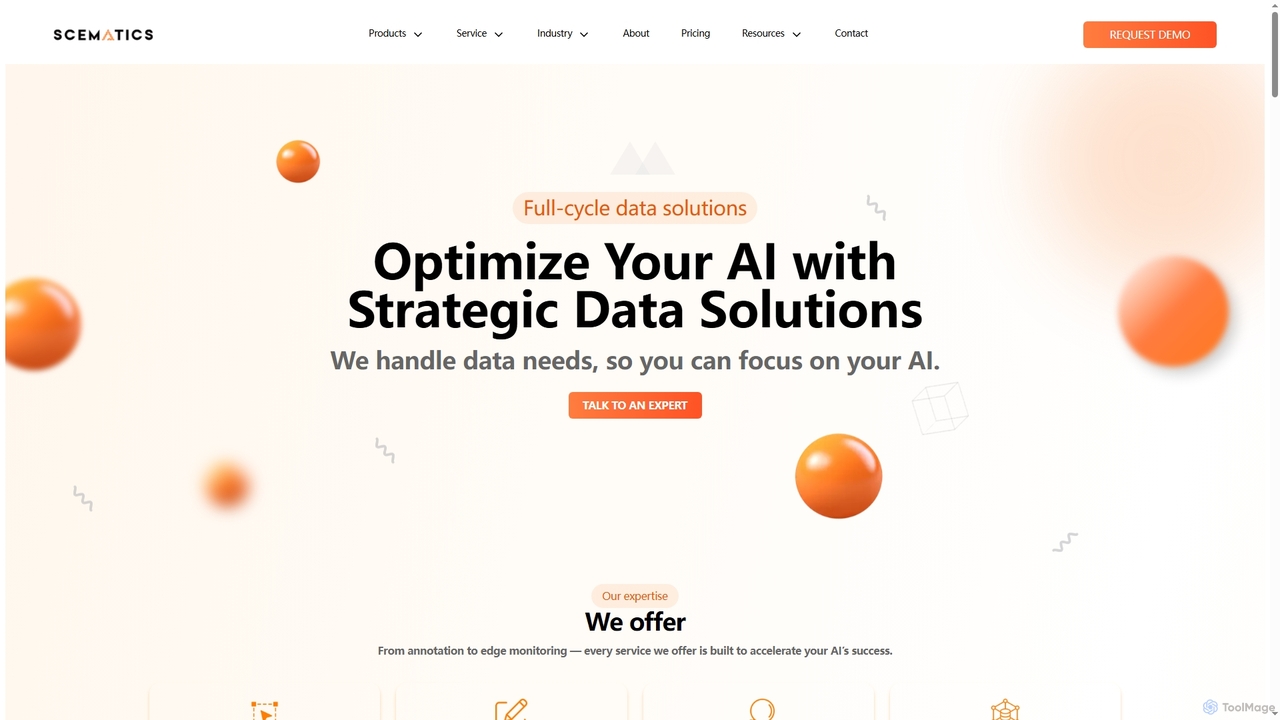
Scematics is an all-in-one data annotation and labeling platform that provides strategic data solutions to optimize AI models. …

2.5K

About Data Preparation

Data Preparation tools are AI-powered solutions designed to transform raw, unstructured data into a clean, structured, and usable format for machine learning models. These tools leverage advanced algorithms for data cleaning, transformation, and feature engineering, significantly improving model accuracy and efficiency. They are essential for data scientists and ML engineers to streamline the initial, often time-consuming, stages of the machine learning pipeline, ensuring high-quality input for robust model training.

Core Features

  • Data Cleaning: Automatically identifies and corrects errors, handles missing values, and removes duplicates or inconsistencies.
  • Feature Engineering: Creates new, more informative features from raw data, enhancing the predictive power of models.
  • Data Transformation: Normalizes, scales, or encodes data into formats suitable for various machine learning algorithms.
  • Data Augmentation: Generates synthetic data points to expand datasets, particularly useful for rare classes or limited data.
  • Anomaly Detection: Pinpoints outliers or unusual patterns in data that could skew model training.

Applicable Scenarios

Data Preparation tools are crucial across industries where data quality directly impacts analytical outcomes. Data scientists use them to refine datasets before training predictive models, ensuring data integrity. Business analysts leverage these tools to prepare customer data for segmentation and personalized marketing campaigns. Furthermore, researchers in fields like genomics or finance apply them to standardize complex datasets for advanced statistical analysis and pattern recognition.

How to Choose

When selecting Data Preparation tools, consider the types and volume of data you handle, as well as the complexity of required transformations. Evaluate the tool's integration capabilities with your existing data sources and machine learning platforms. Look for robust feature engineering options, intuitive user interfaces, and scalability to accommodate growing data needs. Finally, assess the level of automation and the tool's ability to handle specific data quality challenges relevant to your domain.

Data PreparationUse Cases

1

Preparing Customer Data for Churn Prediction

A data analyst in a telecommunications company needs to predict customer churn. They use Data Preparation tools to clean raw customer interaction logs, merge billing data with service usage, and engineer features like 'average call duration' or 'number of support tickets' from disparate sources. This process ensures the dataset is ready for a machine learning model to accurately identify customers at risk of churning, enabling proactive retention strategies.

2

Cleaning Sensor Data for Predictive Maintenance

An industrial engineer working with IoT devices needs to predict equipment failures. Raw sensor data often contains noise, missing readings, and inconsistent timestamps. Data Preparation tools are used to filter out noise, impute missing values based on historical trends, and synchronize timestamps across multiple sensors. This clean and consistent dataset is then fed into a machine learning model to accurately predict when maintenance is required, minimizing downtime and operational costs.

3

Feature Engineering for Fraud Detection

A financial institution aims to enhance its fraud detection capabilities. Transaction data, while abundant, requires significant preparation. Data Preparation tools help create new features such as 'transaction frequency per account in the last hour,' 'average transaction value over the past week,' or 'deviation from typical spending patterns.' These engineered features provide richer context to the fraud detection model, allowing it to identify suspicious activities more effectively than with raw data alone.

4

Standardizing Healthcare Records for Disease Prediction

Medical researchers need to analyze vast amounts of patient data from various hospitals to predict disease outbreaks or patient outcomes. Healthcare records often come in diverse formats, with inconsistent terminology and missing fields. Data Preparation tools are used to standardize medical codes, impute missing lab results, and harmonize patient demographics across different datasets. This ensures a unified, high-quality dataset for machine learning models to identify patterns and make accurate predictions.

5

Optimizing E-commerce Product Data for Recommendation Engines

An e-commerce platform aims to improve its product recommendation engine. Product data, often sourced from various vendors, can be inconsistent in descriptions, categories, and image metadata. Data Preparation tools are employed to normalize product attributes, map disparate categories to a unified taxonomy, and enrich product descriptions with relevant keywords. This refined data allows the recommendation engine to provide more accurate and personalized suggestions to customers, boosting sales and user engagement.

6

Data Augmentation for Image Recognition Models

A computer vision engineer is building an image recognition model for a rare disease diagnosis, but has a limited dataset of medical images. Data Preparation tools with augmentation capabilities are used to generate synthetic variations of existing images by applying transformations like rotation, flipping, zooming, and color adjustments. This significantly expands the training dataset, helping the model learn more robust features and improve its ability to accurately identify the disease, even with scarce real-world examples.

Data PreparationFrequently Asked Questions