VibeTrack
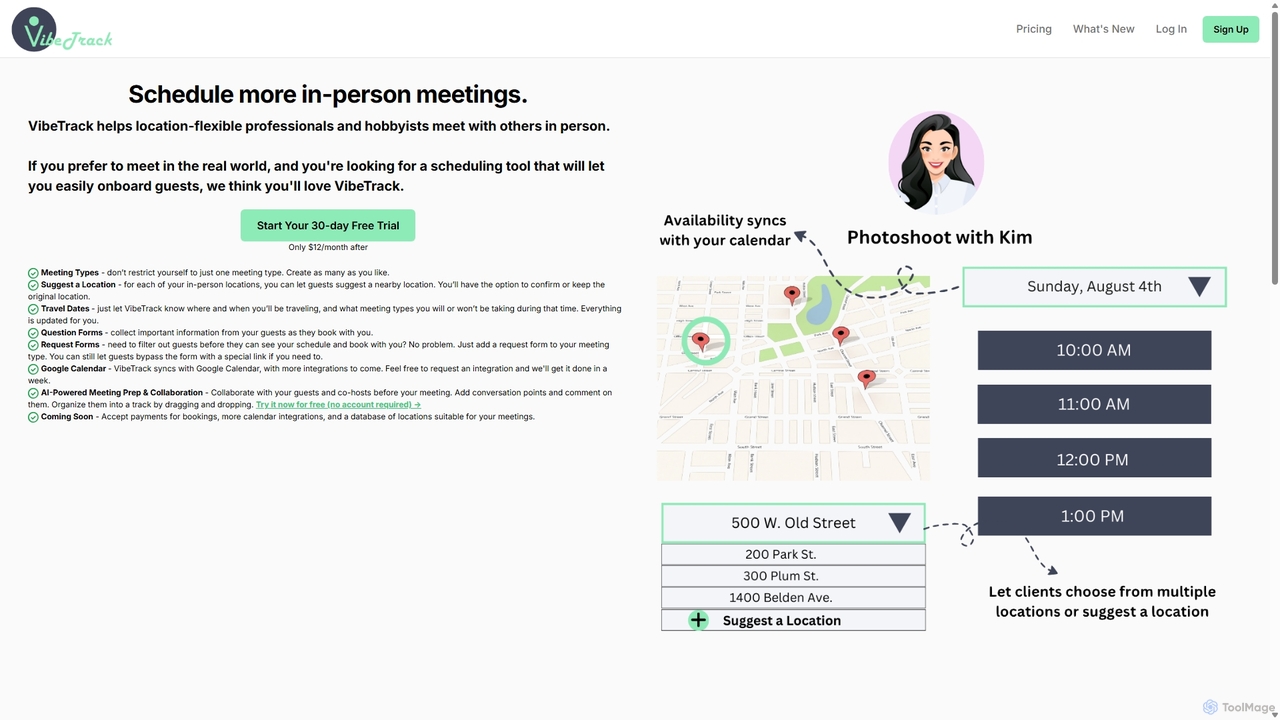
VibeTrack is an AI-powered scheduling tool designed for podcasters and location-flexible professionals who prioritize in-person meetings. It simplifies …
VibeTrack is an AI-powered scheduling tool designed for podcasters and location-flexible professionals who prioritize in-person meetings. It simplifies booking with features like location suggestions, travel date management, and customizable forms. Its standout feature is an AI-driven collaboration space for pre-meeting preparation, allowing hosts and guests to organize conversation points and ensure productive discussions. It also supports virtual meetings and syncs seamlessly with Google Calendar.
EchoPod
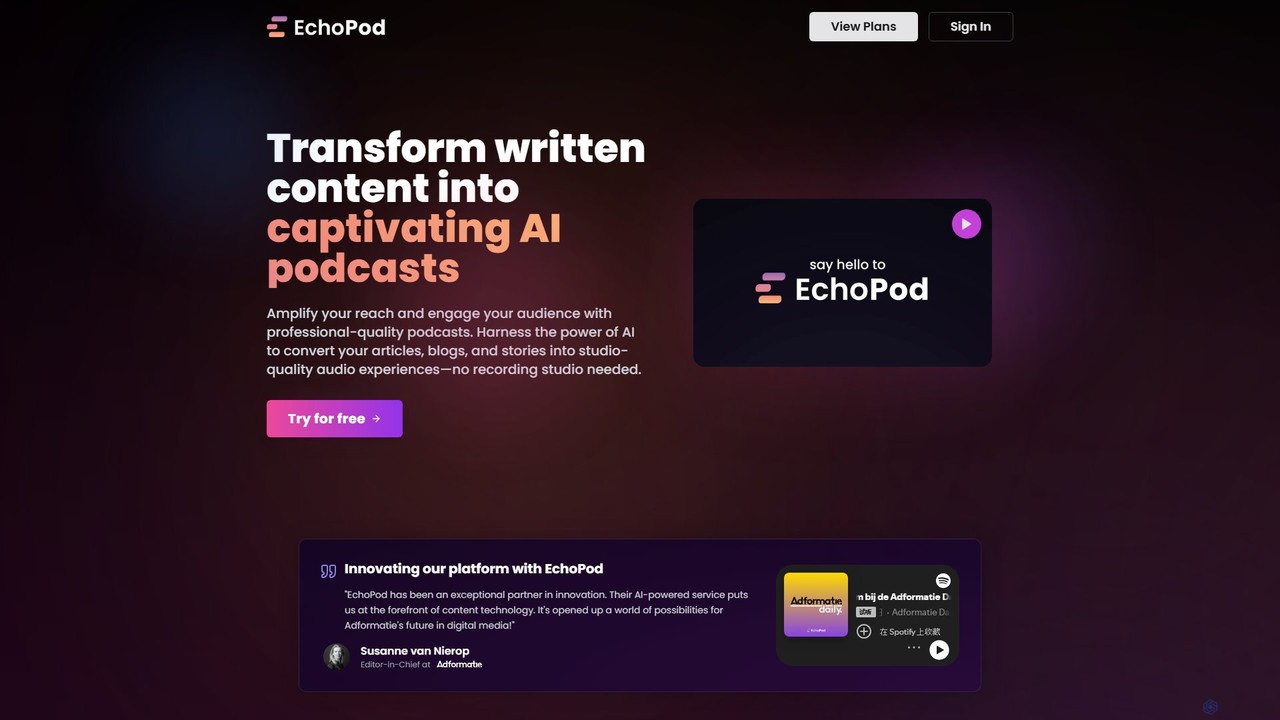
EchoPod is an AI-powered platform that transforms written content like articles, blogs, and newsletters into professional-quality, engaging podcasts. …
EchoPod is an AI-powered platform that transforms written content like articles, blogs, and newsletters into professional-quality, engaging podcasts. It automates the entire process from script creation to audio narration with AI voices and background music, providing a seamless way to repurpose content and expand audience reach.
mumbler
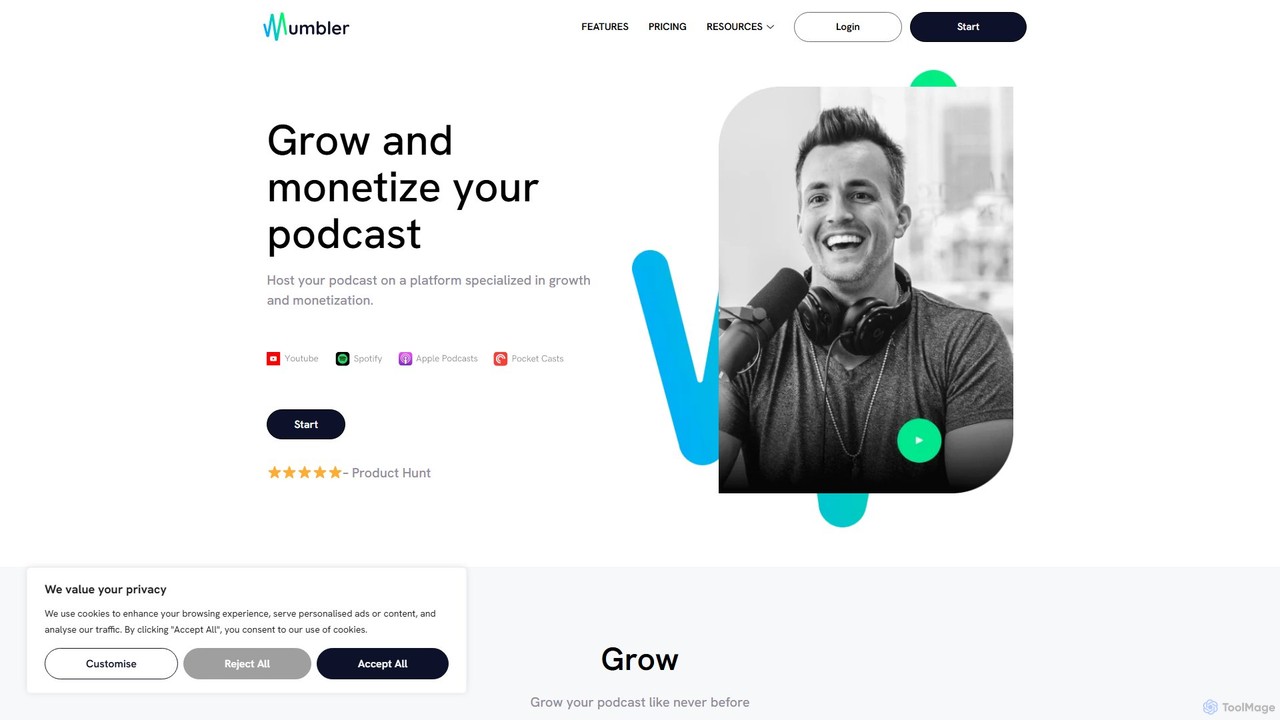
Mumbler is an all-in-one podcast hosting platform designed for creators focused on growth and monetization. It provides a …
Mumbler is an all-in-one podcast hosting platform designed for creators focused on growth and monetization. It provides a suite of tools including AI-generated transcriptions, integrated newsletters, and customizable podcast/creator pages. Mumbler emphasizes creator-first monetization through premium content sales, donations, and direct sponsorships, rather than disruptive dynamic ads, simplifying distribution to all major platforms.
About Podcasting
AI Podcasting tools are applications that leverage artificial intelligence to automate and enhance the entire podcasting workflow. These tools utilize technologies like speech-to-text for transcription, audio processing for noise reduction, and generative AI for content creation. They significantly lower the technical barrier for new creators and enable marketing teams to scale their audio content strategy efficiently. By handling tedious tasks, these tools free up creators to focus on producing high-quality content.
Core Features
- Automated Editing & Transcription: Automatically removes filler words (e.g., 'ums', 'ahs'), silences, and generates time-stamped transcripts for text-based audio editing.
- Audio Enhancement & Mastering: Uses AI to eliminate background noise, balance audio levels, and apply mastering presets for a professional, studio-quality sound.
- Content Repurposing: Generates show notes, summaries, blog posts, and promotional social media clips (audiograms) directly from the episode audio.
- Voice Synthesis & Cloning: Corrects misspoken words or generates entire audio segments using a cloned or synthetic voice, avoiding the need for re-recording.
Use Cases
AI podcasting tools are ideal for solo podcasters, content marketing teams, corporate communication departments, and educational institutions. They are used to streamline post-production, improve audio quality for interviews recorded remotely, and repurpose a single episode into multiple marketing assets to maximize reach and engagement.
How to Choose
When selecting an AI podcasting tool, consider the accuracy of its transcription and filler word detection. Evaluate the effectiveness of its audio enhancement features, such as noise reduction and auto-leveling. Assess the quality and variety of its content repurposing options and check for integrations with your podcast hosting platform or other marketing tools.
PodcastingUse Cases
Automated Episode Editing for Solo Creators
A solo podcaster records a 45-minute interview but lacks the time for detailed manual editing. They upload the raw audio file to an AI podcasting tool. The AI automatically transcribes the entire conversation and identifies all filler words like 'um' and 'ah', as well as long, awkward pauses. With a single click, the creator removes all these elements, instantly tightening up the conversation. This process reduces the editing time from several hours to under 15 minutes, allowing the creator to publish episodes more consistently.
Generating Show Notes and Transcripts for SEO
A marketing team produces a weekly podcast to showcase industry expertise. To improve accessibility and SEO, they need transcripts and show notes for each episode. Using an AI tool, they upload the final audio. The tool generates a highly accurate, speaker-differentiated transcript within minutes. It also creates a concise summary highlighting key topics, guest bios, and resources mentioned. This content is then published on their blog alongside the embedded audio player, making the podcast discoverable by search engines and accessible to a wider audience.
Creating Social Media Audiograms for Promotion
A content creator wants to promote their new podcast episode on Instagram and LinkedIn. They use an AI podcasting tool that can identify the most compelling 'highlight' moments from the audio. The creator selects a 60-second clip suggested by the AI. The tool then automatically generates an engaging video (an audiogram) by combining the audio clip with the podcast's cover art, a dynamic waveform animation, and animated captions. They can quickly generate versions in square, vertical, and horizontal formats, perfectly optimized for each social media platform, driving traffic to the full episode.
Noise Reduction for On-the-Go Recording
A journalist is conducting an important interview in a busy café with significant background noise, including chatter and clattering dishes. After the recording, they use an AI audio enhancement tool. The AI is trained to distinguish human speech from ambient noise. It isolates the voices of the journalist and the interviewee while suppressing the distracting background sounds. The result is a clean, professional-sounding audio track that is clear and easy for listeners to understand, salvaging what would have otherwise been an unusable recording.
Repurposing Podcast Content into a Blog Post
A business consultant hosts a podcast sharing expert advice. To reach an audience that prefers reading, they use an AI tool to repurpose an episode into a blog post. The tool transcribes the audio, then its generative AI capabilities analyze the content to identify the main arguments, key takeaways, and structure. It drafts a well-organized article complete with headings, subheadings, and bullet points. The consultant only needs to spend a few minutes reviewing and refining the draft, transforming a 30-minute audio file into a valuable written asset in a fraction of the time.
AI Voice Cloning for Audio Corrections
During the final review of a podcast episode, an editor notices the host mispronounced a guest's company name. Re-recording the small segment would be inconvenient and time-consuming. Instead, the editor uses an AI tool with a voice cloning feature. After training the AI on a short sample of the host's voice, the editor simply types the correct company name. The AI generates the corrected phrase in the host's own voice, matching the tone and cadence of the original recording. The editor seamlessly inserts the new audio, making the correction undetectable to the listener.