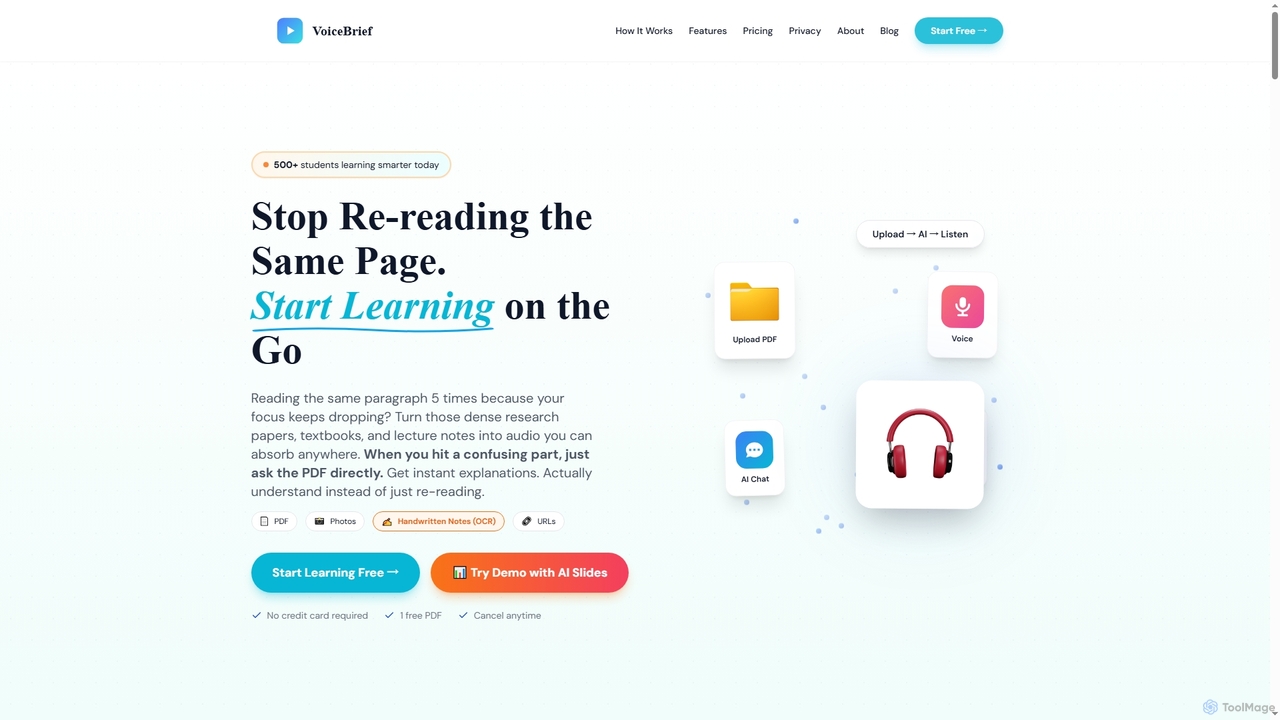
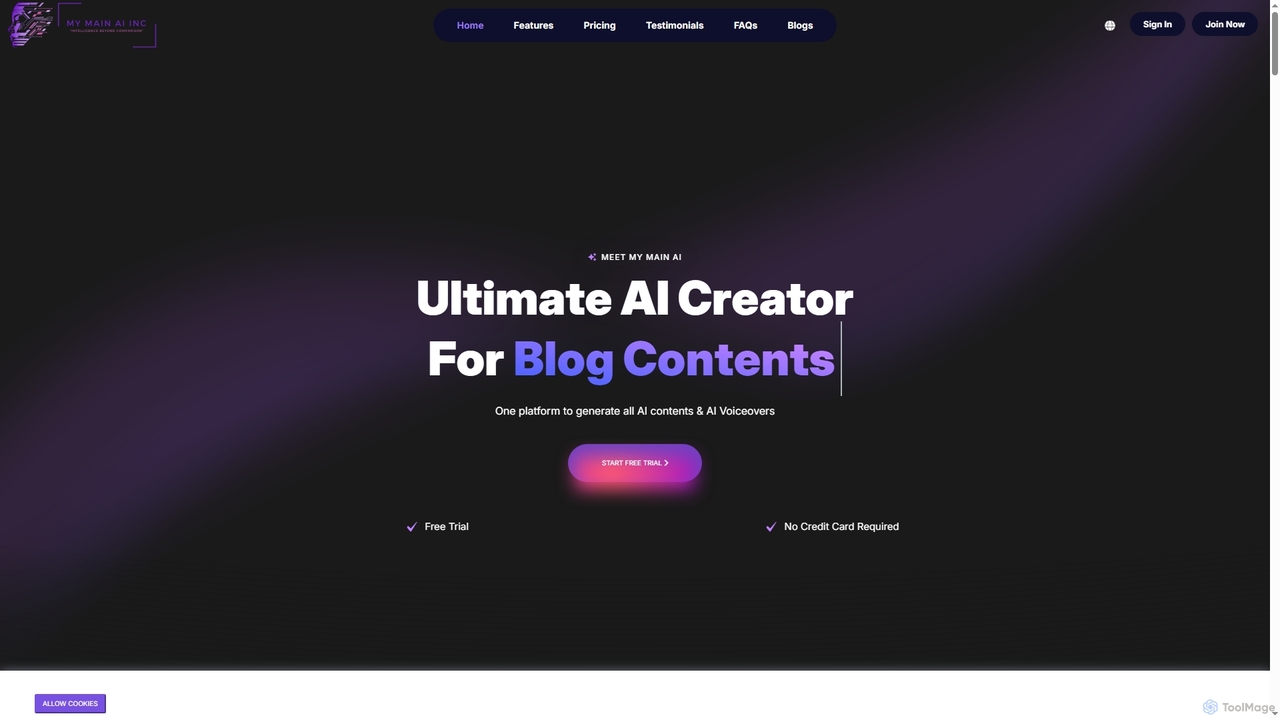
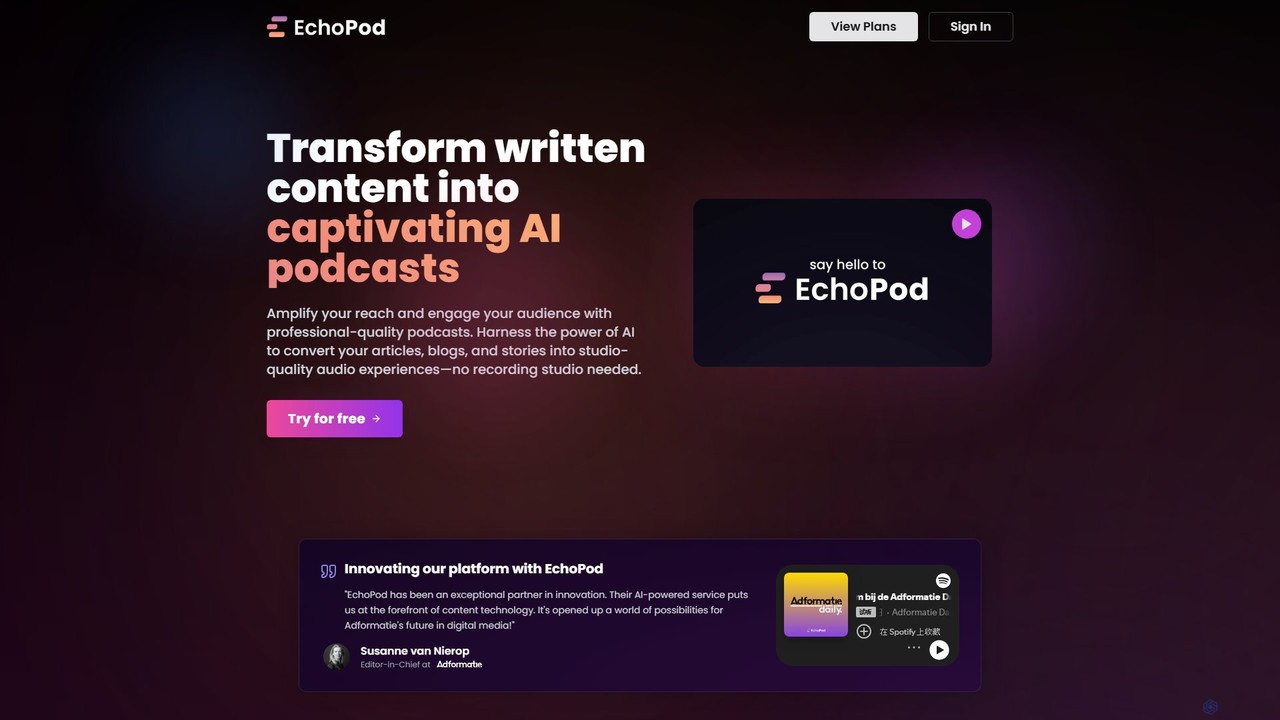
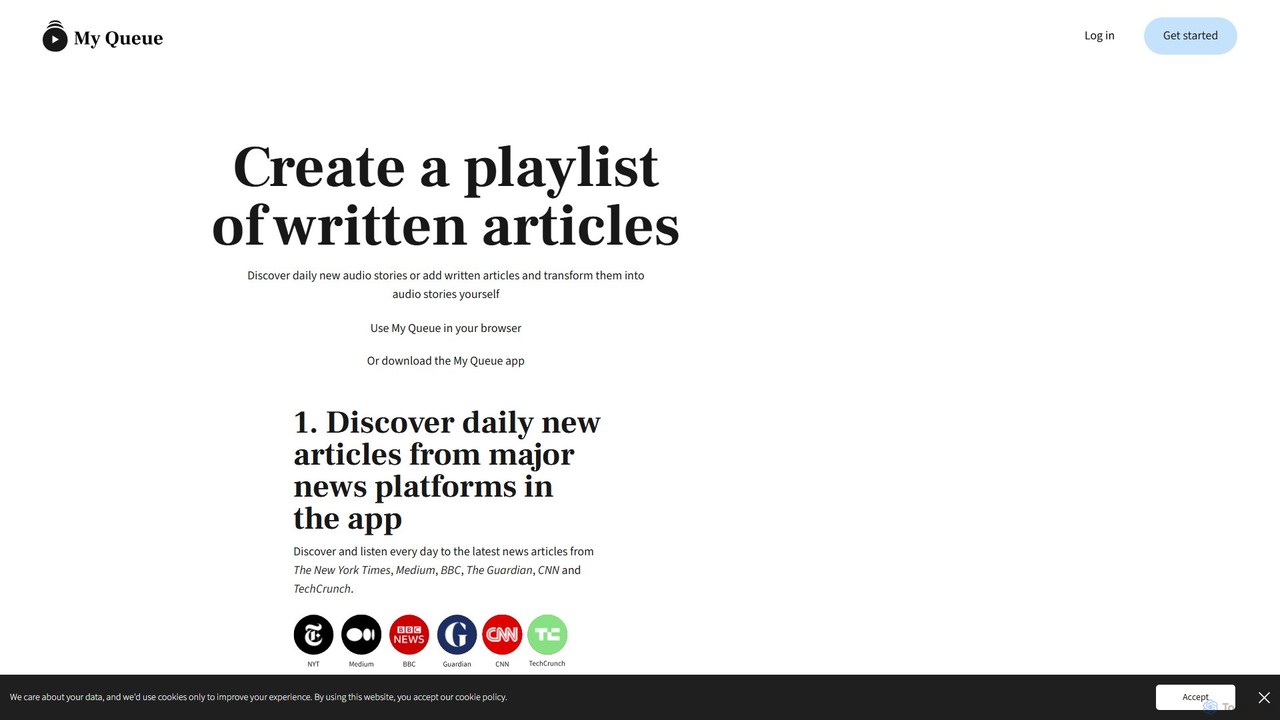
Audio Generation tools are a class of AI applications that synthesize audio content, such as speech, music, and sound effects, from text prompts or other inputs. Leveraging advanced models like text-to-speech (TTS) and generative networks, these tools can produce realistic human-like voices, compose original musical pieces, or create custom soundscapes. They are invaluable for content creators, marketers, and developers, enabling the rapid production of voiceovers, podcast audio, and background music without needing recording studios or professional talent. Unlike traditional audio editing software, which modifies existing recordings, audio generation tools create entirely new audio assets from scratch.
Core Features
- Text-to-Speech (TTS): Converts written text into natural-sounding speech in multiple languages, accents, and emotional tones.
- Music Generation: Creates royalty-free music tracks based on genre, mood, tempo, or instrument descriptions.
- Sound Effect Synthesis: Generates specific sound effects from text prompts, such as "ocean waves crashing" or "futuristic laser blast."
- Voice Cloning: Replicates a specific voice from a short audio sample to generate new speech in that same voice for consistent branding.
Use Cases
These tools are widely used by podcasters for creating intros and outros, video creators for generating voiceovers and background scores, and game developers for producing dynamic sound effects. E-learning developers also use them to create accessible audio versions of course materials, while marketers produce audio ads and branded content efficiently.
How to Choose
When selecting an Audio Generation tool, consider the quality and naturalness of the output. Evaluate the range of available voices, languages, and musical styles. Assess the level of customization, such as control over pitch, speed, and emotion. Finally, check the licensing terms for commercial use and the platform's API availability for integration into applications.