Voiceform
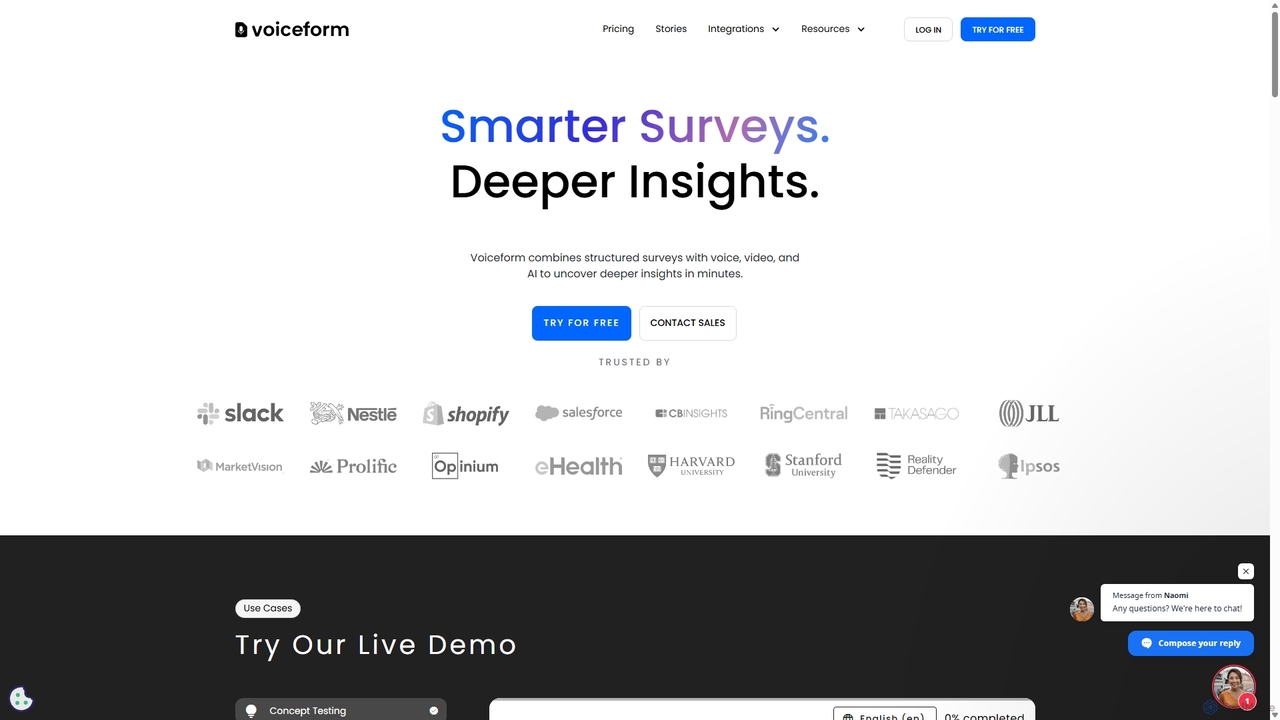
Voiceform is an AI-powered survey platform that captures deeper qualitative insights through voice, video, and text responses. It …
Voiceform is an AI-powered survey platform that captures deeper qualitative insights through voice, video, and text responses. It leverages AI for transcription, translation, sentiment analysis, and dynamic follow-up questions, helping businesses understand their customers more authentically and at scale.
SurveySlack
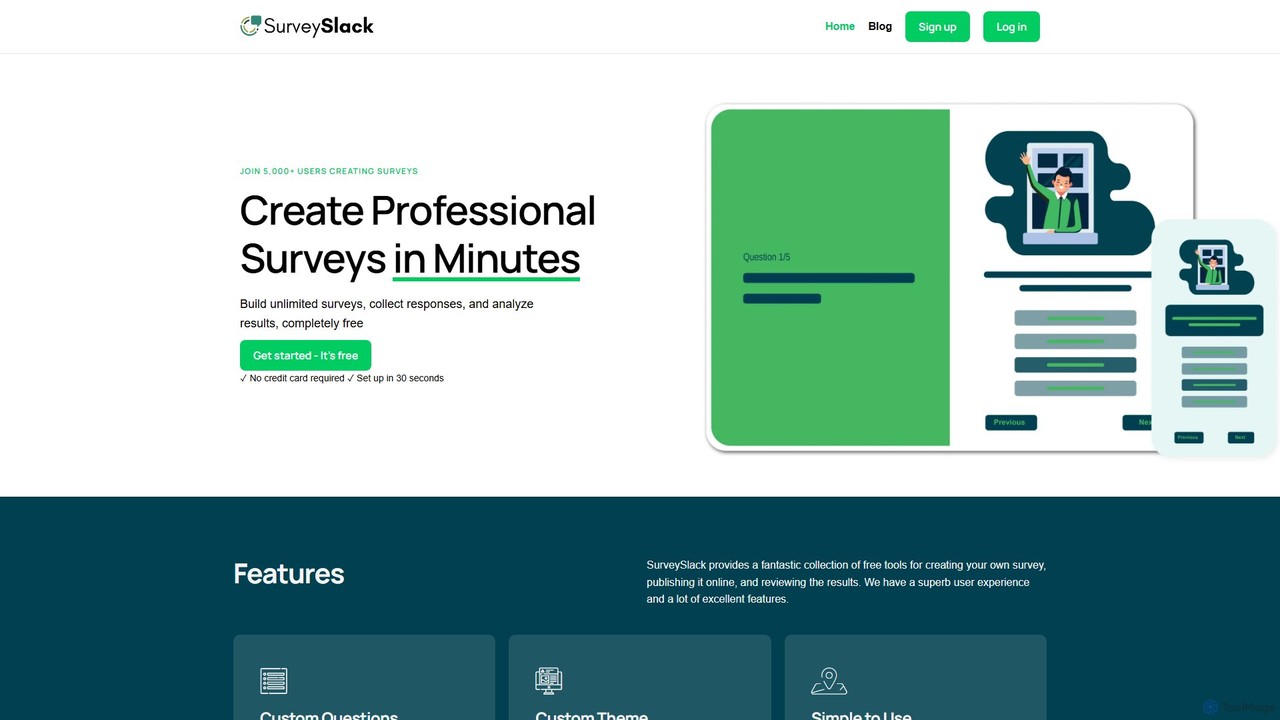
SurveySlack is an AI-powered online survey creator designed to build engaging surveys and boost response rates. It offers …
SurveySlack is an AI-powered online survey creator designed to build engaging surveys and boost response rates. It offers a user-friendly interface, customizable templates, and an AI question generator to simplify data collection. Ideal for small businesses, researchers, and internal feedback, it provides powerful tools for creating, sharing, and analyzing surveys, including a generous free plan.
About Surveys & Forms
AI Surveys & Forms are tools that use artificial intelligence to create, distribute, and analyze data collection forms. They leverage natural language processing (NLP) and machine learning to generate relevant questions, personalize user paths, and automatically extract insights from open-ended responses. This enables marketers and researchers to gather higher-quality data more efficiently, understand customer sentiment in real-time, and improve response rates through dynamic, conversational experiences. Unlike traditional form builders, these AI tools can adapt questions on the fly based on user input, turning a static form into an interactive dialogue.
Core Features
- AI Question Generation: Creates context-aware and unbiased questions based on a simple objective or prompt.
- Dynamic Logic & Branching: Automatically adjusts the survey path based on a user's previous answers or sentiment.
- Open-Ended Response Analysis: Uses NLP to categorize and summarize text feedback, identifying key themes and sentiment.
- Conversational Interface: Presents questions in a chatbot-like format to increase engagement and completion rates.
- Predictive Analytics: Forecasts survey outcomes and identifies potential respondent fatigue to optimize length.
Use Cases
These tools are ideal for market research, customer feedback collection, lead generation, and employee engagement surveys. Marketing teams use them to create interactive lead capture forms that qualify prospects in real-time, while product managers deploy them for in-depth user experience feedback that doesn't require manual analysis of thousands of text responses.
How to Choose
When selecting a tool, consider the sophistication of its AI analysis for open-ended text, its integration capabilities with your CRM or marketing automation platform, the level of customization for conversational flows, and its data privacy and compliance standards (e.g., GDPR, CCPA). Evaluate whether you need simple form generation or advanced qualitative data analysis.

Surveys & FormsUse Cases
Automated Market Research Analysis
A market researcher needs to analyze thousands of open-ended responses from a product concept survey. Instead of spending days manually coding data, they upload the raw responses to an AI survey tool. The platform uses NLP to automatically tag responses with themes like 'pricing concerns,' 'feature requests,' or 'UI feedback' and analyzes the sentiment for each theme. This process generates an interactive dashboard highlighting key customer insights within minutes, reducing manual analysis time by over 90% and enabling faster, data-driven decisions.
Dynamic Lead Generation Forms
A digital marketer wants to increase conversion rates on a website's 'Request a Demo' form, which has a high abandonment rate. They replace the static form with a conversational AI form. This new form asks questions one by one, like a chat, and uses dynamic logic to adapt follow-up questions based on the user's industry or company size. For example, it might ask enterprise leads about integration needs while asking startups about their budget. This personalized approach increases form completion rates by 30% and provides the sales team with more qualified, pre-vetted leads.
Real-time Customer Feedback Collection
A customer success manager needs to gather immediate feedback after a support interaction. They deploy an AI-powered survey via email that uses dynamic logic. If a user gives a low Net Promoter Score (NPS), the survey immediately asks for specific open-ended feedback on what went wrong. The AI then analyzes these text responses in real-time, tagging them with issue types like 'slow response time' or 'unresolved problem'. This allows the support team to identify and address recurring issues 25% faster, improving overall customer satisfaction.
Interactive Employee Engagement Surveys
An HR manager aims to get more honest and detailed feedback from employees who often skip long, generic annual surveys. They use an AI tool to create a conversational survey that feels more like a confidential chat. The AI can probe for more details on vague answers. For instance, if an employee says 'communication can be better,' the AI asks 'Could you give an example of what kind of communication you'd like to see more of?'. This interactive approach boosts employee participation by 40% and uncovers specific, actionable insights that were missed in previous multiple-choice surveys.
AI-Powered Academic Research Data Collection
A university researcher is conducting a complex social science study that requires nuanced data. They design a survey where the AI generates follow-up questions based on the participant's initial responses, ensuring deeper exploration of key topics without a rigid script. The AI also ensures questions are phrased neutrally to avoid bias. For example, after a participant expresses a view on a policy, the AI can ask 'What specific experiences led you to that view?' This method gathers richer qualitative data and helps identify unforeseen correlations, enhancing the depth and validity of the research findings.
Personalized Product Onboarding Questionnaires
A product manager for a SaaS platform wants to personalize the onboarding experience for new users. They create an AI-driven welcome questionnaire that asks about the user's role, goals, and experience level. Based on the answers, the system automatically customizes the user's initial dashboard, highlights relevant features, and suggests a tailored tutorial sequence. For example, a 'developer' user is shown API documentation first, while a 'marketer' is guided to campaign-building tools. This personalization improves user activation rates by 20% and reduces early-stage churn.