Voodu AI
Voodu AI is a conversational AI voice assistant for websites. It allows users to interact with a site …
Voodu AI is a conversational AI voice assistant for websites. It allows users to interact with a site using natural language, either by speaking or typing, to get instant spoken answers, find information, and navigate, enhancing user experience and accessibility.
AIHelp
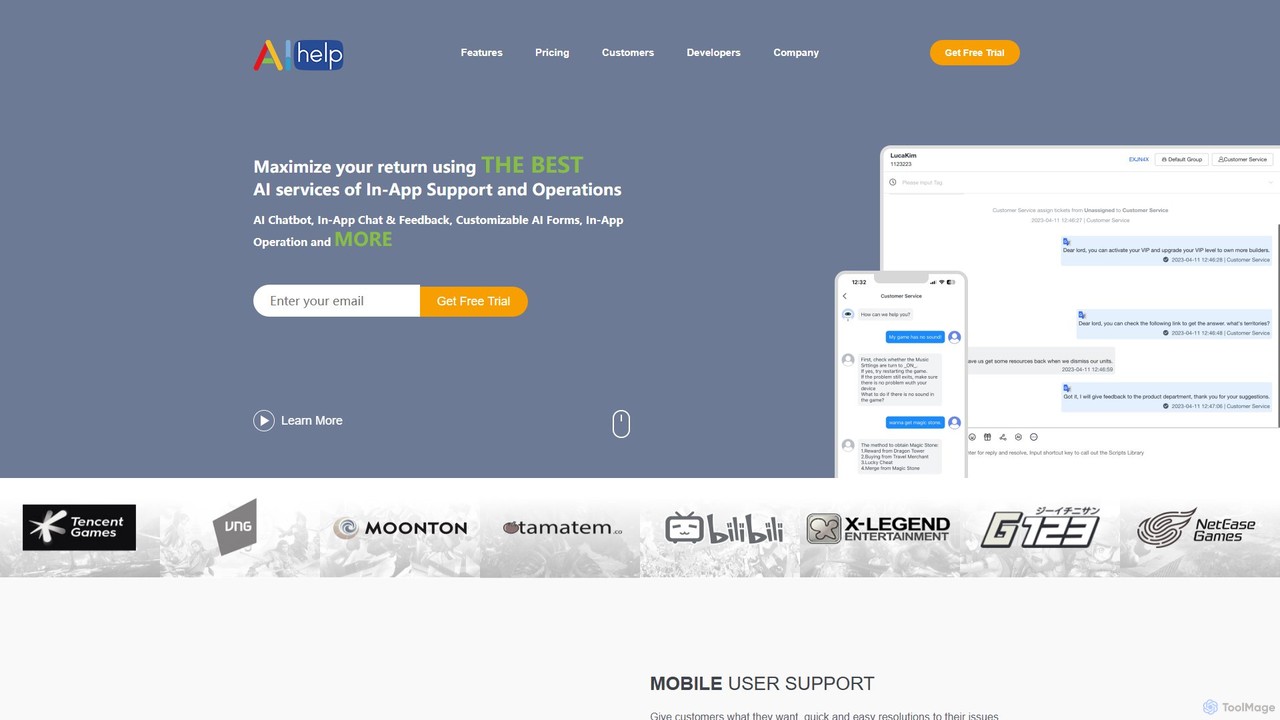
AIHelp is an AI-powered customer support and in-app operations platform for mobile and web apps. It boosts user …
AIHelp is an AI-powered customer support and in-app operations platform for mobile and web apps. It boosts user engagement and satisfaction with features like AI chatbots, in-app messaging, smart forms, and a multi-channel helpdesk, helping businesses automate support and increase efficiency.
Command AI
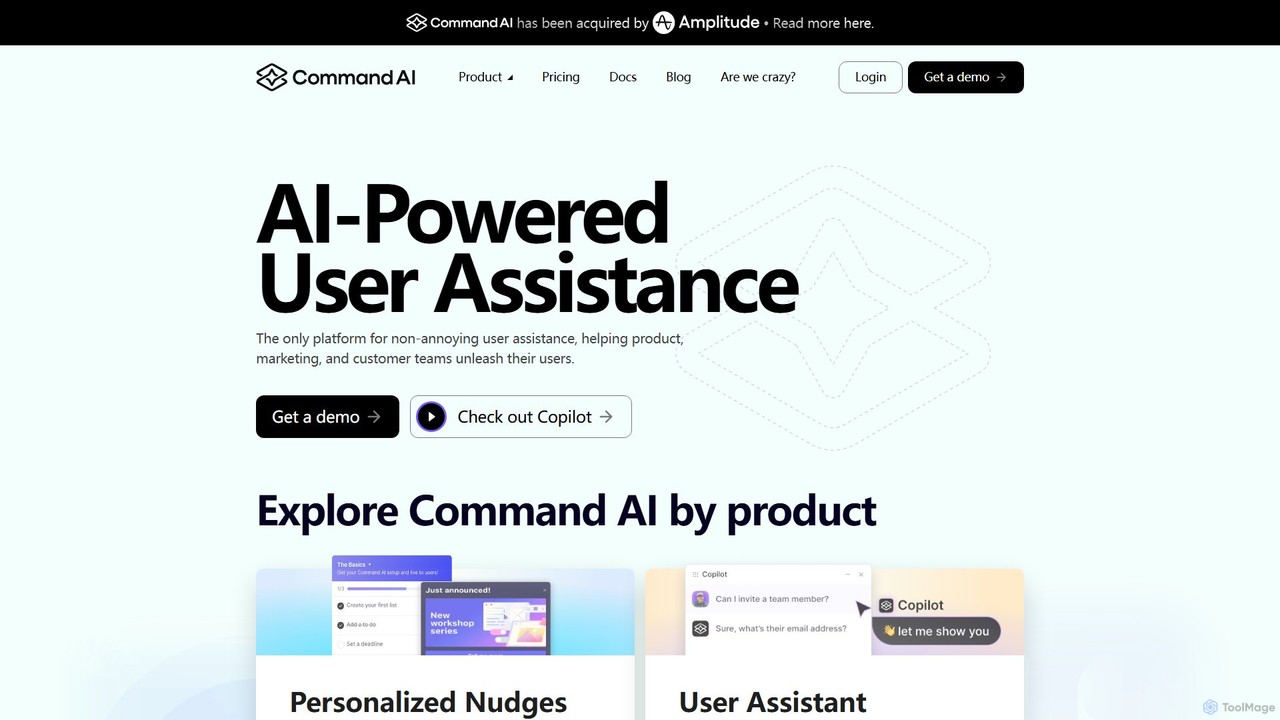
Command AI is an AI-powered user assistance platform that helps businesses improve user onboarding, support, and retention. It …
Command AI is an AI-powered user assistance platform that helps businesses improve user onboarding, support, and retention. It provides a suite of non-intrusive tools, including an AI Copilot, personalized nudges, product tours, and a smart in-app help center, to guide users proactively and enhance their product experience.
Jimo
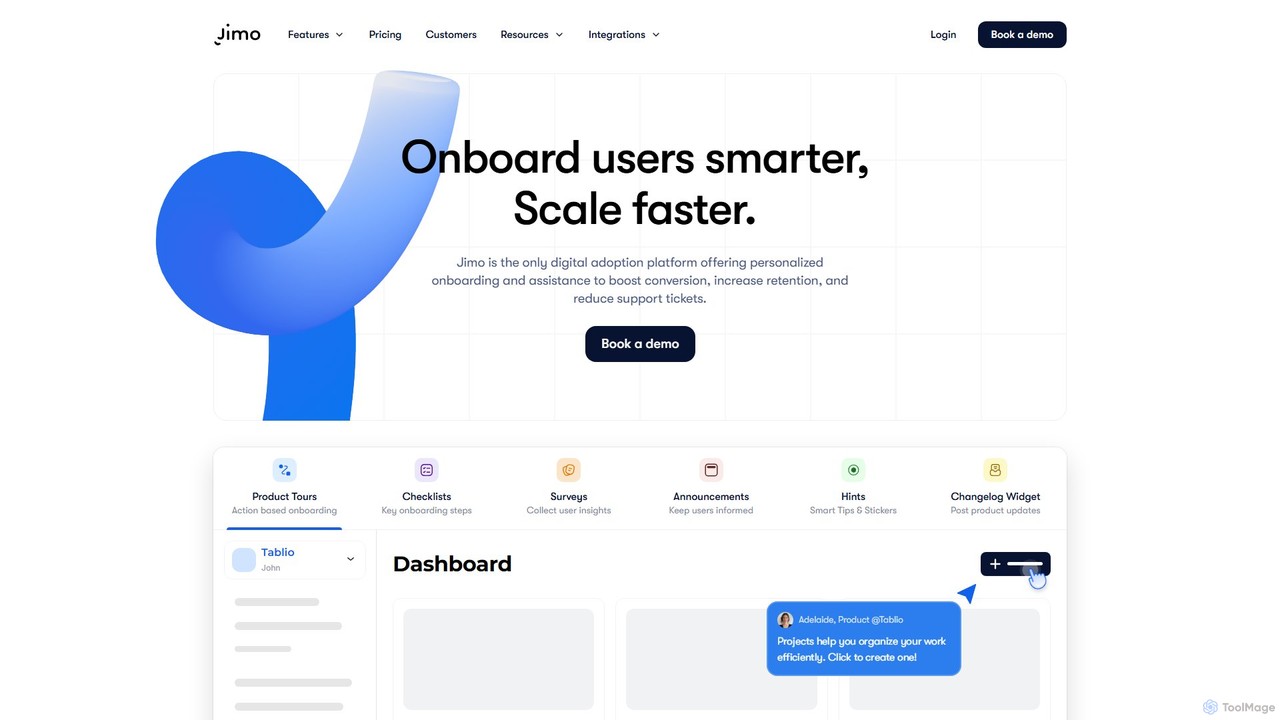
Jimo is an AI-powered digital adoption platform that enables businesses to create no-code, personalized user onboarding experiences. It …
Jimo is an AI-powered digital adoption platform that enables businesses to create no-code, personalized user onboarding experiences. It helps increase user activation, boost retention, and reduce support tickets through interactive product tours, checklists, surveys, and targeted in-app messaging.
Gleap
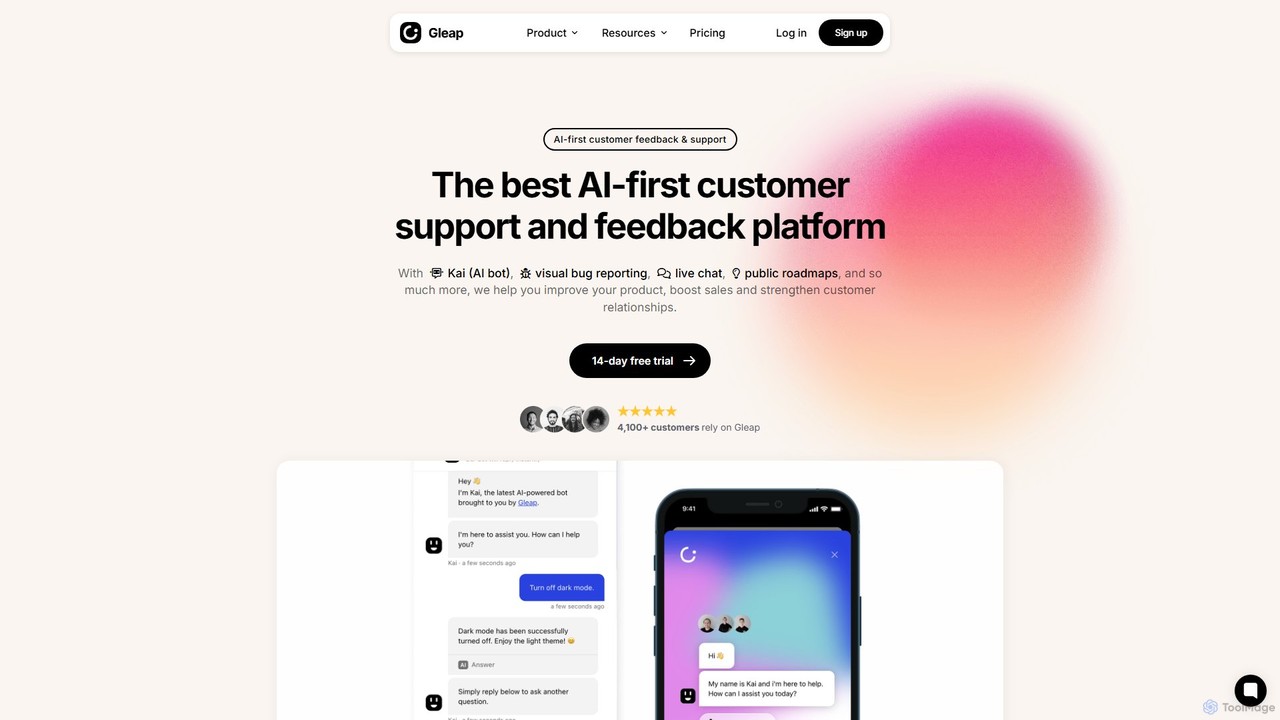
Gleap is an all-in-one, AI-powered customer feedback platform. It helps businesses collect bug reports and user feedback, provide …
Gleap is an all-in-one, AI-powered customer feedback platform. It helps businesses collect bug reports and user feedback, provide automated support with an AI chatbot, engage users with in-app messaging, and manage a public product roadmap.
Inline Help
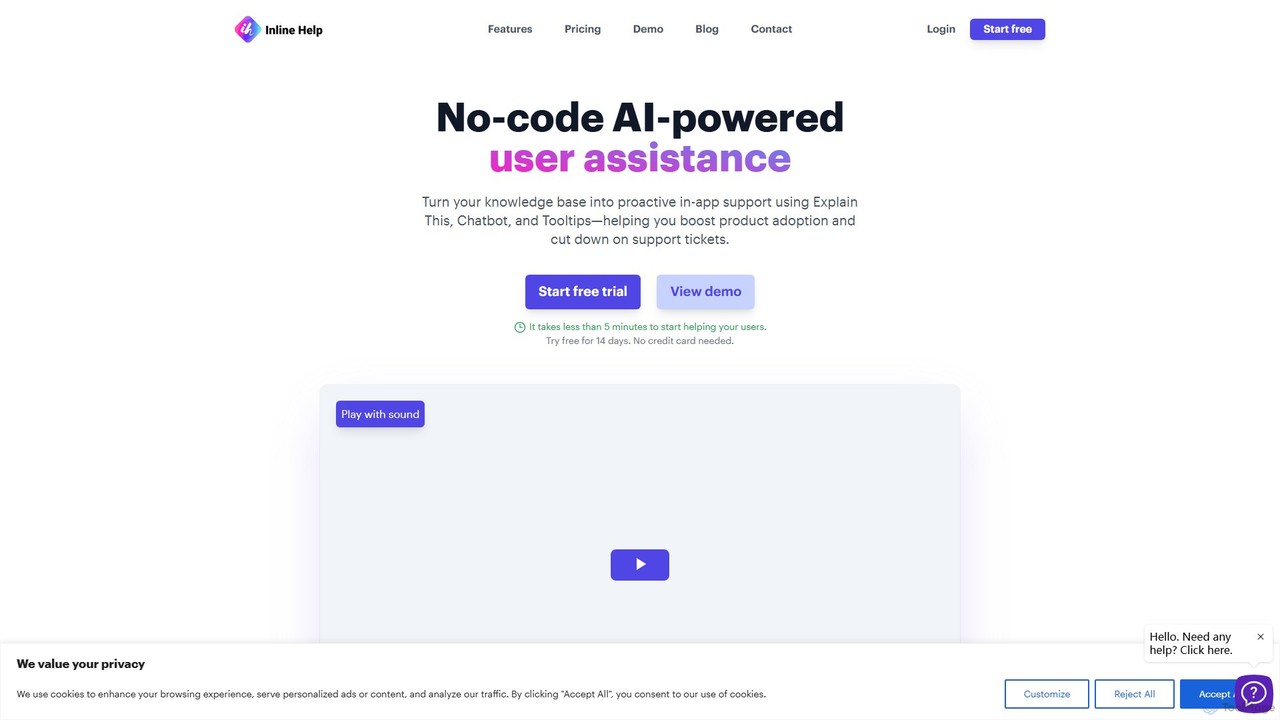
Inline Help is a no-code, AI-powered user assistance platform that transforms your knowledge base into proactive in-app support. …
Inline Help is a no-code, AI-powered user assistance platform that transforms your knowledge base into proactive in-app support. It uses an AI chatbot, contextual tooltips, and an 'Explain This' feature to answer customer questions instantly, aiming to boost product adoption and significantly reduce support tickets.
About User Engagement
AI User Engagement tools are a class of software that uses machine learning to analyze user behavior and automate personalized communication. These tools leverage data on user actions, or inactions, within an app or website to trigger relevant messages, guides, and offers. The primary goal is to increase user retention, boost feature adoption, and enhance customer lifetime value. As a specialized area of marketing, they focus on nurturing existing users rather than acquiring new ones.
Core Features
- Behavioral Segmentation: Automatically groups users into dynamic segments based on their real-time actions and attributes.
- Personalized Messaging Automation: Triggers contextual emails, push notifications, and in-app messages based on specific user behaviors.
- Churn Prediction: Utilizes predictive analytics to identify users who are at high risk of leaving the service.
- Automated Onboarding Flows: Creates personalized guidance and tutorials for new users to improve activation rates.
- Feedback Analysis: Employs Natural Language Processing (NLP) to analyze and categorize user feedback from surveys and support channels.
Use Cases
These tools are essential for digital-first businesses like SaaS platforms, mobile app developers, e-commerce stores, and online education providers. Product managers use them to drive feature adoption, while marketers create automated campaigns to re-engage dormant users. Customer success teams also leverage them to proactively address potential issues before they escalate.
How to Choose
When selecting an AI User Engagement tool, consider its integration capabilities with your existing tech stack (e.g., CRM, analytics). Evaluate the sophistication of its AI models for prediction and personalization. Also, assess the range of communication channels it supports (email, in-app, push, SMS) and the user-friendliness of its campaign builder for non-technical teams.
User EngagementUse Cases
Automating SaaS User Onboarding
A Product Manager for a SaaS company aims to increase the new user activation rate. They use an AI User Engagement tool to design a personalized onboarding sequence. The tool tracks which key features a user interacts with in their first session. Based on this behavior, it automatically triggers a series of in-app messages and emails that guide the user to discover related, valuable features. This tailored guidance helps users reach their 'aha' moment faster, significantly improving activation and long-term retention.
Reducing Mobile App Churn with Predictive Analytics
A mobile gaming app's marketing team wants to proactively reduce user churn. They implement an AI engagement tool that analyzes player behavior, such as session length, purchase history, and difficulty level progression. The AI model identifies a segment of players at high risk of churning in the next seven days. The tool then automatically sends this segment a targeted push notification with a special in-game bonus, successfully re-engaging them and lowering the overall churn rate for the month.
Personalizing E-commerce Promotions
An e-commerce manager wants to increase the repeat purchase rate. Using an AI engagement platform, they segment customers based on browsing history, abandoned carts, and past purchases. For a customer who frequently views running shoes, the system automatically sends an email featuring new arrivals in that category. For another who abandoned a cart with a specific brand, it triggers a follow-up message with a limited-time discount on that brand. This level of personalization leads to higher conversion rates than generic marketing blasts.
Boosting New Feature Adoption
A product team launches a new advanced reporting feature. Instead of announcing it to all users, they use their engagement tool to identify a segment of 'power users' who have frequently used the old reporting feature. An in-app message is triggered for this segment, highlighting the new feature's benefits and providing a direct link to try it. This targeted approach ensures the announcement reaches the most relevant audience, leading to faster adoption, valuable early feedback, and avoids overwhelming novice users with complex features.
Collecting and Analyzing User Feedback at Scale
A customer success manager needs to gather product feedback efficiently. They configure their AI engagement tool to automatically trigger a feedback survey after a user successfully completes a key workflow for the third time. The tool collects hundreds of open-ended responses. Its built-in NLP capabilities then analyze the feedback, automatically tagging responses with topics like 'UI improvement', 'bug report', or 'feature request' and assigning a sentiment score. This automates a previously manual process, providing the product team with structured, actionable insights quickly.
Re-engaging Dormant Users with Smart Campaigns
A growth marketer for an online learning platform notices a segment of users who haven't logged in for 60 days. Instead of a generic 'we miss you' email, they use an AI tool to create a smart re-engagement campaign. The AI analyzes each user's past course history and recommends a new, relevant course that has been recently added. The campaign automatically sends a series of emails over two weeks, highlighting different benefits of the new course. This personalized approach is far more effective at winning back users than a one-size-fits-all message.