Media Best in category 1 results Broadcasting AI Tool

Popular AI tools in the Broadcasting field of Media include Pixop, etc., helping you quickly improve efficiency.

Pixop

Pixop

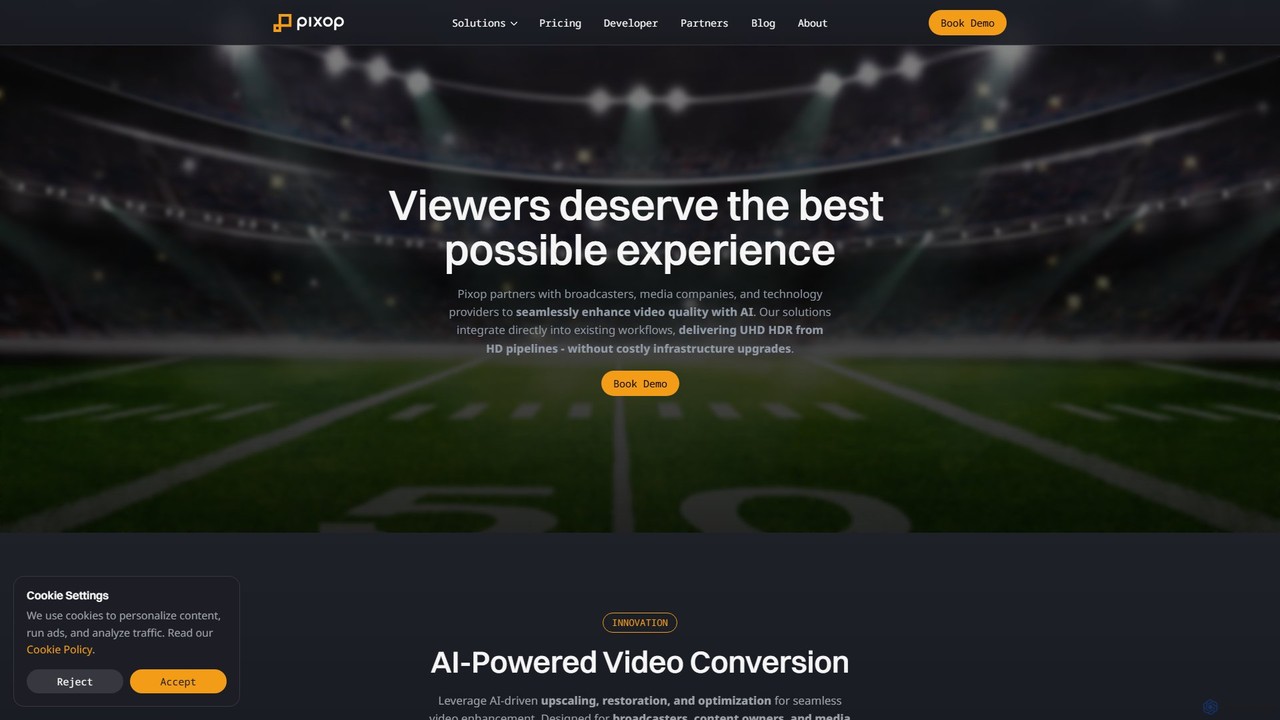
Pixop is an AI-powered video enhancement platform designed for broadcasters and content owners. It offers solutions for real-time …

13.3K

About Broadcasting

AI Broadcasting tools are a specialized category within media technology that leverage artificial intelligence to enhance the creation, production, distribution, and consumption of broadcast content. These tools utilize advanced algorithms for tasks such as automated content generation, real-time production management, personalized audience engagement, and intelligent content moderation. They enable broadcasters, content creators, and media organizations to streamline workflows, optimize delivery, and create more dynamic and interactive viewing experiences across various platforms.

Core Features

  • Automated Production: AI-driven camera switching, graphic overlays, and scene transitions for live events.
  • Content Personalization: AI algorithms recommending tailored content segments or ads to individual viewers.
  • Real-time Moderation: AI detecting and filtering inappropriate language, images, or behaviors in live streams and comments.
  • AI-driven Analytics: Providing insights into audience engagement, content performance, and distribution effectiveness.
  • Virtual Studio & Presenters: Generating realistic virtual environments and AI-powered anchors for cost-efficient productions.

Applicable Scenarios

AI Broadcasting tools are essential for modern media operations, from traditional television networks to digital-first content platforms. They are used in live sports broadcasting for dynamic replays and commentary, by online news channels for rapid content summarization and distribution, and in corporate communications for enhancing virtual events and webinars with interactive AI features.

How to Choose

Selecting the right AI broadcasting tool involves evaluating its real-time processing capabilities for live events, its integration potential with existing broadcast infrastructure and content management systems, and the breadth of its feature set, including automation, personalization, and moderation. Consider also the scalability to handle varying audience sizes and the level of technical support provided.

BroadcastingUse Cases

1

Automated Live Sports Production

Sports broadcasters utilize AI tools to automate multi-camera switching, generate instant replays, and overlay real-time statistics during live games. This allows production teams to focus on storytelling, reduces manual errors, and delivers a more dynamic viewing experience, significantly cutting operational costs and increasing content output.

2

Personalized News Delivery

News organizations employ AI to analyze viewer preferences and deliver personalized news feeds or segment recommendations. AI can automatically re-package news clips, generate localized summaries, and even create custom news bulletins for individual users, enhancing engagement and relevance for diverse audiences.

3

Real-time Content Moderation for Live Streams

Live streaming platforms and content creators use AI to automatically detect and filter inappropriate language, hate speech, or graphic content in real-time chat and video feeds. This ensures a safe and compliant viewing environment, protecting brand reputation and fostering positive community interaction without constant human oversight.

4

Virtual Event & Webinar Enhancement

Companies and educators leverage AI broadcasting tools to create engaging virtual events. AI can manage speaker transitions, generate interactive polls, provide real-time Q&A moderation, and even create virtual backgrounds or AI co-hosts, making online presentations more professional and interactive for remote participants.

5

AI-driven Ad Insertion & Optimization

Broadcasters and advertisers use AI to dynamically insert targeted advertisements into live and on-demand content based on viewer demographics, viewing habits, and real-time context. This optimizes ad revenue, improves ad relevance for viewers, and allows for more flexible and efficient campaign management.

6

Automated Subtitling & Translation

Media companies deploy AI to generate accurate, real-time subtitles and translations for live broadcasts and pre-recorded content. This significantly expands audience reach by making content accessible to hearing-impaired viewers and non-native speakers, reducing manual transcription costs and speeding up global distribution.

BroadcastingFrequently Asked Questions