
My Mediktor
My Mediktor is an advanced AI-powered symptom checker that provides a personalized pre-diagnosis and recommends the appropriate level …
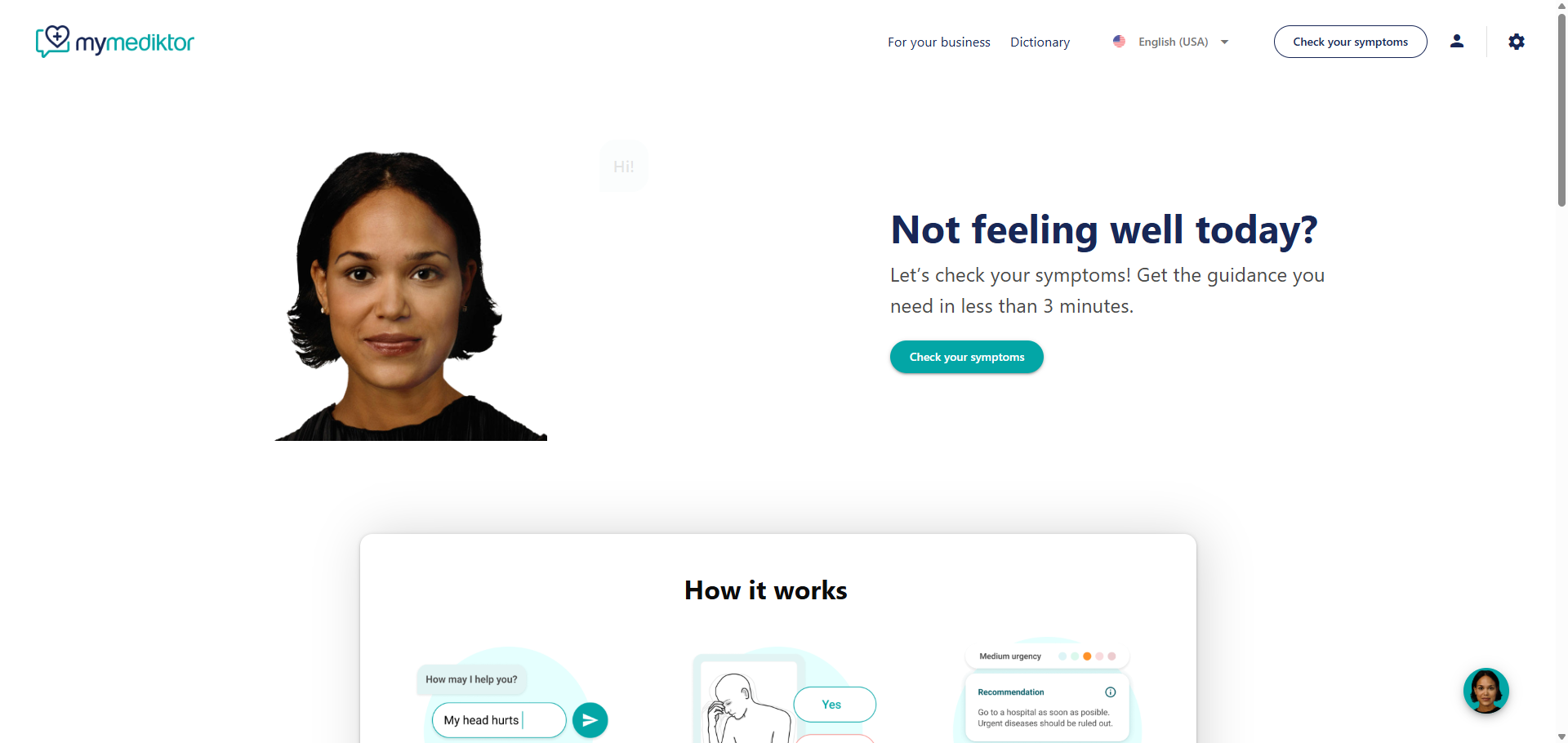
My Mediktor is an advanced AI-powered symptom checker that provides a personalized pre-diagnosis and recommends the appropriate level of care. By engaging in a natural, conversational chat, users can understand their symptoms, explore potential causes, and make informed decisions about their health. It is a clinically validated tool designed for accuracy and user safety.
About Diagnostics
AI Diagnostics are AI-powered tools specifically designed to assist in identifying diseases, conditions, or health issues. These tools leverage advanced algorithms to analyze vast amounts of medical data, including images, patient records, and lab results. Their primary goal is to enhance the accuracy and speed of diagnosis, supporting clinicians in making more informed decisions. By detecting subtle patterns and anomalies, AI Diagnostics contribute significantly to early detection and personalized patient care.
Core Features
- Medical Image Analysis: Interprets X-rays, CT scans, MRIs, and ultrasounds to identify abnormalities.
- Predictive Diagnostics: Analyzes patient data to assess disease risk and predict future health outcomes.
- Patient Data Synthesis: Integrates and cross-references electronic health records, lab results, and genetic data for comprehensive insights.
- Anomaly Detection: Pinpoints unusual patterns or deviations in medical data that might indicate a condition.
- Clinical Decision Support: Provides clinicians with evidence-based suggestions for differential diagnoses and next steps.
Applicable Scenarios
AI Diagnostics tools are invaluable across various medical settings. Radiologists use them to accelerate image interpretation and improve the detection of subtle findings. Pathologists apply these tools for precise analysis of tissue samples, aiding in cancer staging. Primary care physicians utilize them for early screening and risk assessment of chronic diseases, while specialists benefit from enhanced insights into complex cases.
How to Choose
When selecting an AI Diagnostics tool, prioritize its clinical validation and regulatory approvals to ensure reliability. Evaluate its integration capabilities with existing hospital systems like EHR and PACS for seamless workflow. Consider the tool's specialization (e.g., oncology, cardiology) to match specific departmental needs. Assess the user interface for ease of use and the vendor's support and scalability options.
DiagnosticsUse Cases
Accelerate Radiology Image Interpretation
Radiologists utilize AI Diagnostics tools to rapidly analyze complex medical images such as X-rays, CT scans, and MRIs. The AI identifies potential anomalies, lesions, or fractures, highlighting areas of concern for the radiologist. This significantly reduces the time spent on initial review, improves the detection rate of subtle findings that might be missed by the human eye, and allows for faster, more accurate diagnostic reports, ultimately enhancing patient care efficiency.
Enhance Pathology Slide Analysis for Cancer Detection
Pathologists leverage AI Diagnostics to analyze digital pathology slides with high precision. The AI can automatically identify and quantify cancer cells, grade tumor aggressiveness, and detect subtle morphological changes that might be challenging for human observers. This not only speeds up the diagnostic process but also provides objective, consistent assessments, leading to more accurate cancer diagnoses and better-informed treatment planning for patients.
Predict Disease Risk from Patient Records
Clinicians use AI Diagnostics to analyze vast amounts of patient data, including electronic health records (EHRs), genetic information, and lifestyle factors. The AI identifies complex patterns and correlations to predict an individual's risk of developing chronic diseases like diabetes, cardiovascular conditions, or certain cancers. This enables proactive intervention strategies, personalized preventive care plans, and early lifestyle modifications, potentially delaying or preventing disease onset.
Automated Screening for Retinal Diseases
Ophthalmologists and optometrists deploy AI Diagnostics to perform automated screening of retinal scans for early signs of diseases like diabetic retinopathy, glaucoma, and macular degeneration. The AI quickly analyzes high-resolution images, detecting subtle changes in blood vessels, optic nerve, or macula that might indicate disease progression. This allows for efficient mass screening, timely referrals to specialists, and earlier intervention, preserving patient vision and reducing the burden on eye care professionals.
Dermatology Skin Lesion Classification
Dermatologists employ AI Diagnostics tools to classify skin lesions from high-resolution images. The AI analyzes characteristics such as size, shape, color, and texture to differentiate between benign moles, suspicious lesions, and potential melanomas or other skin cancers. This assists in early detection, reduces the need for unnecessary biopsies, and helps prioritize cases requiring urgent attention, leading to improved patient outcomes and more efficient clinic operations.
Cardiac Anomaly Detection from ECG/ECHO
Cardiologists utilize AI Diagnostics to analyze electrocardiograms (ECGs) and echocardiograms (ECHO) for subtle signs of cardiac anomalies. The AI can detect arrhythmias, structural heart defects, and early indicators of heart failure or coronary artery disease that might be difficult to identify manually. This enhances diagnostic accuracy, supports early intervention, and helps in monitoring disease progression, ultimately improving cardiovascular patient management and outcomes.