AVA
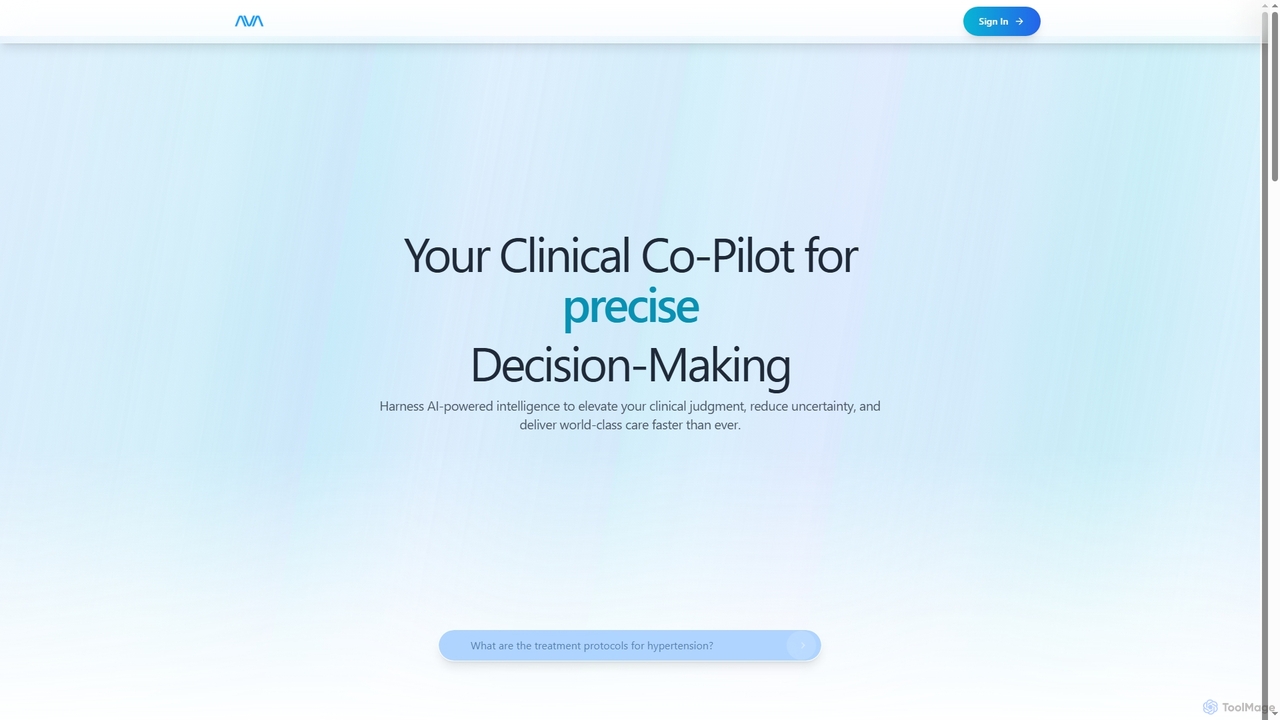
AVA is an AI-powered clinical co-pilot designed for medical professionals to enhance decision-making with intelligent, evidence-based, and precise …
AVA is an AI-powered clinical co-pilot designed for medical professionals to enhance decision-making with intelligent, evidence-based, and precise insights. It synthesizes the latest medical literature from trusted sources, providing instant support for diagnostics, treatment protocols, and personalized patient care.
About Clinical Decision Support
Clinical Decision Support (CDS) tools are AI-powered systems that provide healthcare professionals with evidence-based recommendations and insights at the point of care. These tools leverage artificial intelligence, machine learning, and natural language processing to analyze patient data, medical literature, and clinical guidelines. Their primary purpose is to enhance diagnostic accuracy, optimize treatment plans, and improve patient safety and outcomes by offering timely, relevant information. CDS systems act as intelligent assistants, helping clinicians navigate complex medical information and reduce errors.
Core Features
- Diagnostic Assistance: Analyzes symptoms, lab results, and imaging to suggest potential diagnoses and differential diagnoses.
- Treatment Recommendations: Provides evidence-based guidelines for treatment protocols, drug dosages, and therapy options tailored to individual patient profiles.
- Drug Interaction & Allergy Alerts: Automatically flags potential adverse drug reactions, contraindications, and known patient allergies.
- Preventive Care Reminders: Notifies clinicians about overdue screenings, vaccinations, or other preventive health measures.
- Clinical Workflow Integration: Seamlessly embeds into Electronic Health Records (EHR) systems and other clinical workflows for real-time support.
Applicable Scenarios
Clinical Decision Support tools are invaluable across various healthcare settings. Physicians in primary care can use them to quickly assess complex patient cases and ensure adherence to best practices. Hospital specialists, such as oncologists or cardiologists, leverage CDS for personalized treatment planning and managing intricate drug regimens. Emergency room doctors benefit from rapid diagnostic suggestions and critical alerts during high-pressure situations, improving patient safety and care quality.
How to Choose
When selecting a Clinical Decision Support system, prioritize its integration capabilities with existing EHRs to ensure seamless workflow. Evaluate the breadth and depth of its medical knowledge base, ensuring it covers relevant specialties and is regularly updated. Consider the system's user interface for ease of use and the clarity of its recommendations. Finally, assess its customization options to tailor alerts and guidelines to specific institutional protocols and patient populations, alongside robust data security and compliance with healthcare regulations.

Clinical Decision SupportUse Cases
Enhancing Diagnostic Accuracy for Rare Diseases
A general practitioner encounters a patient with a constellation of unusual symptoms. Using a Clinical Decision Support tool integrated with their EHR, they input the patient's history, lab results, and symptoms. The CDS system cross-references this data with a vast knowledge base of rare diseases, suggesting potential diagnoses that might otherwise be overlooked, and guiding the physician towards appropriate specialized tests, thereby accelerating accurate diagnosis and treatment initiation.
Optimizing Personalized Cancer Treatment Plans
An oncologist is developing a treatment plan for a patient with a complex form of cancer. The CDS tool analyzes the patient's genetic markers, tumor characteristics, previous treatment responses, and current clinical guidelines. It then provides evidence-based recommendations for chemotherapy regimens, targeted therapies, and clinical trial eligibility, helping the oncologist select the most effective and least toxic personalized treatment strategy, improving patient outcomes and reducing adverse effects.
Preventing Adverse Drug Events in Polypharmacy Patients
A pharmacist is reviewing medication orders for an elderly patient on multiple prescriptions. The Clinical Decision Support system automatically flags potential drug-drug interactions, contraindications based on the patient's comorbidities, and alerts for dosage adjustments due to renal impairment. This proactive identification of risks helps the pharmacist intervene before dispensing, preventing serious adverse drug events and ensuring patient safety, especially in complex medication management.
Streamlining Sepsis Protocol Adherence in Emergency Rooms
In a busy emergency department, a patient presents with suspected sepsis. The CDS system, integrated into the ER workflow, automatically triggers alerts and a step-by-step protocol checklist based on vital signs and lab results. It guides the medical team through immediate actions like fluid resuscitation, antibiotic administration, and lactate measurement, ensuring timely and consistent adherence to critical sepsis management guidelines, which significantly improves survival rates.
Supporting Preventive Care and Chronic Disease Management
A nurse practitioner is managing a panel of patients with chronic conditions like diabetes and hypertension. The CDS tool provides automated reminders for overdue screenings (e.g., HbA1c tests, mammograms), vaccination schedules, and follow-up appointments. It also offers evidence-based recommendations for lifestyle modifications and medication adjustments based on patient data, empowering the nurse to deliver comprehensive preventive care and effectively manage chronic diseases, reducing long-term complications.
Guiding Surgical Risk Assessment and Pre-operative Planning
A surgeon is preparing for a complex cardiac surgery. The Clinical Decision Support system analyzes the patient's medical history, co-existing conditions, previous surgical outcomes, and relevant risk scores. It provides a comprehensive pre-operative risk assessment, highlights potential complications, and suggests specific pre-operative interventions or adjustments to the surgical plan. This helps the surgical team mitigate risks, optimize patient preparation, and improve post-operative recovery.