
Medical Best in category 1 results Billing And Coding AI Tool

Popular AI tools in the Billing And Coding field of Medical include Claio, etc., helping you quickly improve efficiency.

Claio

Claio

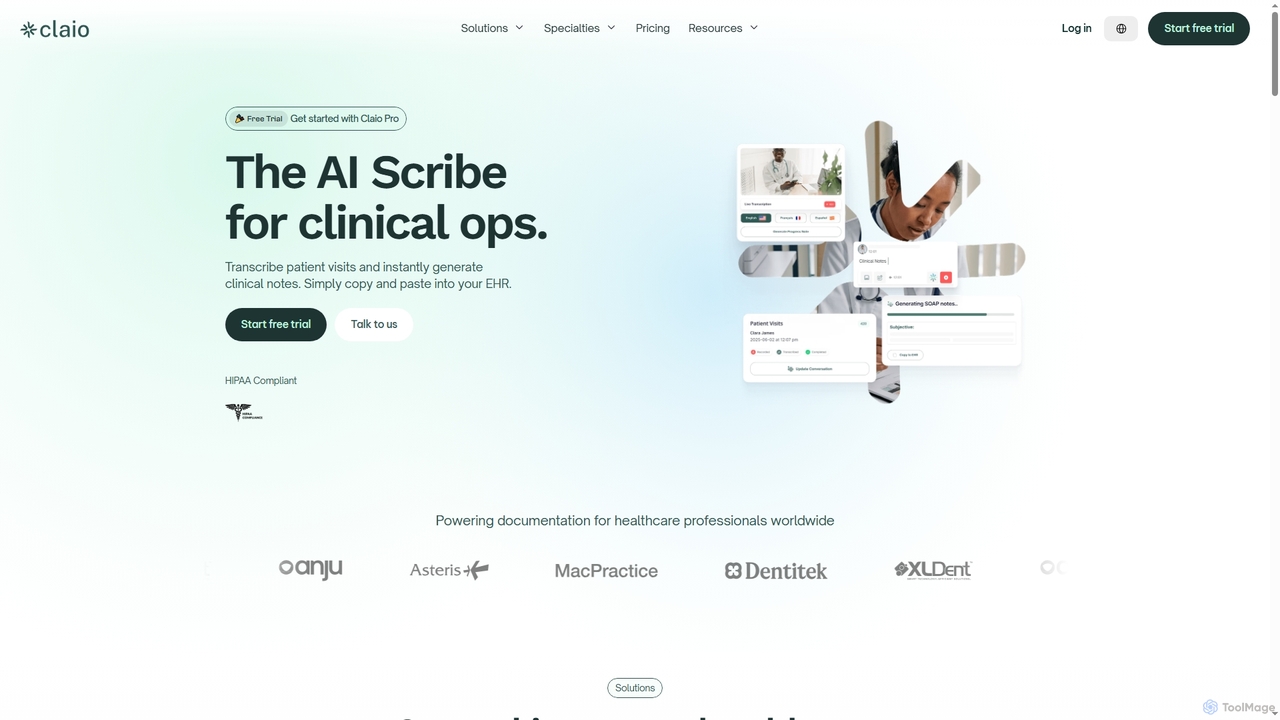
Claio is an AI-powered scribe designed for healthcare professionals to streamline clinical documentation. It transcribes patient visits in …

15.8K

About Billing And Coding

AI Billing and Coding tools are specialized software that use artificial intelligence to automate the translation of healthcare services into universal medical codes. These tools leverage Natural Language Processing (NLP) to analyze clinical documentation and machine learning to suggest accurate ICD, CPT, and HCPCS codes. Their primary value lies in significantly reducing human error, accelerating the reimbursement cycle, and ensuring compliance with complex regulations. By automating tedious manual processes, they help healthcare providers optimize revenue cycle management and minimize claim denials.

Core Features

  • Automated Code Suggestion: Analyzes clinical notes, lab results, and physician reports to recommend the most accurate medical codes.
  • Real-time Claim Scrubbing: Pre-audits insurance claims for errors, inconsistencies, and compliance issues before submission.
  • Denial Prediction: Uses historical data to identify patterns and predict the likelihood of a claim being denied, allowing for proactive correction.
  • Compliance Auditing: Continuously monitors coding practices against the latest regulations from bodies like CMS and ensures HIPAA adherence.

Use Cases

These tools are essential for hospitals, outpatient clinics, private medical practices, and third-party medical billing companies. Key users include medical coders, billing specialists, revenue cycle managers, and healthcare administrators who need to ensure financial accuracy and operational efficiency in the billing process.

How to Choose

When selecting an AI Billing and Coding tool, consider its integration capabilities with your existing Electronic Health Record (EHR) system. Evaluate the tool's accuracy rates and its support for your specific medical specialties. Ensure it provides robust compliance features that stay updated with changing regulations, and look for powerful analytics to track financial performance and identify revenue leakage.

Billing And CodingUse Cases

1

Automating Inpatient Chart Coding

A hospital's medical coding team uses an AI tool to process complex inpatient discharge summaries. The AI's NLP engine reads through unstructured physician notes, operative reports, and lab results to automatically identify all relevant diagnoses and procedures. It then suggests the appropriate ICD-10-CM and ICD-10-PCS codes with supporting evidence highlighted directly from the text. This reduces the manual coding time per chart from an average of 45 minutes to under 10 minutes, significantly accelerating the billing cycle and improving coder productivity.

2

Real-time Claim Scrubbing for a Clinic

A multi-specialty clinic integrates an AI billing tool with its practice management system. As billing specialists prepare claims, the AI tool runs in the background, performing real-time 'scrubbing'. It cross-references procedure codes (CPT) with diagnosis codes (ICD-10) for medical necessity, checks for correct use of modifiers, and validates patient insurance information against a payer database. This proactive error detection reduces the first-pass denial rate from 15% to below 3%, improving cash flow and freeing up staff from rework.

3

Revenue Cycle Auditing and Optimization

A healthcare consulting firm uses an AI analytics platform to audit a hospital system's billing data from the past two years. The AI identifies patterns of under-coding, such as consistently missed secondary diagnoses that impact DRG assignment, and flags common reasons for denials from specific insurance payers. The firm uses these data-driven insights to recommend targeted training for the coding staff and to renegotiate contracts with payers, leading to the recovery of millions in previously lost revenue and preventing future losses.

4

Improving Coding Accuracy in a Specialty Practice

An oncology practice uses an AI coding tool trained on cancer-specific terminology and treatment protocols. The tool accurately interprets complex pathology reports and chemotherapy administration records to assign highly specific codes for different cancer types, stages, and treatments. This ensures that claims reflect the full complexity of care provided, maximizing compliant reimbursement. The AI also flags when documentation is insufficient to support a high-specificity code, prompting physicians to add necessary details and improving overall clinical documentation quality.

5

Training and Quality Assurance for New Coders

A large medical billing company onboards new coders using an AI platform as a training and quality assurance tool. Trainees code a set of standardized charts, and the AI provides immediate feedback by comparing their code selections to its own suggestions, which are linked to official coding guidelines. This interactive learning process helps new coders quickly grasp complex rules and reduces the time senior coders spend on manual reviews. The platform also tracks proficiency over time, identifying areas where individuals may need further training.

6

Predictive Denial Management

A large medical group uses an AI platform that analyzes payer-specific rules and historical claim data. Before a claim is submitted, the AI model calculates a 'denial risk score' based on factors like the payer, patient's history, procedure codes, and documentation completeness. Claims with a high risk score are automatically flagged for review by a senior billing specialist. This specialist can then add missing documentation or correct coding issues proactively, preventing the denial before it happens and avoiding the lengthy appeals process.

Billing And CodingFrequently Asked Questions