ToolMage
Sign in

Best 1 Music Production AI tools for Multimedia

Popular Music Production AI tools in Multimedia include vocalremoveroak, helping you work more efficiently.

vocalremoveroak
Freemium

vocalremoveroak

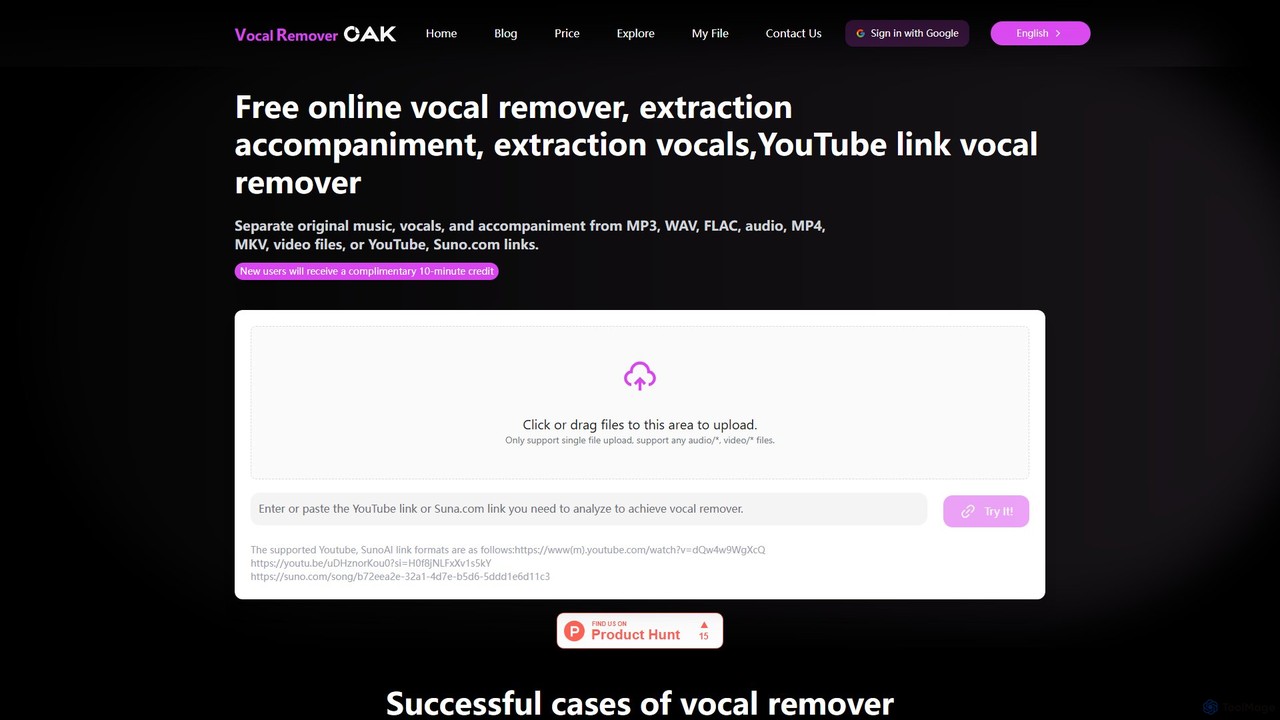
vocalremoveroak is a free online AI tool that separates vocals and instrumentals from any audio or video file. Using advanced deep learning, it quickly processes files from your device, YouTube, or Suno.com links. Ideal for musicians, DJs, and content creators to produce high-quality karaoke tracks, remixes, or instrumental versions with lossless audio quality.

Audio Editing
Visits 9.2KFavorites 131Likes 141

About Music Production

AI Music Production tools are software applications that leverage artificial intelligence to assist or automate various stages of music creation. These tools utilize machine learning algorithms to analyze musical patterns, generate melodies, harmonies, and rhythms, and even refine audio quality. They empower musicians, producers, and content creators to innovate, experiment, and streamline their workflow, making sophisticated music production more accessible.

Core Features

  • AI Composition & Generation: Automatically create melodies, chord progressions, drum patterns, or full instrumental tracks based on user input or style preferences.
  • Intelligent Mixing & Mastering: AI algorithms analyze audio tracks to suggest optimal EQ, compression, reverb, and overall loudness for professional-sounding mixes and masters.
  • Sound Design & Synthesis: Generate unique soundscapes, textures, and instrument sounds, or transform existing audio with AI-powered effects.
  • Vocal Synthesis & Manipulation: Create realistic AI-generated vocals, harmonize existing vocal tracks, or apply pitch correction and timing adjustments.

Use Cases

AI music production tools are widely adopted by independent artists, professional producers, game developers, and content creators. They are used for generating background music for videos, creating unique sound effects for games, or assisting musicians in overcoming creative blocks by suggesting new musical ideas.

How to Choose

When selecting an AI music production tool, consider its generative capabilities (e.g., melody, harmony, rhythm), the range of instruments and styles supported, and its integration with existing digital audio workstations (DAWs). Evaluate the quality of the AI-generated output, ease of use, and pricing model, as well as the flexibility for human intervention and customization.

Music Production use cases

1

Generating Background Music for Videos

Content creators and videographers can use AI music production tools to quickly generate royalty-free background music tailored to the mood and tempo of their video content. By inputting keywords or selecting genres, they can obtain unique soundtracks without extensive manual composition or licensing concerns, significantly speeding up post-production.

2

Overcoming Creative Blocks in Composition

Musicians and composers facing creative stagnation can leverage AI tools to generate new melodic ideas, chord progressions, or rhythmic patterns. The AI acts as a collaborative partner, offering fresh perspectives and variations that can inspire new compositions or help develop existing musical themes.

3

Automating Mixing and Mastering for Demos

Independent artists and home studio producers can utilize AI-powered mixing and mastering tools to achieve a professional sound for their demo tracks without needing deep audio engineering expertise. The AI analyzes the audio, applies optimal processing, and balances levels, providing a polished sound ready for sharing or further refinement.

4

Creating Unique Sound Effects for Games

Game developers and sound designers can employ AI sound design tools to generate a vast array of unique sound effects for in-game environments, character actions, or UI elements. This allows for rapid prototyping and iteration of soundscapes, providing distinct audio experiences without extensive manual synthesis or recording.

5

Experimenting with Generative Music Art

Experimental artists and researchers can use AI music generators to explore new forms of generative music, creating evolving soundscapes or algorithmic compositions. These tools enable the creation of music that continuously transforms, offering a unique blend of technology and artistic expression.

6

Producing Custom Jingles and Ad Music

Marketing agencies and advertisers can quickly produce custom jingles, intro/outro music, and background tracks for commercials or podcasts using AI music production platforms. This ensures brand consistency and provides unique audio branding elements without the high costs and time associated with traditional bespoke composition.

Music Production FAQ

What are AI Music Production tools?

AI Music Production tools are software applications that use artificial intelligence to assist in creating, mixing, mastering, and generating music. They leverage machine learning to understand musical structures, generate new compositions, and enhance audio quality, making music creation more efficient and accessible for various users.

How do AI Music Production tools work?

These tools typically work by analyzing vast datasets of existing music to learn patterns, styles, and structures. When a user provides input (e.g., genre, mood, melody), the AI uses generative models (like neural networks) to create new musical elements or apply intelligent processing based on its learned knowledge.

What are the main benefits of using AI in music production?

The main benefits include accelerating the creative process, overcoming creative blocks, automating repetitive tasks like mixing and mastering, and making professional-quality music production more accessible to non-experts. AI tools also enable experimentation with new sounds and generative compositions.

Can AI replace human composers or producers?

While AI can generate impressive musical content and automate many tasks, it currently serves as a powerful assistant rather than a replacement for human creativity. Human composers and producers still provide the artistic vision, emotional depth, and nuanced decision-making that AI tools augment, but do not fully replicate.

How do AI Music Production tools differ from traditional DAWs?

Traditional Digital Audio Workstations (DAWs) provide a comprehensive environment for recording, editing, mixing, and mastering music manually. AI Music Production tools, on the other hand, integrate intelligent algorithms to automate or assist in these processes, offering generative capabilities and smart audio processing that traditional DAWs typically lack without third-party AI plugins.