ToolMage
Sign in

Best 1 Background Check AI tools for Other

Popular Background Check AI tools in Other include oopsbusted, helping you work more efficiently.

oopsbusted
Paid

oopsbusted

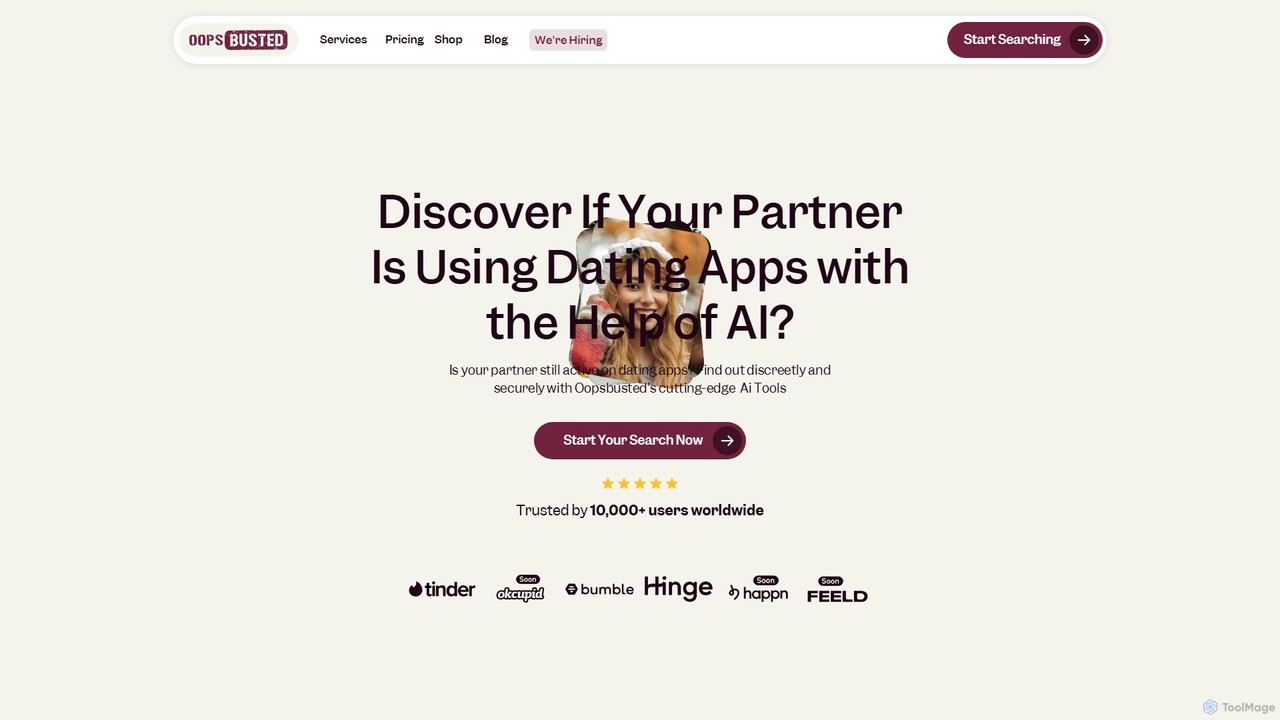
Oopsbusted is an AI-powered service designed to discreetly discover if a partner is using dating apps. By leveraging advanced facial recognition technology, it scans major dating platforms like Tinder, Bumble, and Hinge to find hidden profiles. The service offers a secure, private, and fast way for users to gain clarity and peace of mind in their relationships by providing concrete evidence, such as profile screenshots.

Relationship
Visits 5.5KFavorites 126Likes 114

About Background Check

AI Background Check tools are applications that use artificial intelligence to automate and enhance the process of verifying an individual's history. These tools aggregate and analyze vast amounts of data from public records, criminal databases, social media, and other digital sources. Their primary value lies in delivering faster, more comprehensive, and consistent screening results for employment, tenancy, or due diligence. By leveraging machine learning, they can identify patterns, inconsistencies, and potential risks that might be missed in a manual review.

Core Features

  • Automated Data Aggregation: Gathers and consolidates information from numerous online and offline databases, including criminal, financial, and educational records.
  • Identity Verification: Uses AI to match identities against official documents, photos, and biometric data to prevent fraud.
  • Risk Signal Analysis: Scans collected data for predefined red flags, negative sentiment, or behavioral patterns relevant to the screening purpose.
  • Compliance Management: Helps adhere to regulations like FCRA and GDPR by automatically redacting protected information to reduce bias and legal exposure.
  • Continuous Monitoring: Offers ongoing surveillance of individuals post-screening, providing real-time alerts for new relevant activities or records.

Applicable Scenarios

These tools are widely used across various sectors. Human resources departments utilize them for pre-employment screening to ensure candidate integrity. In real estate, property managers use them for tenant verification to assess risk. Financial institutions also rely on them for Know Your Customer (KYC) and Anti-Money Laundering (AML) compliance.

Selection Criteria

When choosing an AI Background Check tool, consider the breadth and accuracy of its data sources. Ensure it is compliant with relevant legal frameworks in your jurisdiction, such as FCRA or GDPR. Evaluate the tool's turnaround time for reports and its ability to integrate with your existing platforms, like an Applicant Tracking System (ATS). Finally, assess the clarity and actionability of the final reports.

Featured tool rankings

Background Check use cases

1

Streamlining High-Volume Pre-Employment Screening

A human resources manager at a national retail chain is tasked with hiring over 200 seasonal employees in a short timeframe. Manually checking each applicant's criminal history and employment verification would be slow and prone to error. By using an AI Background Check tool integrated with their Applicant Tracking System (ATS), the manager can initiate checks automatically for all qualified candidates. The AI processes hundreds of reports simultaneously, flagging only those with significant discrepancies or relevant criminal records for human review. This reduces the average screening time per candidate from several days to just a few hours, enabling the company to meet its hiring targets efficiently and securely.

2

Automating Tenant Screening for Property Management

A property management company oversees hundreds of rental units and needs a reliable way to screen potential tenants. They use an AI-powered background check platform to assess applicants. A prospective tenant submits an application online, which triggers the AI tool to perform a comprehensive check covering credit history, eviction records, and criminal background. The system generates a standardized risk score for each applicant based on the company's predefined criteria. This automated process ensures fair and consistent evaluation, reduces the risk of renting to problematic tenants, and helps the company comply with fair housing laws by applying the same objective standards to everyone.

3

Verifying Freelancers on a Gig Economy Platform

An online platform connecting businesses with freelance developers needs to maintain a high level of trust and safety. To achieve this, they integrate an AI background check API into their onboarding process. When a new developer signs up, the system automatically verifies their identity against government-issued IDs, checks for relevant professional certifications, and scans public records for any major red flags. The AI can also perform a basic social media analysis to ensure the profile is authentic. This automated verification process builds credibility for the platform, protects businesses from fraudulent freelancers, and creates a safer environment for all users, all while keeping the onboarding process fast and seamless.

4

Conducting Due Diligence for Business Partnerships

A venture capital firm is considering a significant investment in a startup. As part of their due diligence, they use an AI background check service to investigate the startup's founders and key executives. The tool scans for undisclosed bankruptcies, past litigation, connections to sanctioned entities, and negative press. The AI's ability to analyze vast unstructured data sources, such as news articles and corporate filings globally, provides a much deeper insight than a standard criminal check. The comprehensive report helps the firm identify potential reputational or financial risks associated with the leadership team, enabling them to make a more informed investment decision.

5

Enhancing Safety in Online Dating Apps

A popular dating app aims to improve user safety and reduce instances of catfishing and fraud. They implement an AI-powered identity and background verification feature. Users can voluntarily opt-in to verify their profile by submitting a photo of their ID and a selfie. The AI tool uses facial recognition to match the selfie with the ID photo and then cross-references the name and date of birth against public records and databases of known offenders. Verified profiles receive a special badge, increasing their trustworthiness. This feature not only deters malicious actors but also gives genuine users more confidence when interacting with others on the platform, creating a safer community.

6

Screening Volunteers for Non-Profit Organizations

A non-profit organization that works with children needs to conduct thorough yet affordable background checks on all its volunteers. They adopt an AI-powered screening service designed for non-profits. When a new volunteer applies, they are sent a link to a secure portal to provide consent and personal information. The AI tool then runs a comprehensive check against national and local criminal databases, as well as sex offender registries. The system provides a clear pass/fail report based on the organization's safety policy. This allows the non-profit to ensure a safe environment for the children they serve, maintain compliance, and manage the screening process efficiently without a large administrative budget.

Background Check FAQ

What are AI Background Check tools?

AI Background Check tools are software solutions that use artificial intelligence and machine learning to automate the collection and analysis of an individual's personal and professional history. Unlike traditional manual checks, they can rapidly process vast amounts of data from diverse sources like public records, criminal databases, credit bureaus, and online activities. Key features often include identity verification, automated flagging of risks, and compliance with legal standards. They are primarily used by businesses and organizations to make faster, more informed, and consistent decisions in hiring, tenant screening, and due diligence.

How to choose the right AI Background Check tool?

Choosing the right tool depends on your specific needs. Consider the following factors:

  • Compliance: Ensure the tool complies with legal regulations in your region, such as the FCRA in the U.S. or GDPR in Europe. This is crucial to avoid legal issues.
  • Data Coverage and Accuracy: Evaluate the breadth and reliability of the data sources it accesses. Does it cover national, state, and local records relevant to your needs?
  • Turnaround Time: How quickly does the tool deliver reports? For high-volume needs like hiring, speed is a critical factor.
  • Integration: Check if it can integrate with your existing software, such as an Applicant Tracking System (ATS) or property management platform, to streamline your workflow.
  • User Experience: The final report should be easy to read, understand, and provide clear, actionable insights.
What is the difference between AI and traditional background checks?

The primary difference lies in speed, scale, and depth of analysis. Traditional checks are often manual, slow, and limited to specific databases. AI background checks automate this process, delivering results in minutes or hours instead of days. AI can also analyze a much wider range of data, including unstructured sources like news articles or social media, to identify potential risks or behavioral patterns that manual checks would miss. Furthermore, AI tools can help reduce human bias by applying consistent, predefined criteria to all candidates, promoting fairer evaluation.

Are AI-powered background checks legally compliant?

Reputable AI background check providers design their tools with legal compliance as a core principle. They often build in features to help users adhere to regulations like the Fair Credit Reporting Act (FCRA) in the United States and the General Data Protection Regulation (GDPR) in Europe. This can include managing candidate consent, redacting information related to protected classes (e.g., race, gender) to prevent bias, and providing clear adverse action notices. However, the ultimate responsibility for using the tool in a legally compliant manner rests with the end-user (the employer or landlord). It is essential to understand and follow all applicable laws in your jurisdiction.

Who are the primary users of AI Background Check tools?

These tools serve a wide range of users who need to verify identity and assess risk. The most common users include:

  • Human Resources Departments: For pre-employment screening to verify candidate claims and ensure a safe workplace.
  • Landlords and Property Managers: To screen potential tenants for creditworthiness, eviction history, and criminal records.
  • Financial Institutions: For Know Your Customer (KYC) and Anti-Money Laundering (AML) compliance to prevent fraud.
  • Gig Economy Platforms: To verify the identity and credentials of contractors, drivers, and freelancers to build trust and safety.
  • Non-Profit Organizations: To affordably and efficiently screen volunteers, especially those working with vulnerable populations.