ToolMage
Sign in

Best 1 Exam Preparation AI tools for Other

Popular Exam Preparation AI tools in Other include AssistED AI, helping you work more efficiently.

AssistED AI
Freemium

AssistED AI

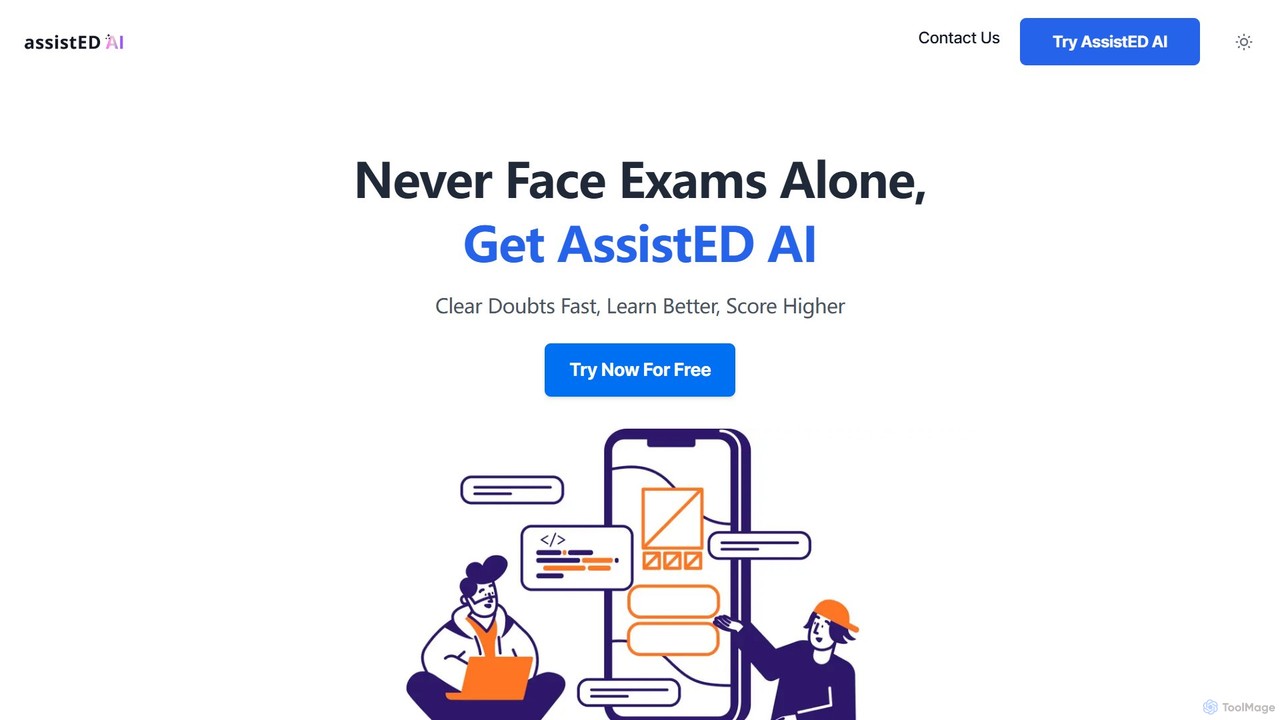
AssistED AI is an AI-powered learning assistant designed for students preparing for competitive exams. It offers instant doubt clarification, personalized quizzes, and efficient topic revision through its specialized bots: DoubtBot, QuizBot, and ReviseBot. The platform provides 24/7 support, adaptive learning paths, and real-time feedback to help students learn better and score higher.

Learning Assistant
Visits 5.6KFavorites 111Likes 111

About Exam Preparation

Exam Preparation AI tools are specialized applications designed to assist students and professionals in efficiently preparing for various tests, certifications, and academic assessments. Leveraging advanced artificial intelligence, these tools offer personalized study plans, adaptive practice questions, and detailed performance analytics. Their primary goal is to optimize learning outcomes by identifying knowledge gaps, providing targeted resources, and simulating real exam conditions, ultimately enhancing confidence and readiness.

Core Features

  • Adaptive Learning Paths: Dynamically adjusts study material and question difficulty based on individual performance and progress.
  • Personalized Study Plans: Generates customized schedules and content recommendations tailored to specific exam syllabi and user strengths/weaknesses.
  • Performance Analytics: Provides detailed insights into user performance, highlighting areas of proficiency and topics requiring more attention.
  • Practice Question Generation: Creates a vast array of practice questions, often with explanations, mimicking actual exam formats and content.
  • Content Summarization & Flashcards: Utilizes AI to summarize complex texts and generate interactive flashcards for efficient memorization and review.

Applicable Scenarios

These tools are invaluable for a wide range of users, from high school students preparing for college entrance exams to professionals seeking career advancement through certification. They are particularly useful for individuals needing structured study, personalized feedback, or efficient content review. Typical users include university students, candidates for professional licenses (e.g., medical, legal, finance), and language learners aiming for proficiency tests.

How to Choose

When selecting an Exam Preparation AI tool, consider the specific exam coverage and accuracy of its content. Evaluate its adaptive learning capabilities and the depth of its performance analytics, ensuring it provides actionable insights. Look for a user-friendly interface and robust question banks. Finally, assess the pricing model and check for features like offline access or integration with other learning platforms to match your study habits and budget.

Exam Preparation use cases

1

Generate Personalized Study Schedules

A university student preparing for final exams uses an AI tool to analyze their course syllabus, past performance, and available study time. The tool then generates a customized study schedule that prioritizes weaker subjects, allocates optimal time for each topic, and integrates breaks, ensuring comprehensive coverage and efficient revision tailored to their individual needs.

2

Adaptive Practice for Certification Exams

A professional studying for a project management certification (e.g., PMP) utilizes an AI platform that dynamically adjusts the difficulty and type of practice questions based on their real-time performance. This ensures they focus on areas where they struggle, maximizing learning efficiency and reinforcing understanding of complex concepts crucial for passing the exam.

3

Efficient Content Summarization for Revision

A high school student facing multiple subjects for an upcoming exam uploads their textbooks and notes to an AI tool. The tool then generates concise summaries, key bullet points, and concept maps, allowing them to quickly review vast amounts of information and recall essential facts without rereading entire chapters, significantly saving time during intense revision periods.

4

Simulate Language Proficiency Tests

An individual preparing for a language proficiency exam like TOEFL or IELTS uses an AI-powered platform that simulates the actual test environment. This includes interactive speaking and writing sections, providing instant feedback on grammar, vocabulary, pronunciation, and coherence. This helps them identify weaknesses and refine their skills in a realistic setting before the actual exam.

5

Generate Flashcards and Quizzes from Notes

A medical student preparing for board exams inputs their lecture notes and research papers into an AI tool. The tool automatically processes the text to create interactive flashcards, multiple-choice quizzes, and fill-in-the-blank exercises. This transforms passive learning material into active recall exercises, significantly improving memory retention and making study sessions more engaging and effective.

6

Identify Knowledge Gaps and Recommend Resources

A candidate for a professional licensing exam uses an AI diagnostic tool that assesses their current knowledge across various domains through a series of mock tests. The tool pinpoints specific topics where understanding is weak and automatically recommends targeted learning modules, articles, or video lectures to address these gaps effectively, ensuring a focused and efficient study approach.

Exam Preparation FAQ

What are Exam Preparation AI tools?

Exam Preparation AI tools are software applications that use artificial intelligence to help individuals study for and pass various exams. They typically feature adaptive learning algorithms, personalized study plans, extensive question banks, and detailed performance analytics. These tools aim to make studying more efficient, targeted, and effective by identifying user strengths and weaknesses and providing tailored content.

How do AI tools personalize exam preparation?

AI tools personalize exam preparation through several mechanisms. They use adaptive learning algorithms to assess a user's current knowledge level and learning pace, then dynamically adjust the difficulty and type of study material and practice questions. Based on performance analytics, they create customized study plans that focus on identified weaknesses, recommend specific resources, and optimize the learning path for maximum efficiency, ensuring a highly tailored experience.

What types of exams can Exam Preparation AI tools help with?

Exam Preparation AI tools are versatile and can assist with a wide range of exams. This includes standardized tests like SAT, GRE, GMAT, and LSAT; professional certification exams such as PMP, CFA, and various IT certifications; academic exams for high school and university courses; and language proficiency tests like TOEFL, IELTS, and Duolingo English Test. Their adaptability makes them suitable for diverse educational and professional goals.

How to choose the best AI tool for exam preparation?

To choose the best AI tool for exam preparation, consider several factors. First, ensure it covers your specific exam syllabus accurately and comprehensively. Look for robust adaptive learning features and detailed performance analytics that provide actionable insights. Evaluate the quality and quantity of practice questions, and check for realistic exam simulations. User interface, pricing model, customer support, and compatibility with your devices are also crucial. Reading user reviews can offer valuable perspectives on real-world effectiveness.

Are Exam Preparation AI tools suitable for all learning styles?

Exam Preparation AI tools are highly adaptable and can cater to various learning styles, but their effectiveness can vary. Visual learners benefit from concept maps and video explanations, while auditory learners might prefer text-to-speech features. Kinesthetic learners can engage with interactive quizzes and practice simulations. However, individuals who prefer traditional methods or lack self-discipline might find the digital format less engaging. The best tools offer a blend of features to accommodate diverse preferences, but active engagement from the user remains key.