
Free
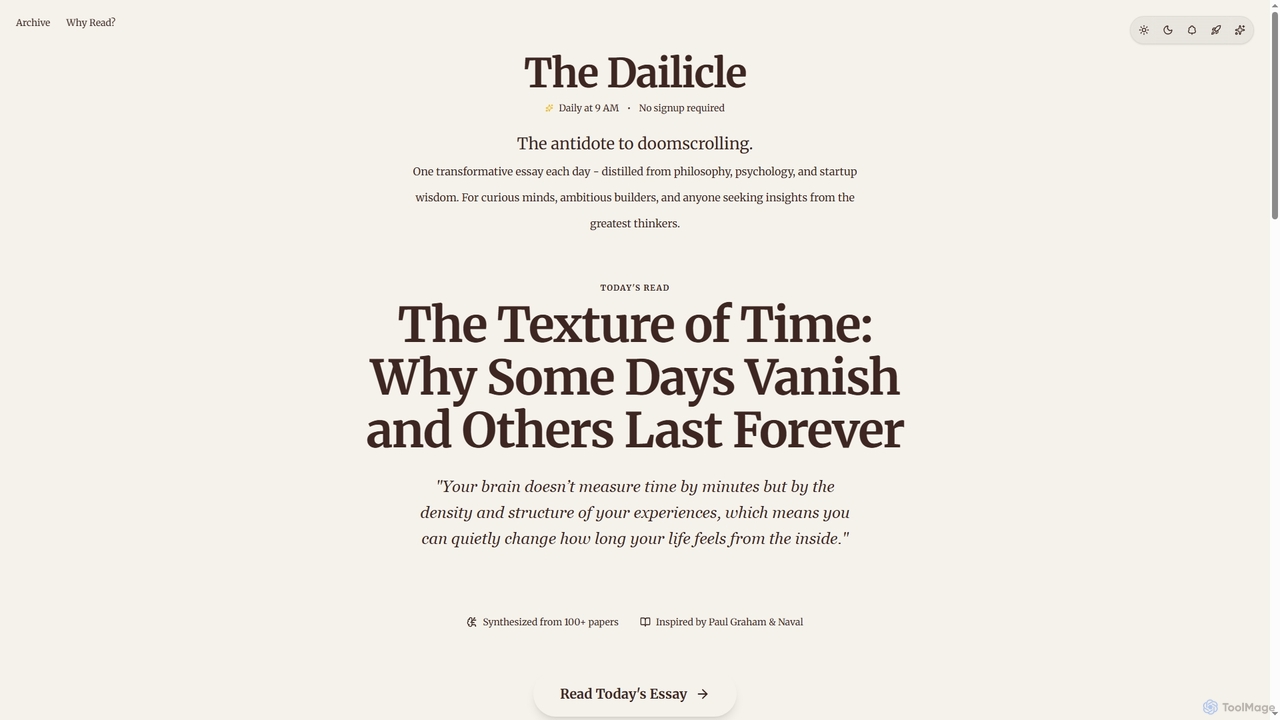
Popular Mindfulness AI tools in Personal Development include Dim and Dailicle, helping you work more efficiently.

Dim is an innovative app designed as a digital sanctuary for your mind, helping you effortlessly capture, connect, house, and celebrate your thoughts. It simplifies idea organization through intuitive tagging and free-form writing, fostering mental clarity and structured thinking.
MindfulnessMindfulness AI tools are specialized applications that leverage artificial intelligence to guide individuals through practices of mindfulness, meditation, and stress reduction. These tools often utilize AI algorithms to personalize meditation sessions, track user progress, and provide real-time biofeedback, making ancient practices more accessible and engaging. As a vital aspect of personal development, they empower users to cultivate mental clarity, emotional balance, and improved well-being in their daily lives.
Individuals seeking to manage stress and anxiety can use these tools for daily guided meditations, while professionals looking to enhance focus and productivity can benefit from short mindfulness breaks. People struggling with sleep can utilize sleep-focused programs, and those new to meditation can find structured learning paths to build foundational skills.
When selecting a Mindfulness AI tool, consider the range of guided meditations and programs offered, checking for personalization capabilities based on your needs. Evaluate its integration with wearable devices for biofeedback, if desired, and assess the quality of its mood tracking and progress reporting features. Finally, compare subscription models and ensure the user interface is intuitive and calming for a consistent practice.
Individuals experiencing high stress use AI mindfulness apps for short, guided breathing exercises or body scans during work breaks, helping to calm the nervous system and regain composure. The AI can suggest specific techniques based on reported stress levels, providing immediate relief and fostering resilience against daily pressures.
Professionals or students utilize tools offering focus-enhancing meditations before tasks or study sessions, leveraging AI to suggest optimal durations and techniques based on their cognitive patterns. This helps to clear mental clutter, sharpen attention, and sustain concentration for improved productivity and learning outcomes.
Users with sleep difficulties engage with AI-powered sleep stories, soundscapes, or progressive muscle relaxation exercises before bedtime, with the AI learning preferences to create a personalized sleep routine. This helps to calm the mind, reduce pre-sleep anxiety, and promote a smoother transition into restful sleep, improving overall sleep quality.
Beginners to mindfulness use structured programs that introduce core concepts and gradually increase meditation duration, with AI tracking consistency and offering motivational insights. This systematic approach helps users overcome initial hurdles, establish a regular routine, and progressively deepen their meditation skills over time.
Individuals seeking to better understand and manage their emotions log daily moods, and the AI suggests specific meditations or journaling prompts to process feelings and develop emotional resilience. This proactive approach helps users identify emotional triggers, practice non-judgmental awareness, and respond to emotions more skillfully.
Teams or individuals in demanding roles use quick, AI-suggested mindfulness breaks to prevent burnout, improve decision-making, and foster a more positive work environment. These short interventions, often personalized by AI, help maintain mental clarity and emotional balance throughout the workday, enhancing overall well-being and productivity.
Mindfulness AI tools are digital applications that use artificial intelligence to facilitate and enhance mindfulness and meditation practices. They provide personalized guided meditations, track user progress, offer biofeedback, and suggest exercises tailored to individual needs, helping users cultivate mental well-being and reduce stress.
These tools personalize the experience by analyzing user input such as mood logs, goals, and even biometric data from wearables. AI algorithms then adapt meditation content, duration, and style, suggesting specific exercises or programs that are most relevant to the user's current state and long-term objectives, making practice more effective.
While Mindfulness AI tools offer accessible and personalized guidance, they complement rather than fully replace traditional meditation teachers. They provide structured practice and data-driven insights, but a human teacher can offer nuanced feedback, deeper philosophical context, and direct interpersonal support that AI currently cannot replicate, especially for advanced practitioners or specific therapeutic needs.
The key benefits include enhanced personalization, making practices more relevant and engaging for individuals. AI tools offer convenience and accessibility, allowing users to practice anytime, anywhere. They also provide objective tracking and feedback, helping users understand their progress and maintain consistency, ultimately leading to improved mental clarity, stress reduction, and emotional balance.
Mindfulness AI tools specifically focus on practices like meditation, breathing exercises, and present-moment awareness to cultivate mental well-being and reduce stress. While they contribute to personal development, general personal development apps often cover a broader range of areas such as productivity, skill-building, goal setting, or habit formation, without the deep specialization in mindfulness techniques.