ToolMage
Sign in

Best 1 Self Help AI tools for Personal Development

Popular Self Help AI tools in Personal Development include HallofTarot, helping you work more efficiently.

Freemium

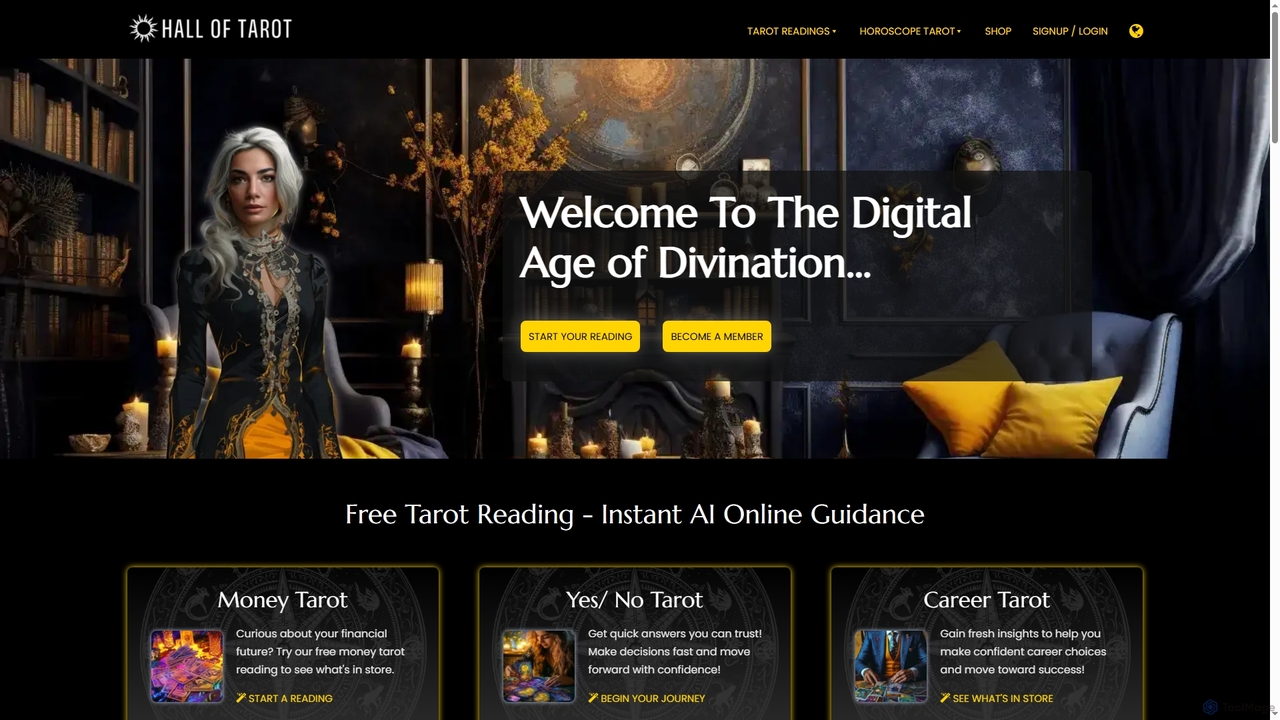
HallofTarot

HallofTarot offers free, AI-powered online tarot readings for instant, personalized guidance across various life aspects like love, career, and finance. It combines ancient tarot wisdom with cutting-edge AI to provide clarity and insights anytime, anywhere, on any device. A customizable widget is also available for website integration.

Self Help
Visits 8.6KFavorites 94Likes 111

About Self Help

AI Self Help tools are applications that provide personalized guidance and support for personal growth and mental well-being. They leverage artificial intelligence, particularly natural language processing and machine learning, to act as digital coaches, mentors, or companions. These tools offer accessible, on-demand support for developing habits, managing stress, and improving skills. Their primary value lies in delivering customized feedback and adaptive learning paths based on individual user interactions.

Core Features

  • Personalized Coaching: Delivers tailored advice and action plans based on user goals and progress tracking.
  • Conversational Support: Utilizes AI chatbots for guided journaling, emotional processing, and reflective conversations.
  • Intelligent Habit Formation: Analyzes user patterns to provide insights and nudges for building consistent routines.
  • Guided Exercises: Offers AI-driven sessions for mindfulness, meditation, breathing exercises, and cognitive behavioral therapy (CBT) techniques.

Use Cases

These tools are widely used by individuals seeking to manage daily anxiety, build positive habits like meditation or exercise, or improve specific soft skills such as communication and leadership. Professionals use them for career development coaching, while students leverage them for focus and procrastination management. They serve as a confidential space for self-reflection and guided improvement.

How to Choose

When selecting an AI Self Help tool, consider its specific focus area (e.g., mental wellness, career, habits). Evaluate the underlying methodology, such as whether it's based on CBT or positive psychology. Data privacy and security policies are crucial, as you will be sharing personal information. Also, assess the level of personalization and the quality of the AI-driven feedback to ensure it meets your needs.

Featured tool rankings

Self Help use cases

1

Manage Daily Anxiety with an AI Companion

A professional experiencing work-related stress uses an AI self-help app to manage their daily anxiety. Each morning, they engage in a 5-minute guided conversation with the AI chatbot to set a positive intention for the day. When feeling overwhelmed, they use the app's 'thought reframing' exercise, which is based on Cognitive Behavioral Therapy (CBT). The AI helps them identify negative thought patterns and suggests alternative, more balanced perspectives. This practice helps reduce anxiety spikes and builds long-term mental resilience without needing to schedule appointments.

2

Build a Consistent Morning Routine with AI Nudges

A user wants to establish a consistent morning routine of meditation, journaling, and exercise. They use an AI habit-tracking tool that goes beyond simple reminders. The AI analyzes their completion data and notices they are more likely to skip exercise on days they check social media first. The tool then suggests a 'digital detox' period for the first hour of the day. It also provides personalized motivational messages based on their stated goals, helping them stay committed and transforming a difficult goal into an achievable daily practice.

3

Practice for a Job Interview with an AI Coach

A recent graduate is preparing for their first major job interview. They use an AI coaching tool to practice their answers to common interview questions. The user records their responses, and the AI provides instant, private feedback on several metrics: speech clarity, pacing, use of filler words like 'um' and 'like', and overall confidence conveyed through tone. The tool also suggests stronger action verbs to better describe their accomplishments. This allows for unlimited practice rounds, helping the graduate build confidence and polish their delivery in a judgment-free environment.

4

Improve Communication Skills via Role-Playing

A team leader wants to improve their ability to give constructive feedback. They use an AI self-help tool that offers role-playing scenarios. The user can choose a scenario, such as 'addressing missed deadlines with a team member.' They type or speak their feedback, and the AI, acting as the team member, responds realistically. The AI then provides an analysis of the user's communication, highlighting phrases that were effective and suggesting alternative wording to be more empathetic and clear. This repeated practice helps the leader become more confident and skilled in handling difficult conversations.

5

Receive a Personalized Daily Learning Path

An employee aiming for a promotion wants to develop leadership skills. Instead of generic courses, they use an AI mentor that creates a personalized daily learning path. Based on their stated goals and a quick initial assessment, the AI delivers a daily 15-minute 'micro-learning' module. This might include a short article on delegation, a video on active listening, and a reflective question about a recent team interaction. The path adapts based on their feedback and progress, ensuring the learning is relevant, manageable, and directly applicable to their career goals.

6

Overcome Procrastination with AI-Driven Goal Setting

A student struggling with procrastination on a large research paper uses an AI tool to break down the task. The AI guides them through a process of defining the final goal and then helps break it into smaller, manageable sub-tasks like 'find five sources' or 'write the introduction paragraph.' For each sub-task, the AI helps set a realistic deadline. If the student reports feeling 'stuck,' the AI can offer strategies like the Pomodoro Technique or suggest starting with an even smaller, 5-minute task to build momentum. This structured, supportive approach makes the large project feel less daunting.

Self Help FAQ

What are AI Self Help tools?

AI Self Help tools are digital applications designed to support personal growth and mental well-being through personalized, AI-driven interactions. Unlike static content apps, they use technologies like machine learning and natural language processing to act as a coach, mentor, or supportive companion. Key features often include AI-powered chatbots for conversation, personalized feedback on goals, and adaptive plans for skill-building or habit formation. They make self-improvement more accessible and tailored to the individual's specific needs and progress.

How to choose the right AI Self Help tool?

To choose the right tool, first clarify your primary goal. Are you looking to manage anxiety, build habits, or develop professional skills? Then, consider these factors:

  • Methodology: Check if the tool's approach aligns with your preferences, such as being based on Cognitive Behavioral Therapy (CBT), mindfulness, or positive psychology.
  • Personalization: Look for a tool that offers truly adaptive feedback and plans, rather than generic advice.
  • Data Privacy: Since you'll be sharing personal data, review their privacy policy to ensure your information is secure.
  • User Interface: Choose an app with an intuitive and engaging interface that you'll be motivated to use regularly.
What's the difference between AI Self Help tools and general wellness apps?

The key difference lies in interactivity and personalization. General wellness apps often provide a library of static content, like guided meditation videos, articles, or generic workout plans. AI Self Help tools, on the other hand, create a dynamic, two-way interaction. They use AI to analyze your specific inputs, track your progress, and adapt their guidance in real-time. For example, an AI tool might adjust a learning plan based on your performance or offer specific conversational support based on your journal entries, providing a much more tailored experience.

Are AI Self Help tools a replacement for human therapists or coaches?

No, AI Self Help tools are not a replacement for professional human support. They should be viewed as supplementary tools that can provide accessible, on-demand support for daily challenges, skill-building, and habit formation. For serious mental health conditions, complex personal issues, or in-depth professional coaching, consulting a qualified human therapist, counselor, or coach is essential. These AI tools can be a great first step or a way to reinforce strategies learned in therapy, but they do not replace the nuanced understanding and clinical expertise of a human professional.

What kind of goals can I achieve with these tools?

AI Self Help tools can help you work towards a wide range of personal development goals. Common applications include:

  • Wellness & Mental Health: Managing daily stress and anxiety, practicing mindfulness, and improving sleep quality.
  • Habit Formation: Building and maintaining positive routines like regular exercise, meditation, or learning a new language.
  • Skill Development: Improving soft skills such as public speaking, communication, leadership, and negotiation through practice and feedback.
  • Productivity: Overcoming procrastination, improving focus, and setting and achieving personal or professional goals more effectively.