ToolMage
Sign in

Best 1 Well Being AI tools for Personal Development

Popular Well Being AI tools in Personal Development include ChillandPill, helping you work more efficiently.

ChillandPill

ChillandPill

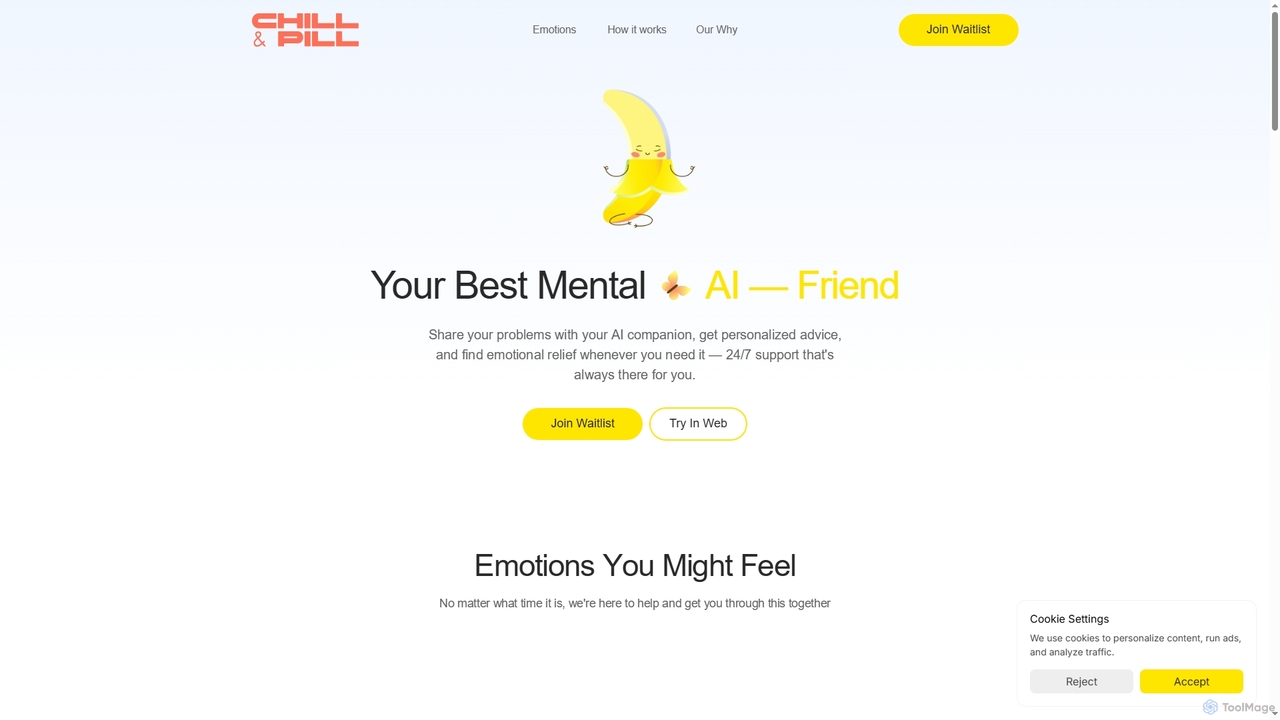
ChillandPill is an AI emotional support companion designed to be your non-judgmental 'pocket friend.' It offers 24/7 personalized guidance and instant responses to help you navigate various emotions, from anxiety and stress to joy and gratitude, fostering self-awareness and emotional relief.

Mindfulness
Visits 5.9KFavorites 152Likes 138

About Well Being

AI Well Being tools are a category of artificial intelligence applications designed to support and enhance an individual's physical and mental health. Leveraging machine learning, natural language processing, and data analytics, these tools offer personalized insights, guidance, and interventions to improve various aspects of personal wellness. They empower users to proactively manage stress, optimize sleep, track fitness, foster positive habits, and cultivate mindfulness for a more balanced and fulfilling life, serving as a key component within the broader Personal Development landscape.

Core Features

  • Personalized Wellness Plans: AI analyzes user data to create customized routines for fitness, nutrition, and mental health.
  • Mood & Emotional Tracking: Tools monitor emotional states through journaling or input, offering insights and coping strategies.
  • Sleep Optimization: AI analyzes sleep patterns and provides tailored recommendations for improved rest and relaxation.
  • Mindfulness & Stress Reduction: Guided meditations, breathing exercises, and cognitive behavioral techniques adapted to individual needs.
  • Habit Formation & Coaching: Intelligent reminders and motivational support to build and maintain healthy behaviors.

Use Cases

Individuals seeking to proactively manage their health, improve daily routines, or gain deeper insights into their well-being often utilize AI Well Being tools. They are particularly valuable for those looking to reduce stress, enhance sleep quality, maintain fitness goals, or develop consistent mindfulness practices without constant human intervention.

How to Choose

When selecting an AI Well Being tool, consider its specific focus (e.g., sleep, mental health, fitness), the level of personalization offered, and its data privacy policies. Evaluate the scientific backing of its methods, user interface intuitiveness, integration capabilities with other devices, and overall cost-effectiveness to ensure it aligns with your personal wellness goals.

Well Being use cases

1

Personalized Stress & Anxiety Management

An individual experiencing daily stress uses an AI Well Being app to track their mood, identify stress triggers, and receive personalized recommendations for guided meditations, breathing exercises, or journaling prompts. The AI adapts suggestions based on their responses and progress, helping them develop effective coping mechanisms and reduce anxiety levels over time.

2

Optimizing Sleep Quality and Patterns

A user struggling with inconsistent sleep utilizes an AI-powered sleep tracker that monitors their sleep cycles, heart rate, and environmental factors. The tool provides data-driven insights into their sleep quality and offers tailored advice on sleep hygiene, relaxation techniques, and optimal bedtime routines, leading to more restful nights.

3

AI-Guided Mental Wellness Journaling

Someone looking to improve their emotional intelligence and process thoughts uses an AI journaling tool. After daily entries, the AI analyzes language patterns and sentiment to highlight recurring themes, emotional shifts, and potential cognitive distortions, suggesting relevant CBT-based exercises or prompts for deeper self-reflection.

4

Customized Fitness & Nutrition Coaching

An individual with specific fitness or dietary goals employs an AI personal coach. Based on their biometric data, activity levels, and food preferences, the AI generates adaptive workout plans and meal suggestions. It continuously adjusts recommendations as the user progresses, ensuring sustainable and effective progress towards their health objectives.

5

Enhancing Mindfulness & Focus in Daily Life

A busy professional integrates an AI mindfulness app into their routine to combat distractions and improve concentration. The app offers short, personalized meditation sessions and mindful breaks throughout the day, adapting to their schedule and stress levels to foster greater presence and mental clarity.

6

Building & Sustaining Healthy Habits

A user aiming to establish new healthy habits, such as regular hydration or daily reading, leverages an AI habit tracker. The tool sends intelligent reminders, tracks progress, and provides motivational insights based on behavioral science, helping to reinforce positive actions and build long-term consistency.

Well Being FAQ

What are AI Well Being tools?

AI Well Being tools are applications that use artificial intelligence to support and enhance personal health and wellness. Unlike traditional wellness apps, they leverage machine learning to offer personalized insights, adaptive guidance, and proactive interventions for areas like mental health, sleep, fitness, and stress management, making them a dynamic part of personal development.

How do AI Well Being tools personalize recommendations?

These tools personalize recommendations by analyzing a user's input data, such as mood logs, activity levels, sleep patterns, and preferences, often combined with sensor data from wearables. Machine learning algorithms process this information to identify patterns, predict needs, and deliver tailored advice, exercises, or content that evolves with the user's progress and changing state.

Are AI Well Being tools a substitute for professional medical or psychological advice?

No, AI Well Being tools are designed to be supplementary aids for personal growth and general wellness, not replacements for professional medical or psychological advice. While they can offer valuable support and insights, individuals with serious health concerns or mental health conditions should always consult qualified healthcare professionals for diagnosis and treatment.

What kind of data do AI Well Being tools collect and how is privacy handled?

AI Well Being tools typically collect data related to user activity, mood, sleep, fitness, and sometimes biometric information. Reputable tools prioritize user privacy by employing robust encryption, anonymization techniques, and strict data governance policies. Users should always review the privacy policy of any tool to understand how their data is collected, stored, and used.

How can I choose the best AI Well Being tool for my specific needs?

To choose the best AI Well Being tool, first identify your primary wellness goals, whether it's stress reduction, better sleep, or fitness. Then, evaluate tools based on their specific features, the scientific basis of their methods, user reviews, and their data privacy practices. Consider the user interface, integration with other devices, and pricing model to find a solution that aligns with your personal preferences and budget.