Vital
Vital is an AI-powered meditation app that creates personalized, on-demand audio sessions to guide your mind. Simply type …
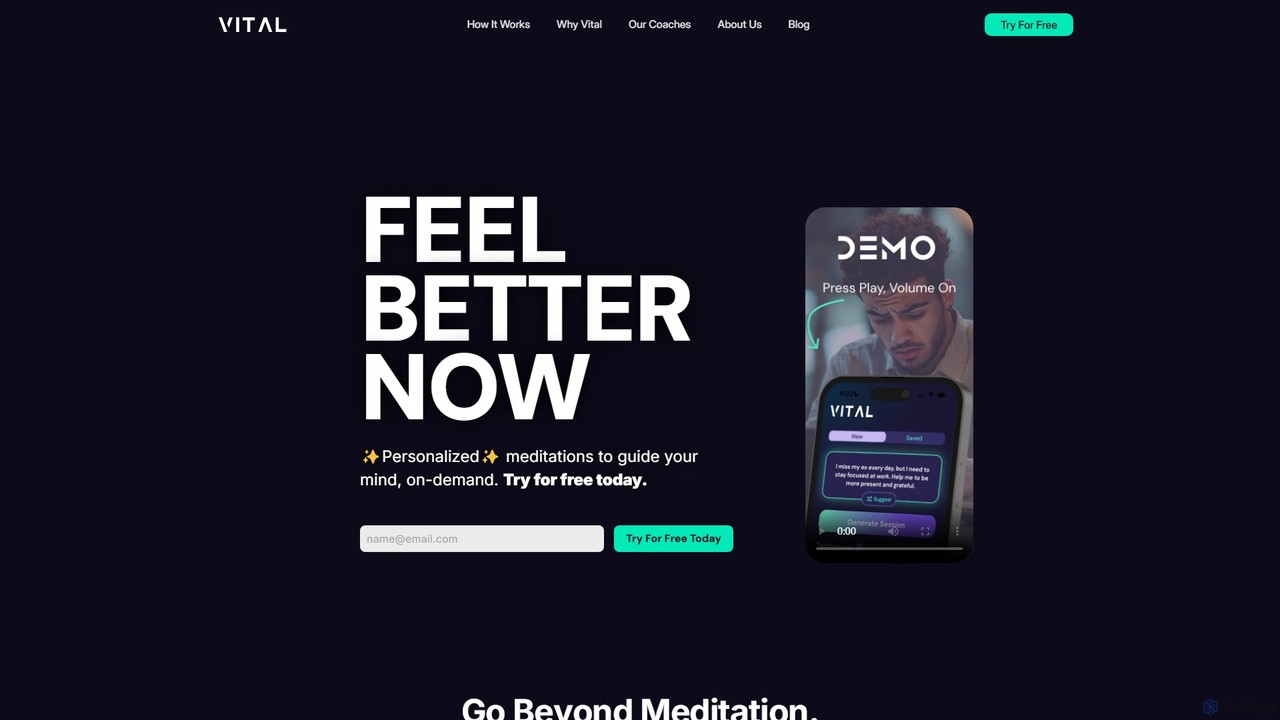
Vital is an AI-powered meditation app that creates personalized, on-demand audio sessions to guide your mind. Simply type what's on your mind, and Vital instantly generates a unique meditation to help you improve sleep, reduce stress, and achieve your goals.
About Wellbeing
Wellbeing AI tools are a category of artificial intelligence applications designed to support and enhance an individual's mental, emotional, and physical health. Leveraging machine learning and natural language processing, these tools offer personalized insights, guided practices, and proactive interventions. They empower users to manage stress, improve sleep, cultivate mindfulness, and foster healthier habits, contributing to a balanced and fulfilling life.
Core Features
- Personalized Guidance: Offers tailored recommendations for meditation, exercise, or stress reduction based on user data and preferences.
- Mood & Emotion Tracking: Analyzes user input (e.g., journal entries, voice) to identify emotional patterns and provide insights for better emotional regulation.
- Sleep Optimization: Monitors sleep patterns and suggests improvements through guided meditations, soundscapes, or habit adjustments for more restful sleep.
- Stress Management Techniques: Provides guided breathing exercises, mindfulness practices, and cognitive reframing tools to help users cope with stress.
- Habit Formation Support: Helps users build and maintain positive routines through reminders, progress tracking, and motivational feedback.
Applicable Scenarios
Individuals seeking to reduce daily stress, improve sleep quality, or develop healthier routines can significantly benefit from Wellbeing AI tools. They are also valuable for those looking for accessible mental health support, personalized fitness and nutrition guidance, or tools to enhance emotional intelligence and self-awareness.
How to Choose
When selecting a Wellbeing AI tool, consider its core focus (e.g., mental health, sleep, fitness), the level of personalization it offers, and its data privacy policies. Evaluate the scientific backing for its methods, integration capabilities with other health devices, and the user-friendliness of its interface to ensure it meets your specific needs.
WellbeingUse Cases
Enhance Daily Mindfulness & Meditation
Busy professionals seeking to integrate short mindfulness breaks into their day can use Wellbeing AI tools. These tools offer personalized guided meditations and breathing exercises, helping users to reduce stress, improve focus, and maintain mental clarity amidst demanding schedules, fostering a calmer and more present state of mind.
Optimize Sleep Quality & Patterns
Individuals struggling with insomnia or inconsistent sleep can use Wellbeing AI tools to track sleep cycles, analyze disturbances, and receive tailored recommendations. These might include guided meditations, soothing soundscapes, or personalized pre-sleep routines, leading to more restful nights and improved overall sleep health.
Manage Stress & Emotional Regulation
Users experiencing high stress levels or anxiety can leverage AI-powered journaling and mood tracking features. These tools help identify emotional triggers and provide cognitive behavioral therapy (CBT)-inspired exercises or coping strategies, fostering emotional resilience and promoting healthier responses to daily challenges.
Cultivate Healthy Habits & Routines
Anyone aiming to build positive habits, such as regular exercise, mindful eating, or consistent hydration, can utilize Wellbeing AI tools. These applications assist with goal setting, progress tracking, and provide motivational nudges or reminders, making habit formation more consistent and sustainable over time.
Personalized Fitness & Nutrition Planning
For those seeking a healthier lifestyle, Wellbeing AI tools can analyze activity levels, dietary preferences, and fitness goals. They then generate customized workout plans and meal suggestions, adapting as progress is made and providing guidance to help users achieve their physical health objectives effectively and sustainably.
Support Cognitive & Emotional Intelligence
Individuals looking to improve their emotional awareness, empathy, and cognitive functions can engage with Wellbeing AI tools. These offer interactive exercises, journaling prompts, and feedback mechanisms designed to develop self-awareness, enhance problem-solving skills, and foster stronger interpersonal relationships through improved emotional intelligence.