
Kurby
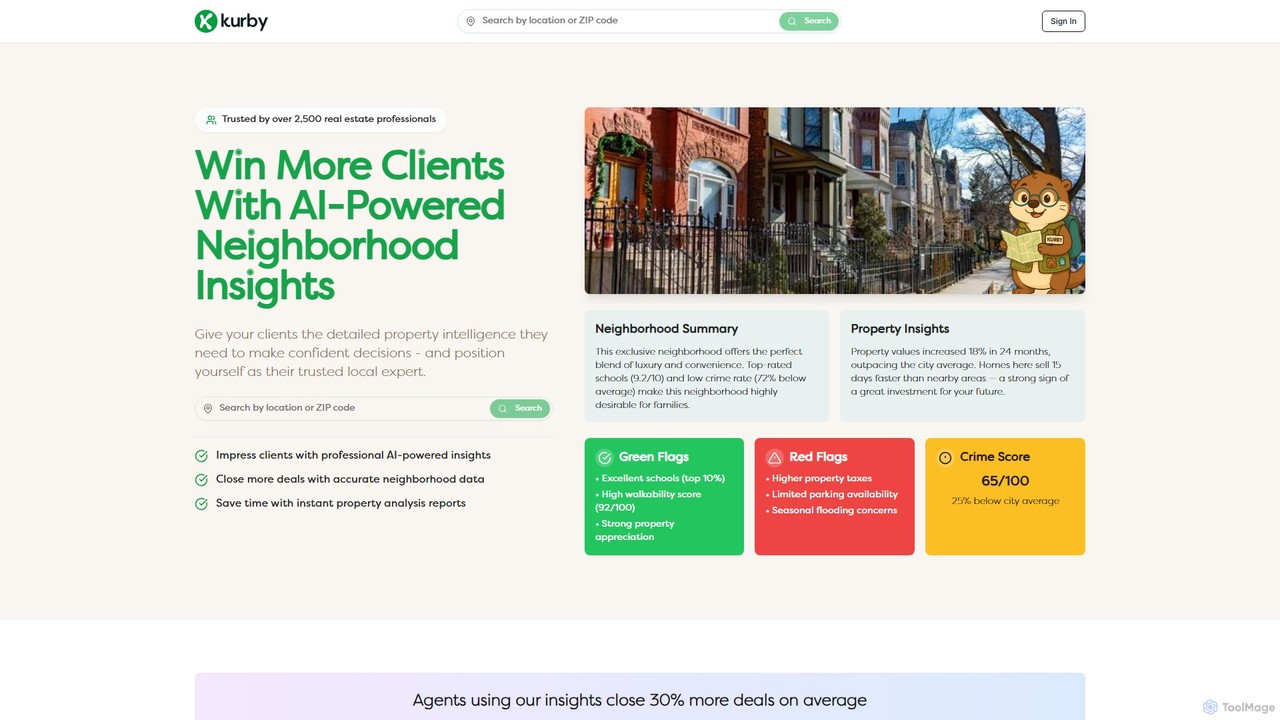
Kurby is an AI-powered platform for real estate professionals, providing detailed neighborhood and property intelligence. It generates comprehensive …
Kurby is an AI-powered platform for real estate professionals, providing detailed neighborhood and property intelligence. It generates comprehensive reports on market trends, demographics, safety, and amenities, helping agents impress clients, close more deals, and establish themselves as local experts.
About Analytics
AI Real Estate Analytics tools are AI-powered platforms designed to process and interpret vast amounts of real estate data. These tools leverage machine learning algorithms to uncover patterns, predict market movements, and provide actionable insights. They enable real estate professionals to make data-driven decisions, optimize investment strategies, and identify emerging opportunities. By automating complex data analysis, they offer a significant advantage in understanding market dynamics and property performance.
Core Features
- Market Trend Analysis: Identifies emerging patterns in property values, rental rates, and demand across various geographical areas.
- Property Valuation: Estimates accurate property worth by analyzing comparable sales, market conditions, and property-specific attributes.
- Investment Performance Tracking: Monitors the return on investment (ROI), cash flow, and equity growth for individual properties or entire portfolios.
- Risk Assessment: Evaluates potential risks associated with specific real estate investments, market segments, or economic shifts.
- Demographic & Location Insights: Provides detailed analysis of population shifts, local amenities, and infrastructure projects impacting property appeal and value.
Applicable Scenarios
Real estate investors utilize these tools to pinpoint undervalued properties with high growth potential. Developers leverage them for site selection and project planning based on future market demand. Real estate agents use the insights to advise clients on optimal buying, selling, and pricing strategies.
How to Choose
When selecting an AI Real Estate Analytics tool, consider the breadth and accuracy of its data sources, particularly for your target markets. Evaluate its predictive capabilities and the sophistication of its forecasting models. Assess integration options with your existing CRM or property management systems, and review the clarity and customizability of its reporting and visualization features.
AnalyticsUse Cases
Identifying Undervalued Investment Properties
Real estate investors leverage AI analytics to scan vast market data, including transaction histories, property characteristics, and local economic indicators. The tools pinpoint properties that are currently priced below their intrinsic value but show high potential for appreciation, allowing investors to make informed acquisition decisions and maximize returns.
Predicting Future Property Value Trends
Real estate developers and urban planners utilize AI analytics to forecast property value appreciation or depreciation in specific neighborhoods over various time horizons. By analyzing historical data, demographic shifts, infrastructure projects, and economic forecasts, these tools provide critical insights for long-term development planning and strategic land acquisition.
Optimizing Rental Pricing Strategies
Property managers and landlords employ AI analytics to determine optimal rental rates for their properties. The tools analyze competitor pricing, local demand, seasonal trends, and property-specific features to suggest dynamic pricing strategies. This ensures maximum occupancy and revenue generation, adapting quickly to market fluctuations without manual adjustments.
Assessing Real Estate Investment Portfolio Risk
Financial institutions and fund managers use AI analytics to evaluate the risk exposure of their real estate portfolios. By analyzing market volatility, property-specific risks, economic indicators, and geopolitical factors, these tools identify potential vulnerabilities, suggest diversification strategies, and help rebalance portfolios to mitigate losses and optimize long-term stability.
Targeting High-Potential Development Sites
Urban planners and real estate developers use AI analytics to identify prime locations for new residential or commercial projects. The tools analyze demographic shifts, zoning regulations, infrastructure plans, and proximity to amenities to pinpoint areas with high demand and growth potential, streamlining the site selection process and maximizing project success rates.
Personalizing Property Recommendations for Buyers
Real estate agents utilize AI analytics to provide highly personalized property recommendations to their clients. By analyzing client preferences (e.g., desired school districts, commute times, amenities, property types) against available listings and market trends, these tools streamline the search process, present more relevant options, and significantly enhance client satisfaction and conversion rates.