ValueMate
ValueMate is an AI-powered platform designed for residential property appraisers to streamline their workflow. By using mobile LiDAR …
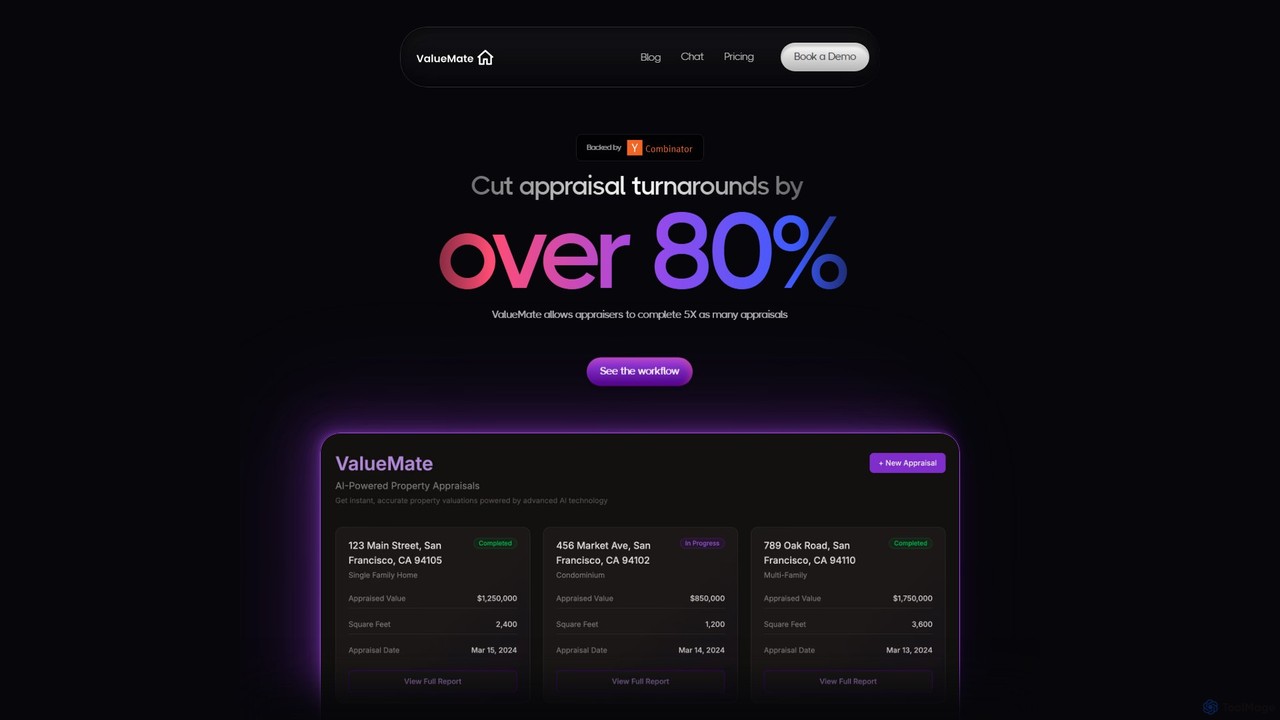
ValueMate is an AI-powered platform designed for residential property appraisers to streamline their workflow. By using mobile LiDAR scanning and AI, it automates the creation of 3D models, ANSI-compliant floorplans, and UAD 3.6 compliant appraisal reports. This enables appraisers to work up to 5 times faster, reduce turnaround times by over 80%, and ensure regulatory compliance with ease.
About Appraisal
AI Appraisal tools are specialized platforms within real estate technology that use machine learning to automate property valuation. These tools analyze vast datasets, including property records, market trends, and comparable sales, to generate accurate and instant value estimates. Their primary purpose is to provide real estate professionals, investors, and financial institutions with data-driven insights, significantly speeding up the appraisal process. By leveraging predictive analytics, they offer a consistent and objective alternative to traditional valuation methods.
Core Features
- Automated Valuation Models (AVM): Generate instant property value estimates using proprietary algorithms and massive datasets.
- Comparable Market Analysis (CMA): Automatically identify and analyze the most relevant comparable properties to support a valuation.
- Predictive Analytics: Forecast future property value trends and market fluctuations based on historical and economic data.
- Data Aggregation: Consolidate information from multiple sources like MLS, public records, and geographic data into a single analysis.
- Risk Assessment: Evaluate property-related risks, such as market volatility or location-specific factors, for investment and lending decisions.
Use Cases
AI Appraisal tools are widely used by real estate agents for pricing listings, investors for identifying undervalued assets, and mortgage lenders for initial loan underwriting. They are also valuable for portfolio managers at Real Estate Investment Trusts (REITs) who need to conduct regular, large-scale portfolio valuations to track performance and report to stakeholders.
How to Choose
When selecting an AI Appraisal tool, consider the accuracy and recency of its underlying data sources. Evaluate its geographic coverage to ensure it includes your target markets. Assess the transparency of its valuation model and its ability to integrate with other real estate software, such as CRMs or MLS platforms. Finally, compare pricing models based on your usage volume.
AppraisalUse Cases
Rapid Valuation for Real Estate Listings
A real estate agent preparing for a meeting with a potential seller uses an AI Appraisal tool to generate an instant, data-backed valuation report. By inputting the property's address and key features, the tool analyzes recent comparable sales, market trends, and neighborhood data. The agent presents this objective report to the seller, building trust and helping to set a competitive and realistic listing price, which can lead to a faster sale and justifies their commission.
Screening for Investment Property Opportunities
A real estate investor uses an AI Appraisal tool to scan hundreds of properties in a target city. They set filters for property type and budget, and the tool's Automated Valuation Model (AVM) provides an estimated market value for each listing. The investor can then quickly compare the AVM value against the asking price to identify potentially undervalued properties. This allows for efficient, large-scale screening, saving significant time compared to manually researching each property's value.
Automating Collateral Assessment for Mortgages
A mortgage lender integrates an AI Appraisal tool into their loan origination system. When a loan application is received, the tool automatically pulls the property details and generates an AVM report. This initial, instant valuation helps the underwriting team quickly assess the collateral's value and the loan-to-value (LTV) ratio. It streamlines the early stages of the approval process, allowing for faster decisions and identifying high-risk applications that may require a full, manual appraisal early on.
Portfolio Valuation for Investment Funds
A portfolio manager for a Real Estate Investment Trust (REIT) needs to report the current market value of hundreds of commercial and residential properties quarterly. Instead of commissioning costly and time-consuming manual appraisals for each asset, they use an AI Appraisal tool. The platform batch-processes the entire portfolio, providing up-to-date valuations. This enables accurate performance tracking, risk management, and transparent reporting to investors and regulators in a fraction of the time and cost.
Informing Home Refinancing Decisions
A homeowner is considering refinancing their mortgage to take advantage of lower interest rates. Before starting the formal application process, they use a consumer-facing AI Appraisal tool to get an instant estimate of their home's current value. This helps them understand their current equity and potential loan-to-value ratio. Based on this data-driven estimate, they can make a more informed decision about whether refinancing is financially viable and approach lenders with greater confidence.
Setting Premiums for Property Insurance
An insurance underwriter needs to determine the appropriate premium for a new homeowner's insurance policy. They use an AI Appraisal tool to get a reliable estimate of the property's replacement cost. The tool analyzes construction materials, square footage, local labor costs, and other factors to provide a detailed valuation. This data ensures the property is insured for the correct amount, preventing under-insurance for the client and managing risk exposição for the insurance company, while also speeding up the quoting process.