
ToolMage
Sign in

Best 1 Agent Tools for Real Estate

Popular Agent Tools in Real Estate include epique, helping you work more efficiently.

epique
Paid

epique

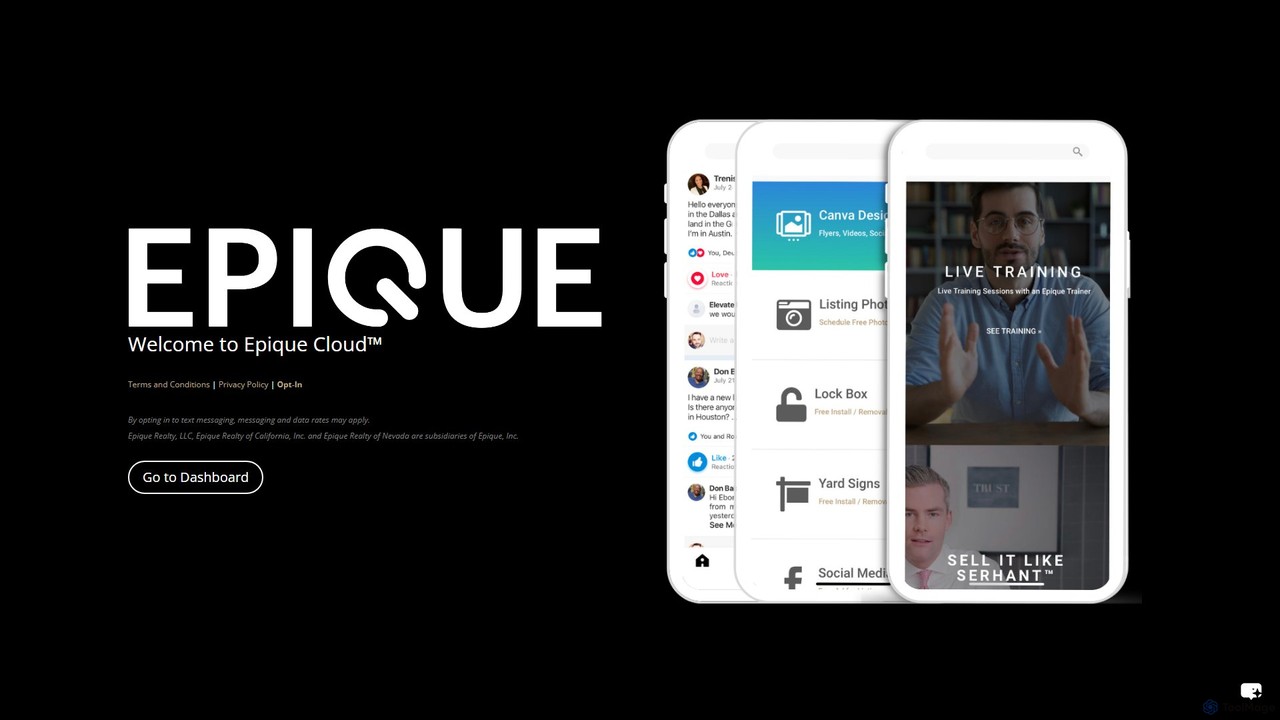
Epique Cloud is an all-in-one, AI-powered real estate platform designed exclusively for Epique Realty agents. It features an AI assistant named Eriq, a comprehensive CRM, marketing automation, and transaction management tools to streamline workflows, enhance client engagement, and boost agent productivity.

Lead Management
Visits 14.1KFavorites 135Likes 133

About Agent Tools

Real Estate Agent Tools are AI-powered platforms designed to assist real estate professionals by automating and enhancing their daily operations. These tools leverage machine learning to handle tasks like lead qualification, client communication, and market analysis. They empower agents to nurture more leads effectively, save significant time on administrative work, and provide data-driven insights to clients. By integrating with CRM and MLS systems, these tools streamline the entire sales and marketing workflow for agents and brokerages.

Core Features

  • AI Lead Qualification: Automatically analyzes and scores incoming leads based on their behavior, engagement, and profile data.
  • Automated Client Follow-up: Creates and sends personalized email or text message sequences to nurture leads and past clients.
  • Property Description Generation: Instantly writes compelling and SEO-friendly property listings based on key features and data points.
  • AI-Powered CMA Reports: Quickly generates comprehensive Comparative Market Analysis (CMA) reports using real-time market data.
  • Predictive Analytics: Identifies potential sellers or buyers in a specific area by analyzing market trends and historical data.

Use Cases

These tools are primarily used by real estate agents, brokers, and marketing teams within real estate agencies. For instance, an agent can use an AI tool to automatically respond to late-night inquiries from property portals, ensuring no lead is missed. A brokerage might use predictive analytics to identify neighborhoods with a high probability of future listings, focusing their marketing efforts more strategically.

How to Choose

When selecting a Real Estate Agent Tool, consider its integration capabilities with your existing CRM and MLS. Evaluate the level of customization available for communication scripts and follow-up sequences. Assess the accuracy and timeliness of the market data it uses for analysis. Finally, consider the pricing model and whether it aligns with your business size and lead volume.

Agent Tools use cases

1

Automated Lead Nurturing for New Inquiries

A real estate agent receives a new lead from their website at 10 PM. The AI Agent Tool instantly sends a personalized welcome text message and an email with similar property listings. Over the next two weeks, the system automatically follows up with valuable content like a neighborhood guide and market updates. This consistent, automated nurturing keeps the lead engaged and warm until the agent can make a personal phone call during business hours, significantly increasing the conversion rate from inquiry to client.

2

Generating Compelling Property Listings in Minutes

A busy agent needs to list five new properties by the end of the day. Instead of spending hours writing descriptions, they input the basic details for each property (e.g., beds, baths, square footage, key features like 'newly renovated kitchen') into the AI tool. The tool generates multiple unique, persuasive, and SEO-optimized descriptions for each property. The agent can then choose the best one, make minor edits, and post the listings to the MLS and social media, saving over 80% of the time typically spent on this task.

3

Predictive Farming for New Listing Opportunities

A real estate brokerage wants to proactively find new sellers in a competitive market. They use an AI Agent Tool's predictive analytics feature. The tool analyzes public records, MLS data, property turnover rates, and demographic shifts to identify homeowners who are most likely to sell within the next 6-12 months. The brokerage's agents can then focus their direct mail and digital marketing campaigns on this high-potential list, resulting in a more efficient use of their marketing budget and a higher rate of securing new listings.

4

24/7 AI Chatbot for Website Inquiries

A real estate agency integrates an AI chatbot into their website. When a visitor browses properties, the chatbot proactively engages them, asking if they need help. It can answer common questions like 'What are the school districts for this property?' or 'Can I schedule a viewing?'. The chatbot qualifies the lead by collecting contact information and viewing preferences, then automatically adds the new contact to the agency's CRM and assigns it to an agent for follow-up. This provides instant service to visitors and captures leads that might otherwise be lost outside of business hours.

5

Creating Data-Driven Comparative Market Analysis (CMA)

An agent is preparing for a listing presentation with a potential seller. Instead of spending an hour manually pulling comps from the MLS and formatting a report, they use an AI Agent Tool. The agent inputs the subject property's address, and the tool instantly generates a comprehensive, professionally branded CMA report. This report includes recent comparable sales, active listings, market trend graphs, and a data-backed suggested listing price range. This allows the agent to present a more compelling, data-driven case to the seller, increasing their chances of winning the listing.

6

Managing Past Client Relationships for Referrals

An experienced agent uses an AI tool to manage their sphere of influence (SOI). The system is connected to their database of past clients. It automatically sends personalized messages on key dates, such as home purchase anniversaries and birthdays. It also sends a quarterly local market update newsletter branded with the agent's information. This consistent, low-effort communication keeps the agent top-of-mind, leading to a steady stream of repeat business and valuable referrals from their satisfied past clients without requiring daily manual effort.

Agent Tools FAQ

What are AI Agent Tools for Real Estate?

AI Agent Tools for Real Estate are specialized software platforms that act as digital assistants for real estate professionals. They use artificial intelligence to automate repetitive tasks, enhance client communication, and provide data-driven market insights. Key functions include automated lead follow-up, AI-powered property description writing, and predictive analytics to identify potential sellers. Their main goal is to free up agents' time so they can focus on building relationships and closing deals.

How do I choose the right AI tool for my real estate business?

To choose the right tool, focus on these key factors:

  • Integration: Ensure it connects seamlessly with your existing CRM, MLS, and lead generation sources (e.g., Zillow, Realtor.com).
  • Automation Quality: Evaluate the intelligence and customizability of its follow-up sequences. Can you tailor the messaging to your brand's voice?
  • Data Accuracy: For tools with CMA or analytics features, verify the reliability and timeliness of the market data they use.
  • User-Friendliness: The platform should be intuitive for you and your team to use without extensive training.
  • Scalability: Consider if the pricing and features can grow with your business, whether you're an individual agent or a growing brokerage.
What's the difference between an AI Agent Tool and a standard Real Estate CRM?

A standard Real Estate CRM is primarily a database for storing and organizing client information, tracking interactions, and managing your sales pipeline. An AI Agent Tool is a layer of intelligence built on top of or integrated with a CRM. While a CRM stores data, an AI tool actively uses that data to automate actions. For example, a CRM stores a lead's contact info, but an AI tool uses that info to automatically send a multi-step email and text campaign to nurture that lead without any manual input from the agent.

Can these AI tools replace a real estate agent?

No, these tools are designed to augment, not replace, real estate agents. Real estate transactions are complex and deeply personal, requiring human skills like negotiation, empathy, and strategic advice. AI tools excel at handling repetitive, data-heavy tasks, which frees up agents to focus on these high-value, client-facing activities. They act as a powerful assistant, allowing a single agent to be more efficient and serve more clients effectively.

What are the key functions of Real Estate AI Agent Tools?

The core functions are centered around automation and data analysis to improve an agent's efficiency. Key functions typically include:

  • Lead Management Automation: Automatically responding to, qualifying, and nurturing new leads through email and SMS.
  • Content Generation: Using AI to write property descriptions, social media posts, and email marketing copy.
  • Market Analysis: Generating data-rich Comparative Market Analysis (CMA) reports and identifying market trends.
  • Predictive Analytics: Forecasting which homeowners in a database or geographic area are most likely to sell soon.
  • Task Management: Automating reminders for follow-ups and managing client communication schedules.