ToolMage
Sign in

Best 1 Document Management AI tools for Real Estate

Popular Document Management AI tools in Real Estate include RealtyGenius.AI, helping you work more efficiently.

RealtyGenius.AI
Freemium

RealtyGenius.AI

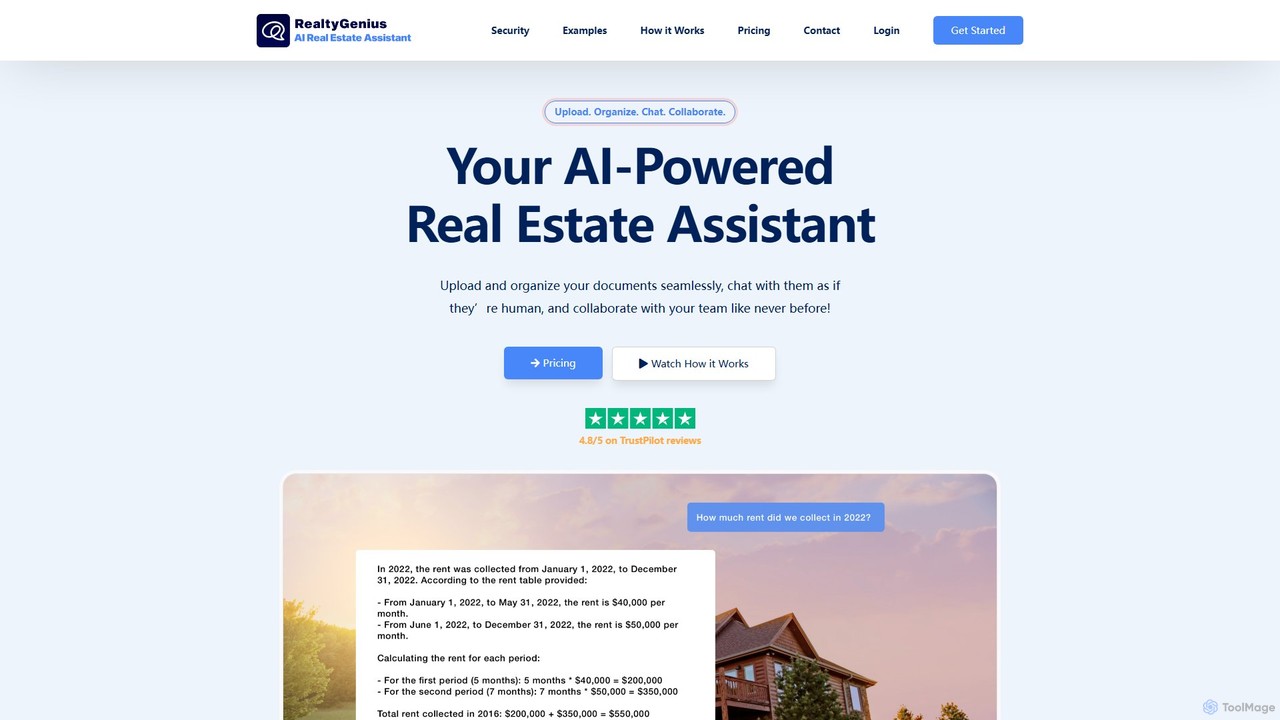
RealtyGenius.AI is an AI-powered assistant for the real estate industry. It allows users to upload, organize, and interact with complex documents like leases, mortgages, and appraisals through a conversational chat interface. This secure platform streamlines document management, enhances team collaboration, and provides instant, accurate answers to complex questions, saving time and reducing errors for real estate professionals.

Contract Management
Visits 5.4KFavorites 130Likes 124

About Document Management

AI-powered Document Management tools are specialized solutions designed to streamline the creation, organization, storage, retrieval, and sharing of documents, particularly within the complex real estate sector. These tools leverage artificial intelligence for intelligent classification, automated data extraction, and smart search capabilities, significantly reducing manual effort and enhancing accuracy. They are crucial for real estate professionals managing vast amounts of contracts, leases, property deeds, client records, and regulatory filings, ensuring efficiency and compliance throughout property lifecycles.

Core Features

  • Intelligent Document Classification: Automatically categorizes real estate documents such as purchase agreements, lease contracts, and appraisal reports based on content and metadata.
  • Automated Data Extraction: Accurately extracts key information like property addresses, client names, dates, and financial terms from unstructured real estate documents.
  • Smart Search & Retrieval: Enables quick and precise location of specific documents or information using natural language queries, even across large archives.
  • Version Control & Collaboration: Manages document revisions, tracks changes, and facilitates secure, real-time collaboration among real estate teams and external parties.
  • Compliance & Audit Trails: Ensures adherence to real estate regulations by maintaining detailed, immutable records of document access, modifications, and approvals.

Applicable Scenarios

These tools are indispensable for real estate agencies, property management firms, legal departments, and developers. They are used to manage high volumes of transaction documents, organize extensive client and property portfolios, and automate the processing of lease agreements and regulatory submissions, ensuring all stakeholders have access to the latest, compliant information.

How to Choose

When selecting an AI Document Management tool for real estate, prioritize solutions with strong real estate-specific features, robust integration capabilities with existing CRM or property management systems, and advanced security protocols. Evaluate its scalability to handle growing document volumes and its compliance features to meet industry-specific regulatory requirements, alongside user-friendliness and support.

Document Management use cases

1

Automating Lease Agreement Processing

Property managers utilize AI document management tools to automatically extract tenant details, lease terms, and renewal dates from incoming lease agreements. This accelerates the review and approval process, reduces data entry errors, and ensures timely notifications for renewals or expirations, significantly streamlining operations for large portfolios.

2

Streamlining Property Transaction Workflows

Real estate agents and brokers employ these tools to manage the entire lifecycle of property transaction documents, from initial offers and counter-offers to purchase agreements, disclosures, and closing statements. AI helps in organizing, tracking, and ensuring all necessary documents are signed, filed, and compliant, reducing closing times and legal risks.

3

Organizing Client & Property Portfolios

Real estate investors and portfolio managers use AI document management to centralize and categorize all documents related to specific clients or properties, including financial statements, maintenance records, and communication logs. This provides a comprehensive, easily searchable repository, enhancing decision-making and client service.

4

Ensuring Regulatory Compliance for Deeds & Titles

Legal departments within real estate firms leverage AI tools to verify the accuracy and completeness of property deeds, titles, and other legal documents against regulatory standards. The tools automate archiving and audit trail generation, ensuring strict adherence to local and national real estate laws and facilitating quick audits.

5

Accelerating Due Diligence for Acquisitions

Real estate developers and acquisition teams use AI document management to rapidly process and analyze vast quantities of documents during property due diligence. The tools extract critical information from environmental reports, zoning permits, and financial records, identifying potential risks and opportunities much faster than manual review.

6

Managing Construction Project Documentation

For real estate development projects, project managers utilize these tools to organize and track all construction-related documents, including blueprints, permits, contracts with contractors, change orders, and progress reports. This ensures all project stakeholders have access to the latest versions, improving communication and project oversight.

Document Management FAQ

What are AI Document Management tools for Real Estate?

AI Document Management tools for real estate are specialized software solutions that use artificial intelligence to automate and optimize the handling of property-related documents. They go beyond basic storage by intelligently classifying documents, extracting key data from contracts and leases, and enabling smart search, making the management of deeds, agreements, and client records more efficient and compliant for real estate professionals.

How do AI tools enhance document management in real estate?

AI tools significantly enhance real estate document management by automating repetitive tasks like data entry and classification, drastically reducing human error and saving time. They improve search accuracy, ensure better version control, and provide robust audit trails for compliance. This leads to faster transaction cycles, better organized client portfolios, and reduced operational costs for real estate businesses.

What types of real estate documents can these AI tools manage?

These AI tools can manage a wide array of real estate documents, including but not limited to: purchase agreements, lease contracts, property deeds, mortgage documents, appraisal reports, inspection reports, client intake forms, financial statements, permits, zoning documents, and communication logs. Their AI capabilities allow them to process both structured and unstructured data within these diverse document types.

How to choose an AI Document Management solution for a real estate business?

When selecting an AI Document Management solution for real estate, consider its specific features for property documents, such as intelligent extraction of real estate terms. Look for seamless integration with your existing CRM or property management systems, robust security measures for sensitive data, and compliance features for industry regulations. Evaluate its scalability, user interface, and the quality of customer support provided.

What is the difference between general document management and AI-powered real estate document management?

General document management systems primarily focus on storage, basic organization, and manual indexing. AI-powered real estate document management, however, leverages AI to understand the content of documents. It automatically classifies real estate-specific documents, extracts relevant data (like property details or lease terms), and offers intelligent search, providing a much deeper level of automation, accuracy, and contextual understanding tailored to the real estate industry's unique needs.