Sales Best in category 3 results Customer Support AI Tool

Popular AI tools in the Customer Support field of Sales include Berrycast、superReply、Letty, etc., helping you quickly improve efficiency.

Letty

Letty

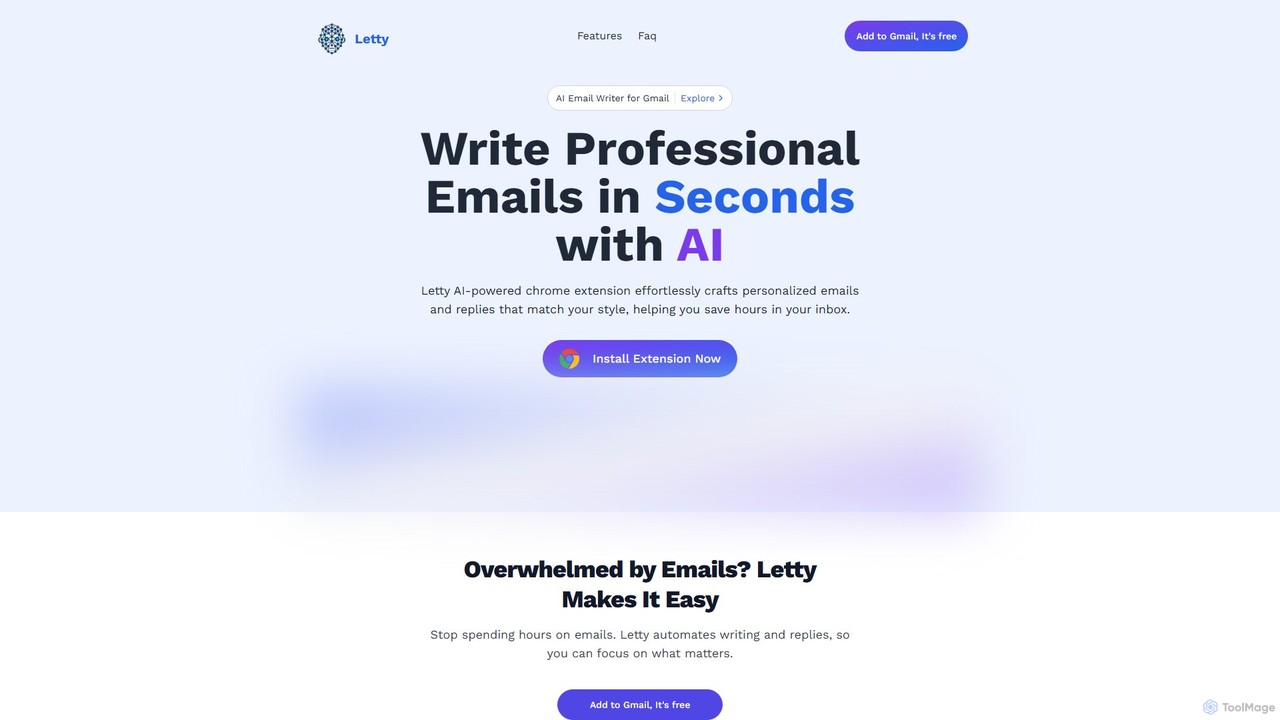
Letty is an AI-powered Chrome extension for Gmail that helps you write professional emails and replies in seconds. …

3.8K
superReply

superReply

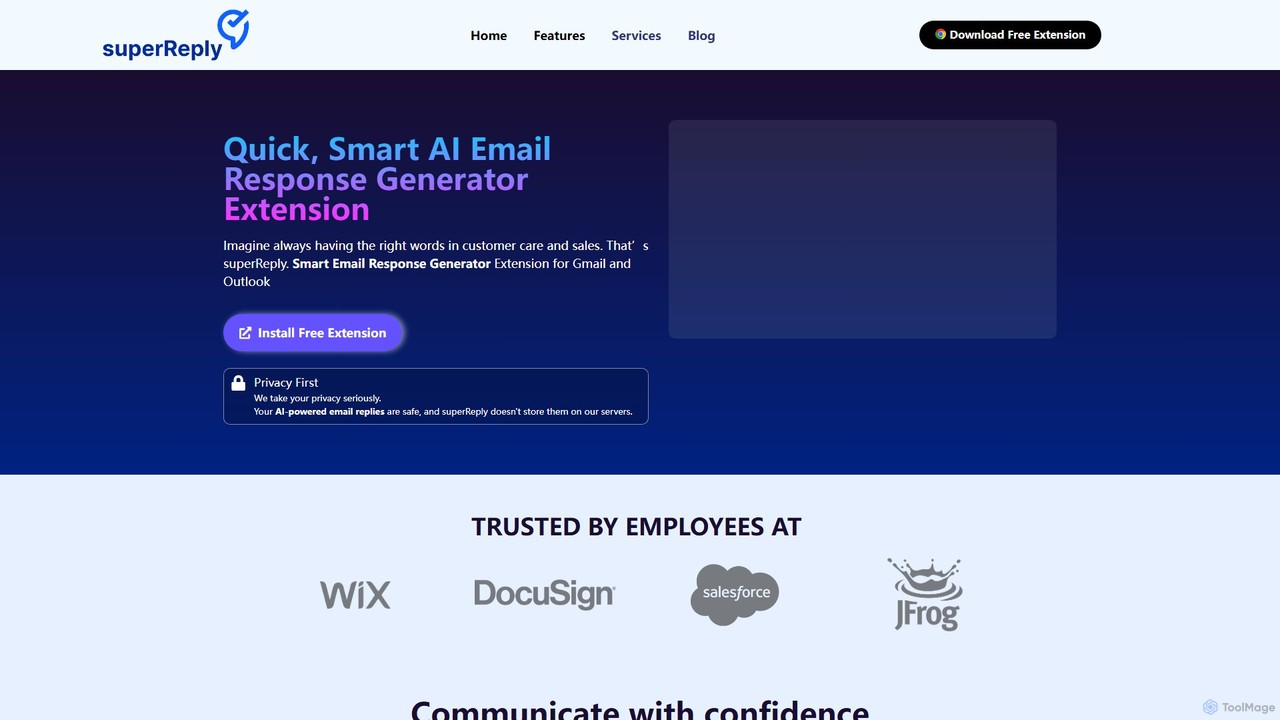
superReply is an AI-powered Chrome extension for Gmail and Outlook that instantly generates professional, context-aware email responses. It …

4.5K
Berrycast

Berrycast

Berrycast is an AI-powered video communication tool for Windows and Mac, designed to enhance workplace productivity. It allows …

37.2K

About Customer Support

AI Customer Support tools are a class of software that uses artificial intelligence to automate, augment, and analyze customer interactions. These tools leverage technologies like Natural Language Processing (NLP) and machine learning to understand and respond to user queries through chatbots, email, and other channels. They are designed to provide instant, 24/7 responses to common questions, intelligently route complex issues to human agents, and analyze customer sentiment. This enhances customer satisfaction by reducing wait times and frees up support teams to focus on high-value problem-solving.

Core Features

  • AI-Powered Chatbots: Provide instant, automated responses to frequently asked questions on websites and messaging apps, available 24/7.
  • Intelligent Ticket Routing: Automatically categorize incoming support requests and assign them to the most appropriate agent or department based on content and urgency.
  • Sentiment Analysis: Analyze the emotional tone of customer communications to identify frustrated users and prioritize their issues for immediate attention.
  • Agent Assist & Response Suggestions: Offer real-time suggestions, knowledge base articles, and response templates to human agents during live conversations.
  • Automated Analytics & Reporting: Generate insights from support data to identify trends, measure customer satisfaction (CSAT), and track agent performance.

Applicable Scenarios

These tools are widely used in sectors with high customer interaction volumes, such as e-commerce, SaaS, finance, and telecommunications. Support teams use them to manage inquiries across multiple channels, while operations managers rely on the analytics to optimize support workflows and reduce operational costs. They are particularly effective for businesses looking to scale their support capabilities without proportionally increasing headcount.

Selection Criteria

When choosing an AI Customer Support tool, consider its integration capabilities with your existing CRM and helpdesk systems (e.g., Zendesk, Salesforce). Evaluate the sophistication of its NLP for understanding user intent and context. Assess its scalability to handle your query volume, its language support, and the ease of training the AI with your company-specific data and brand voice.

Customer SupportUse Cases

1

Automating First-Level Support with an AI Chatbot

An e-commerce store manager implements an AI chatbot on their website to handle the high volume of repetitive customer inquiries. The chatbot is trained on the store's FAQ, return policy, and shipping information. It instantly answers common questions like 'Where is my order?' or 'How do I make a return?' 24/7, without human intervention. This deflects over 60% of incoming queries, allowing the human support team to focus on complex issues like damaged goods or payment disputes, significantly improving overall customer satisfaction and team efficiency.

2

Prioritizing Urgent Tickets with Sentiment Analysis

A SaaS company's support team uses an AI tool that analyzes the sentiment of all incoming emails and support tickets. The system automatically flags messages with strong negative language (e.g., 'frustrated,' 'unacceptable,' 'cancel subscription'). These tickets are immediately escalated and assigned to senior support staff. This proactive approach allows the team to address critical customer issues before they escalate further, reducing customer churn and turning potentially negative experiences into positive resolutions.

3

Empowering Agents with AI-Suggested Responses

In a technical support call center, agents use an 'Agent Assist' tool. As a customer describes a complex software bug, the AI transcribes the conversation in real-time and simultaneously searches the company's knowledge base. It then presents the agent with relevant troubleshooting articles, step-by-step guides, and pre-written response templates on their screen. This empowers agents, especially new ones, to resolve technical issues faster and more accurately, reducing average handling time (AHT) by 30% and improving first-contact resolution rates.

4

Analyzing Customer Feedback at Scale

A product manager for a mobile app uses an AI customer support tool to analyze thousands of support tickets and app store reviews each month. The tool automatically categorizes feedback into themes like 'feature requests,' 'UI/UX issues,' and 'performance bugs.' It identifies that 15% of all negative feedback mentions a slow loading screen. Armed with this data-driven insight, the product manager prioritizes fixing the loading issue in the next development sprint, directly addressing a major source of user frustration and improving the app's rating.

5

Providing Multilingual Customer Support

A global travel agency wants to offer support to customers in different countries without hiring dedicated agents for each language. They deploy an AI chatbot that supports over 50 languages. When a customer from Japan initiates a chat in Japanese, the AI understands and responds in fluent Japanese. If the query needs to be escalated, the AI translates the conversation into English for the English-speaking agent and translates the agent's English responses back into Japanese for the customer. This allows the company to provide seamless, real-time multilingual support and expand its global reach cost-effectively.

6

Onboarding New Support Team Members

A rapidly growing company needs to train new support agents quickly. Instead of lengthy traditional training, new hires use the AI Agent Assist tool as a primary learning resource. They handle real customer chats from day one, with the AI providing real-time guidance, suggesting correct answers, and linking to relevant internal documentation. A team lead monitors these AI-assisted conversations and provides feedback. This 'learning by doing' approach, guided by AI, reduces the formal training period by 50% and helps new agents become fully productive much faster.

Customer SupportFrequently Asked Questions