Security Best in category 1 results Device Management AI Tool

Popular AI tools in the Device Management field of Security include Swif.ai, etc., helping you quickly improve efficiency.

Swif.ai

Swif.ai

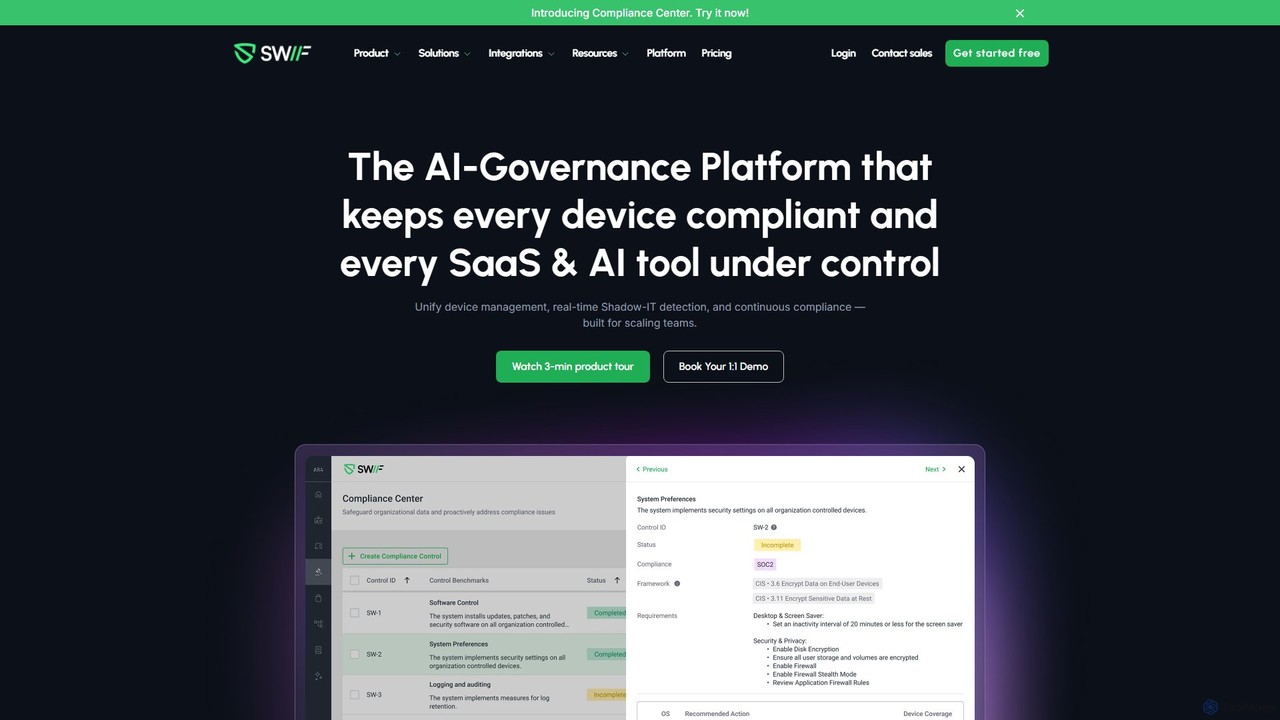
Swif.ai is an AI-powered governance platform that unifies device management (MDM), continuous compliance, and Shadow IT detection. It's …

33.7K

About Device Management

Device Management tools are AI-powered solutions designed to monitor, control, and secure various digital devices within an organization. Leveraging advanced algorithms, they automate tasks like inventory tracking, configuration, and threat detection, ensuring operational efficiency and a robust security posture. These tools are a critical component of an organization's overall security strategy, providing granular control over endpoints, mobile devices, and IoT assets.

Core Features

  • Automated Device Discovery: Automatically identifies and catalogs all connected devices across the network.
  • Remote Configuration & Control: Allows administrators to remotely configure settings, deploy software, and troubleshoot devices.
  • Security Policy Enforcement: Ensures devices comply with organizational security policies, applying patches and updates automatically.
  • Vulnerability & Compliance Scanning: Proactively identifies security vulnerabilities and generates reports for regulatory compliance.
  • Real-time Monitoring & Alerts: Provides continuous oversight of device status, performance, and security events with instant notifications.

Applicable Scenarios

Device Management tools are essential for IT departments in large enterprises managing thousands of endpoints, ensuring consistent security and performance. Small to medium-sized businesses utilize them to secure employee laptops and mobile devices, especially in remote or hybrid work environments. Additionally, organizations with extensive IoT deployments rely on these tools for efficient monitoring and maintenance of connected sensors and smart devices.

How to Choose

When selecting a Device Management solution, consider its scalability to accommodate your current and future device count. Evaluate its integration capabilities with existing security systems and IT infrastructure. Look for comprehensive features like real-time monitoring, automated policy enforcement, and robust reporting. Finally, assess the user interface's intuitiveness and the vendor's support for ease of deployment and ongoing management.

Device ManagementUse Cases

1

Automated Asset Inventory for Large Enterprises

An IT manager in a large corporation uses AI-powered Device Management tools to automatically discover and categorize all network-connected devices, including servers, workstations, and mobile phones. This eliminates manual audits, ensures an up-to-date inventory, and significantly reduces the time spent on asset tracking, leading to better resource allocation and compliance adherence.

2

Remote Device Configuration for Distributed Teams

A system administrator manages a globally distributed workforce where employees use company-issued laptops. Device Management tools enable them to remotely deploy software updates, apply security patches, and enforce specific configurations across all devices, regardless of location. This ensures consistent security posture and operational efficiency, minimizing downtime and support requests.

3

Proactive Security Compliance for Regulated Industries

A healthcare organization must comply with strict data privacy regulations like HIPAA. Device Management tools with AI capabilities continuously scan all medical devices and workstations for vulnerabilities, automatically apply necessary security patches, and generate detailed compliance reports. This proactive approach helps prevent data breaches and ensures the organization meets regulatory requirements with minimal manual effort.

4

Efficient Management of IoT Device Fleets

A smart city initiative deploys thousands of IoT sensors for traffic monitoring and environmental sensing. Device Management tools provide a centralized platform to monitor the health, connectivity, and data flow of these devices. AI-driven analytics can predict potential failures, automate firmware updates, and optimize sensor performance, ensuring the reliability and longevity of the IoT infrastructure.

5

Enhanced Endpoint Security and Threat Response

A cybersecurity team uses Device Management tools to bolster endpoint security. The AI component continuously analyzes device behavior for anomalies, identifies potential malware or unauthorized access attempts, and automates immediate responses like isolating compromised devices or rolling back configurations. This proactive threat detection and rapid response capability significantly reduces the attack surface and minimizes damage from security incidents.

6

Streamlined Software Deployment and Patch Management

An IT administrator needs to deploy a new critical business application or a security patch to hundreds of employee workstations. Device Management tools allow for centralized, automated deployment of software packages and patches across all managed devices. This ensures that all systems are up-to-date, secure, and running the required applications without manual intervention, saving significant time and reducing human error.

Device ManagementFrequently Asked Questions